

Charlotte Renaud
Arts & Culture Editor
Photo via @needless.mp3
“History repeats itself, first as a tragedy, second as farce.” -Karl Marx
A new generation’s arrival always produces a distinct culture composed of unique references, ultimately establishing its specific sense of humour. Generation Z –following Generation X and Millennials (Generation Y) – is considered to encapsulate those born from 1997 to 2012. However, this general cut off leaves a lot of wiggle room, especially in Gen Z’s case. Its humour isn’t limited to a strict age group, but can be appreciated by anyone engaging with its references via platforms like TikTok, Instagram, or Twitter. Our generation’s shared social media experience results in a unique type of humour that transcends geographical boundaries; it can be understood and enjoyed by anyone who has access to these social media platforms.
The rapidity at which these algorithms produce content plays an undeniably important role in shaping our humour. Caroline Geer’s article “Gen-Z Humor and Absurdity: A Misnomer” for Gale Academic describes this phenomena: “Long-form and short-form content of increasingly niche and layered content appear on the feed, giving it the appearance of a joint or shared experience.” Algorithms like TikTok accelerate the speed at which these jokes are created, adapted, and shared. This is reflected in the content of Gen-Z’s ironic and absurd comedy.
While irony is one of the main building blocks of our generation’s humour, we are not the first ones to utilise it. Millennials, as well as other generations before us, have used irony in their comedy. In fact, this type of humour has been used for centuries in comedy and theatre such as Shakespeare’s use of dramatic irony in his plays. Irony can be separated into three levels: sarcasm, post-irony, and meta-irony. Sarcasm, also used by other generations, has one layer of meaning. It simply expresses the opposite of what is said. The second level, post-irony, has two layers of meaning, like when someone says something in a sarcastic tone but actually means what they are saying. Both appear in Millennials’ and Gen X’s Facebook memes.
The third level, meta-irony, a concept popularised by Gen-Z, also has two layers of meaning, but the truth behind it is difficult to uncover. If someone says, “Guys, I’m not a good student. It’s not like I studied for that Shakespeare quiz and always get to class on time, guys stop…”, the statement sounds sarcastic, but the additional information suggests that the person is being sincere. We’re left not knowing the joke’s true meaning. To understand it, we must be familiar with what the joke is referencing or who the person saying it is. For example, people often take part in trends they find cringey to poke fun at them. Sometimes, the imitation is so well-replicated that people can’t determine whether the video is seriously taking part in the trend, or is parodying it. Unlike previous generations, this type of irony is particularly prominent in Gen-Z humour.
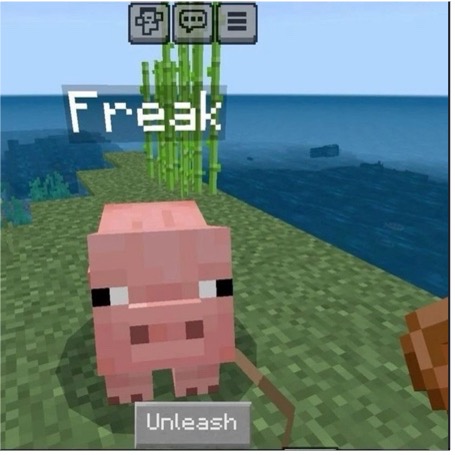
Absurdity is another one of its significant traits. Most memes are mixtures of niche cultural references that have gained popularity simply through their strange appeal. Videos with booming audio, unexpected transitions, and strange visuals are rapidly spreading on social platforms. A video or picture’s degree of ‘randomness’ seems to be proportionate to its comedic impact… but how come? Gen-Z’s consumption of social media’s pop culture references plays an undeniable role in fueling comedy’s desire for the bizarre. Most importantly though, growing up amidst this chaotic world and constantly having to face the tragic realities of wars, genocides, school shootings, police brutality and even the climate crisis prompts a search for solace in absurdity and nihilism.
In a world that never seems to escape the tormenting push and pull relationship of causing harm and suffering from its consequences, our trust in society continues to lessen. We thus challenge the strict institutions that repeatedly fail us, to reject them as absolutes and recognize their absurdity.
Camus’ philosophical essay “The Myth of Sisyphus” ascribes absurdity not only to our institutions and actions, but to the nature of humanity as well. The journalist and author Martin Esslin, in his article “The Absurdity of the Absurd” states that this is the case “not because the human condition is funny, but because it is deeply tragic in an age when the loss of belief in God and human progress has eliminated the meaning of existence and has made human existence essentially purposeless and hence plainly opposed to reason.” In a world that never seems to escape the tormenting push and pull relationship of causing harm and suffering from its consequences, our trust in society continues to lessen. We thus challenge the strict institutions that repeatedly fail us, to reject them as absolutes and recognize their absurdity.
Alongside irony and absurdity, Gen-Z’s humour openly embraces nihilism. They address their hardships in lighthearted ways, downplaying the severity of their situation. When Trump had ordered the killing of Iran’s major general, World War 3 memes started to emerge, despite the significant fear triggered by the situation. In difficult times, comedy makes its way to the forefront as a coping mechanism for a shared anxiety about the future. However, while we joke about these serious topics, we are not passive in the face of these issues. As a generation, we are generally invested in politics and the state of our world because more than anything, we have hope for its betterment.

 The Plant
Leave a comment