

Jade Gangé
Sports Editor
Multivitamins, Omega 3s, Protein Powder, Vitamin C, and even Vitamin D are all supplements you can find in grocery stores, pharmacies, or your local health shop. I used to work out while using supplements myself, but at some point, I had to ask: “Are they that necessary for my body?” I wanted to know more on the subject to help myself and others take the same dietary additives, but more naturally and safely. For that, I contacted my old private coach, Andrea Douala, and created a survey to retrieve information from other people who also do sports and take supplements.
Andrea Douala is a Concordia University student doing a master’s with a thesis in health and exercise science. She has also previously done a bachelor’s at the University of Ottawa, majoring in Biology with a minor in Aging Studies. Douala also did an internship in cardiology in France last year. I discovered Andrea through her personal coaching fitness program. She became both my coach and my nutritionist at the same time.
What are nutrient supplements?
In 1905, while searching for the cause of the disease called Beriberi, scientist William Fletcher suspected that polished rice versus unpolished rice wouldn’t share the same nutrients. Therefore, he realised that the special nutrient contained in the rice removed during the polishing process played a helping role in the disease. Fletcher then
discovered that the removal of special factors from food would lead to diseases.
In 1906, biochemist Frederick Gowland Hopkins found that certain food factors like proteins, carbohydrates, fats, and minerals were important in the growth of the human body.
. The work of these two scientists laid the foundation of the creation of modern supplement.
Dietary supplements are products created to add nutrients to your diet. They come in various forms, including pills, capsules, powders, gummies, liquid, and even food. The most common types are Vitamin C or D, Minerals like Calcium or Iron, Herbs and Botanicals, and Amino Acids like Glutamine and Enzymes. Those dietary additives are great for helping your overall health. The respondents of my survey are aged from 17 to 42 years old. They’ve all been practising sports like CrossFit, Competition volleyball, dancefit, Basketball, and musculation sessions for a minimum of a year and a half and up to ten years. Out of ten people, all of them take or used to take supplements, and 50% said that more than five people surrounding them also take them. Andrea explained that most of her clients have taken nutrition products at least once during their workout journey. The most popular supplements taken are protein products (powders, protein bars), pre-workout, and creatine. The brands used by the respondents are CBUM Essentials, Believe, BUM Raw Essentials, EHPlabs, and Women’s Best. The majority are taking the food additives before, after, and during the workout, five to seven times a week. Let’s say that, each day, the usual consumer takes 1 or 2 scoops of protein powder mixed in a smoothie, pancakes, or whichever kind of food they desire. That makes it 7 to 14 scoops a week. Generally, one scoop is 24 grams. When I looked up the brand named “Women’s Best,” the regular price for a 2lb container of “Fit Pro Whey Protein” is $79,99 and includes approximately thirty servings. If we do the math, the customer will have about two weeks worth of protein powder before needing to buy a new one. For a month, that’ll cost them around $159,98. Is it necessary to pay for nutrient supplements we can find in our foods?
What are the effects?
The effects of taking nutrient supplements will mostly only be seen by yourself. People around you might not see the difference, but you will. Out of ten people, eight admitted that they did feel a difference when they took them. They get more energy and better focus. “A lot of supplements are nutrients naturally present in our body, and they all have specific roles to help the body function properly. When you exercise, your body needs more nutrients for proper energy production and recovery. So, the more you exercise, the more your body needs nutrients to function. Supplements will therefore become handy and make a difference,” claimed Andrea. As for the effects linked to forgetting them, seven people said that not taking the supplement does not make a difference, but three said forgetting them, at the moment of the workout, makes them feel weaker. As for Andrea, she said that she doesn’t rely on supplements, she might take one kind once to twice a month, sometimes another one three times a week. The only constant supplement she takes is protein powder four times a week. Usually, the dose of supplements stays in your body for a couple of days, so even if you skip a day or two, you won’t feel like you’re missing anything. Therefore, taking supplements will not make your body feel “unhealthy,” as they were created to give our bodies what they’re missing.
So, should we take them?
Overall, taking nutrient supplements is recommended, but you need to be aware that we all have different bodies. What works for your sibling might not work for you, and that’s okay. You need to try what’s good for you. At least 65% of the participants recommended taking proteins, while 20% recommended pre-workout. Andrea herself recommends taking collagen because it is the most abundant protein in the body and constitutes your skin, hair joints, and bones. It also tightens pores, which reduces excess oil on your face. “Before taking supplements, I think it is best to make changes in your diet and analyse the types of foods that you eat. As mentioned previously, the amount of physical activity that a person does should be taken into consideration before starting to take them. Also, we live in a society full of highly processed foods, meaning low vitamins and minerals, more toxins, and therefore more nutrient deficiencies. Supplements are sold over the counter, so anyone can have access to them. I therefore recommend being careful in their usage, as high doses of certain nutrients can have negative health impacts,” she said.
But, we should be careful about which ones then?
Three answers stood out to me when I asked which kind of supplement they would not recommend. One participant said that they do not recommend pre-workout because it gives them heart palpitations. Many pre-workouts contain high levels of caffeine which can lead to heart palpitations, increased heart rate, and high-level blood pressure. The high level of caffeine might also lead to insomnia or poor sleep quality if taken too late into the day. If you’re under some kind of medication, pre-workout could also interact with it, causing adverse effects. The second one does not advise taking steroids, stating that it can weaken the immune system, making it more difficult to fight off infections. The bad effects of taking steroids for men are testicular shrinkage, reduced sperm count, and infertility. As for women, the use of steroids could deepen their voices, increase body hair, and create menstrual irregularities. The final interesting answer was to not use weight-loss supplements because they contain harmful ingredients like pesticides, harmful chemicals, or heavy metals. Taking weight-loss products could create liver damage, digestive problems, and psychological side effects. Basically, before taking any kind of supplements, please consult your doctor or nutritionist, to consider the side effects and to decide which would work best for your body and your health. “I don’t think there are “bad” supplements, but it’s always a matter of the reason one wants to use the supplement and the quantity. More is like not enough. Vitamins and nutrients are micronutrients, meaning nutrients needed by your body in small amounts are harmful when taken in big quantities,” explained Andrea.
When deciding to take supplements, your lifestyle is something to take in consideration. If you’re a busy person, taking protein powder during the day might help you make sure that you get the right amount of protein each day. A lot of factors need to be taken into consideration when starting to consume them, such as the amount of physical activity, symptoms, current diet, height, and weight of a person. There’s no specific age to start taking supplements. Some toddlers might need Vitamin D supplements, and some teenagers might need calcium or vitamin D for bone health. It all depends on your health. Again, the advice of a professional is always needed. When using them properly, the supplements will be beneficial for your health and body, but a healthy diet is always the best supplement.
“Real food should always be prioritised over supplements,” concluded Andrea Douala.
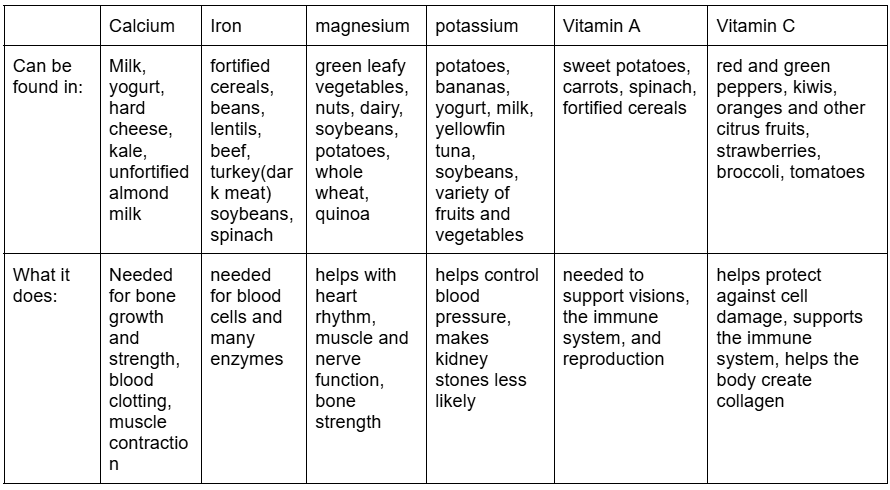
Here’s a list of a few foods that can replace some nutrient supplements, and what they do. I hope this helps you find the nutrients that you need without spending an excessive amount of money on them:
 The Plant
Leave a comment