


VIA THE NEW YORK TIMES
Julia Azzouz
CopyEditor
What does a duct-taped banana mean to you? How about a signed urinal? Or ninety cans of faeces? While these unconventional objects may not initially register as art, they undoubtedly evoke a range of reactions—frustration, confusion, disbelief, or even a laugh. Some advocates might preach the profound significance of these installations, yet most are left feeling that they’re insignificant, a fall cry from what they consider “real” art. This tension between traditional notions of art and the provocative nature of conceptual works invites us to explore the origins and intentions behind this often-misunderstood movement.
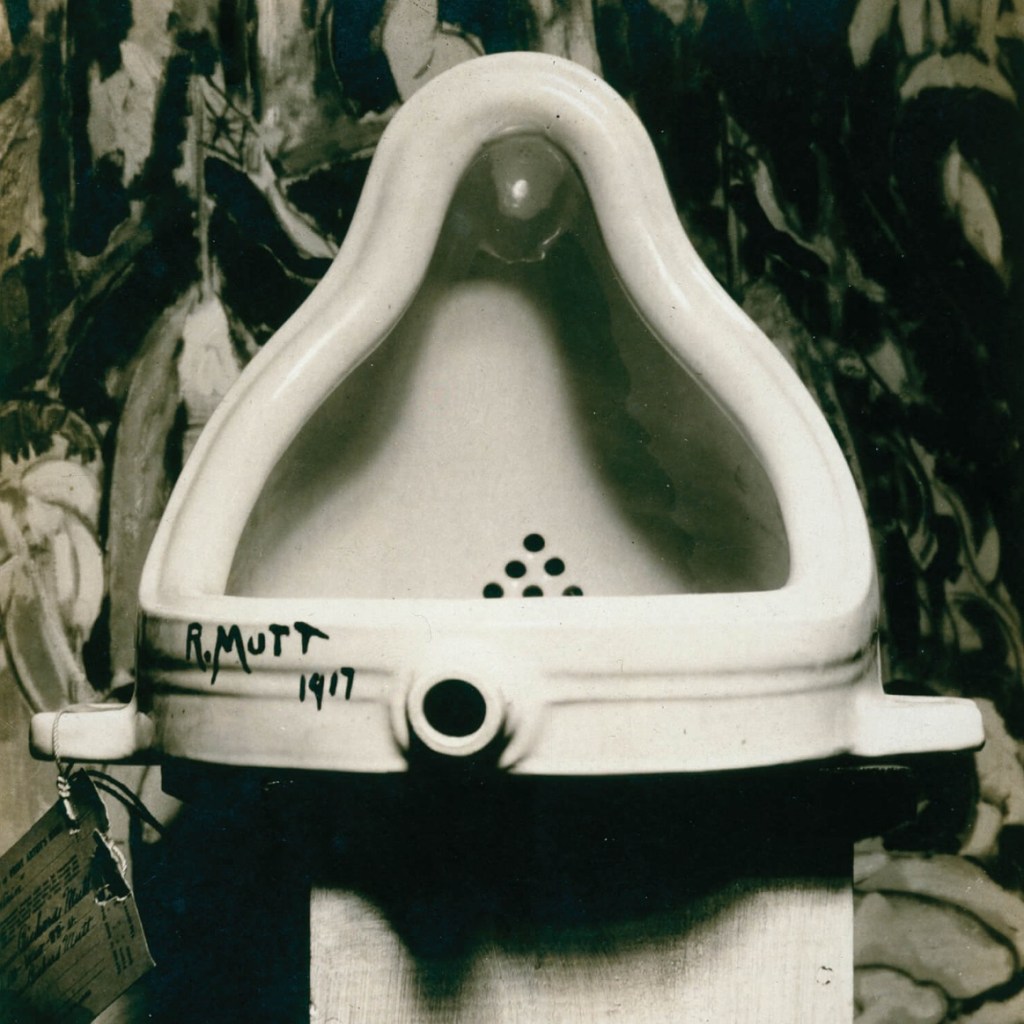
To better understand this phenomenon and clarify its purposes, it’s essential to contextualise the emergence of abstract art. The shift towards the nonrepresentational was influenced by earlier movements like Impressionism and was further propelled by the invention of photography. In the early 20th century, artists aimed to distance themselves from realistic portrayals of the physical world, exploring new ways to use form, colour, and line to evoke raw emotion, express expansive ideas, and challenge conventional notions of beauty. Pioneers like Wassily Kandinsky, Piet Mondrian, and Kazimir Malevich utilised the formal elements of painting not merely as tools for beautification, but as vehicles for expressing concepts and emotions. Among these influential figures, Marcel Duchamp stands out as a pivotal artist, often regarded as the forefather of conceptual art. His provocative readymades, such as the infamous Fountain, not only challenged traditional creative boundaries, but also set a precedent for later artists.
Developed in response to the increasingly commercialised art world, conceptual art emerged as a distinct international movement in the 1960s, emphasising the thought process and method of production over the art object, the physical final product with aesthetic value. Whether performance or an everyday item, the physical manifestation of the idea is chosen for its efficiency in impact and communication, not for its aesthetic value. Duchamp’s readymades foreshadowed this movement, providing a direct commentary on the very nature of art itself. Critics often claim these installations lack “artistic value,” ironically echoing the sentiments of their creators. Conceptual works function as meta-art pieces that inherently question their own existence, so if you ask yourself why such a work is considered art, you’ve already grasped part of its essence. In theory, if there is no final product to hang on a wall or display on a mantel, such pieces cannot be bought or sold… but they are. Is that against their point?
Despite its emphasis on accessibility and its rejection of traditional artistic values, conceptual art has paradoxically become part of the commercial art world it criticises, with its recognition in pop culture anchored in outrage. Maurizio Cattelan’s Comedian–the duct-taped banana– sold for 120,000 US dollars at an auction 5 years ago, complete with detailed instructions on how to install and display the piece (How long to cut the tape? At which angle should it be placed? etc.). The owner doesn’t possess the tangible piece itself, which would undoubtedly have rotted away by now; rather, they own the concept that defines Comedian. This absurd commodification of ideas inevitably raises doubts about the legitimacy of conceptual art as a practice. While it’s instinctual to blame the artists, it’s crucial to recognize that their work intentionally highlights the egoism of art institutions. Indeed, Comedian exemplifies the core tenets of the conceptual movement by ridiculing the art market’s elitist self-indulgence while simultaneously profiting from it, a satirical move emblematic of the art form itself.
Conceptual art, born from the innovations of 20th century abstract art, seeks to shift our focus from aesthetics to ideas, provoking us to reconsider what art can be by playing with the criteria we judge it with. Critics may dismiss these works as lacking artistic value, yet they urge us to engage with the deeper messages they convey about society, commerce, and creativity itself. Ultimately, whether one views conceptual art as a sham or as a valid form of expression, it encourages us to question our perceptions and definitions of art, proposing that true meaning often resides in conversation and emotion rather than in tangible objects.
 The Plant
Leave a comment