

Photo via Verso
Amina Farah – Contributor
Mirren Bodanis – Editor-in-Chief
When we open our phones, we’re bombarded with genocides, police brutality, climate disasters, rising tolls of poverty and homelessness, and growing fascism; horrible reports which flood our feeds at unprecedented rates. These images can lead to a sense of hopelessness, often causing people to give up and walk away from movements or discouraging them from taking action. Our despair makes it seem as though there’s nothing we can do as working class individuals watching these atrocities from the sidelines. However, we can do what people have done for centuries when situations have become unbearable: fight back.
Being part of any sort of community can help heal that sense of powerlessness, whether it surrounds a social cause or just personal motivation. A study by UofT and UBC found that “community belonging and engagement contributes to quality of life which results in a greater sense of identity and confidence, opposing anonymity and loneliness.” A study of young adults in 12 countries, published by Frontiers, found that “High collectivism was associated with less suicidal ideation” in individualist countries like our own. These “communities” can be school clubs, social groups (like book clubs or gaming clubs), or even regular lunches with the people around you.
On top of hopelessness, the media that we are confronted with on a daily basis suggests that we solve our problems individually. Superheroes, detectives, and even real-life leaders of social movements (think King, Mandela, or Ghandi) are generally presented as the most important part of any social fight. In reality, it’s not only the work of one person that makes a difference. “Social movements that have built power and won major change have all included mutual aid, yet it is often part of movement work that is less visible and less valued”, writes Law Professor Dean Spade in their book Mutual Aid. The UofT/UBC study also found that “a greater sense of community may translate into a higher likelihood of people mobilising participatory processes for the solution of their problems.”
When we’re having trouble finding hope, we shouldn’t keep it to ourselves. We spoke with Riley, a Social Service student here at Dawson, a musician and amongst many other things, they’re someone who expressed deep commitment to standing in solidarity for marginalised folks. They have a strong love for their community as an advocate for change, affirming that it’s normal to feel small in the face of large systemic issues and that this is the intended effect of said systems. Riley shares that in order to move past a frozen state of guilt or despair, it’s important to sit with oneself and think about what tools we have, where we are, and who’s around us. “Capitalism makes us think in an individual context. Generally, individualism makes us think all of our successes and failures are based on the individual, but in reality humans have no failure or successes without one another”. Community is therefore necessary to make change. For Riley, this includes reflecting on who they are and what their role is in the context of our white supremacist, heteronormative, capitalist society: “I recognized my privilege and power as someone who appears to be cis, straight, and white, and how my white guilt was not serving me, but was centering myself in something that wasn’t about me”.
Riley also offered many ways to get involved with people working towards solutions for problems we all share. For instance, concerning the Genocide of Palestinian people, we can show up to the many protests organized weekly by the Palestinian Youth Movement (PYM) and other groups. We can learn from reading and listening to Palestinian voices like Bisan Owda (@wizard_bisan1 on Instagram) and the remaining Palestinian journalists who broadcast regularly. We can make space in our every day lives to talk about the genocide and inform others which fosters a sense of community as well.
On a local level, fighting for marginalised groups can look like joining them to protect their rights by staying current on relevant topics, going to demonstrations, signing petitions, and donating what you can or showing up to fundraisers. Learning can happen by reading and borrowing books from libraries, or joining and creating book clubs with friends. For Riley, turning to the local music scene is what they said “helped [them] find the space to be queer and trans,” with queer Montreal artists like Typeface, Object of Loathing, or Jetsam.
Social Media is a great way to find events in the area to show solidarity for organised groups. For example, Iskweu (an initiative by the Native Women’s Shelter of Montreal, @iskweu) will post about their vigils and calls for mutual aid pertaining to MMIW2S+ individuals and their families. Résistance Montréal (@resistance.montreal) posts a monthly calendar of anarchist events held by numerous groups. Even at Dawson there are many clubs that align with various political views, but if you don’t find something to your taste, you can always reach out to the DSU to start your own.
When it comes to forming a group, whether it be in or outside school, the process can seem daunting, increasing that sense of powerlessness. In an interview with The Plant, Alyssa Kuzmarov, a Professor at Dawson’s Social Services department, provided us with some expertise: “One of the most important things is to talk to the people you want to be part of [your group]. I could have amazing ideas sitting in my house, office, wherever, but if I don’t actually talk to [the people] who are supposed to benefit from my club, then I might miss the mark.” She explains that even people with similar interests will have differences of opinion, which can lead to conflict and a loss of motivation to be together. She stressed the need to “go a bit deeper into ‘What are people actually like?’ ‘What are they actually needing underneath?’ Some people just need to be heard or validated or need to find that motivation. […] In social work there’s this very important concept of power over and power with. If you have power over, well, you’re deciding for them, but if you have power with, then there’s that idea of being an ally.”
It goes to show that forming a group isn’t about being the one “in charge”, but is instead about organising and helping the group accomplish its goals. Just like how keeping yourself organised is about making sure everything in your life is helping you work towards a goal, organising a group is about making sure everyone in the group can help work towards a goal. Kuzmarov summarises: “It has to be a win-win for people. […] If you want people to come to your thing, there has to be a reason to come.”
Creating connections in the community can also facilitate the process of making change. Riley discovered Action Santé Travesti(e)s et Transexuel(le)s du Québec (ASTT(e)Q), a project aimed at promoting the wellbeing of trans individuals and the empowerment of the community. Due to a lack of funding, they were at risk of having to put an end to their services. Riley gathered volunteers and bands to play a benefit show that took place in March of this year, successfully raising almost $2000. Fortunately, the ASTT(e)Q is still offering services today, a testament to the importance of mutual aid and the power of community.
It can feel paralysing to want to face systemic issues head on. However, doing something big or small, no matter what it is, will always be better than doing nothing. Riley shares that “Resistance can happen in many forms, from a coming out celebration for a trans friend or a sober party. We have to be creative with our resistance.” Don’t let fear and hopelessness stop you from learning, speaking out, and joining the movement. Kuzmarov affirms: “Two, three people can make a difference, by writing a letter, by raising awareness. We have that choice: are we going to sit around, or are we going to step out of our comfort zone? […] If you’re afraid, do it for the people that will benefit. […] Be scared and do it anyway.”
Under a system designed to keep us doom scrolling, immobilised, and apathetic, we don’t need to become full-time activists to get involved. Simply caring and trying is revolutionary on its own. “Learning to be with the messiness of organising, that’s what I tell my Group Work class,” says Kuzmarov, “We don’t know what’s going to happen, there’s so much uncertainty, but there’s also so much magic when you can really be afraid but still jump into that unknown.”
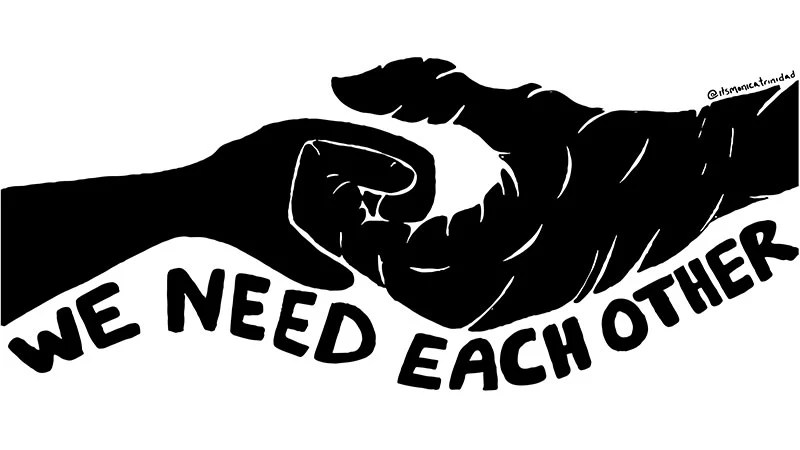
For those who have been showing up, remember that you need to take care of yourself in order to keep going. Keep faith that change is possible. We need each other and we need to be the hope we wish to find, or whatever it is that Gandhi said.
 The Plant
Leave a comment