

Emma Caspi
Voices Editor
Photo Via The Cut
November 6th was a dismaying day for American women. Donald Trump’s victory was indeed a solemn déjà vu, reminding all Americans of what he has done to suppress women during his first presidential term. According to The Independent, Trump managed in his first term to end international funding for women’s rights and reproductive health, block laws promoting equal pay, appoint very few women to his administration, censor terminology about women’s health from government agencies, dismantle reproductive health services…should I go on? Kamala Harris was a beacon of hope to all the dejected women. When that hope was extinguished, American women had the choice to do one of two things: passively watch their bodily autonomy vanish or protest in a way that oppressive men can’t ignore. Pursuing the latter, frustrated American women have been researching and joining the 4B movement.
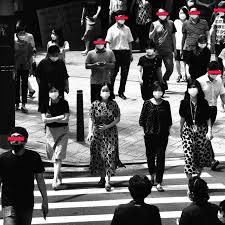
4B is a radical feminist movement originating from South Korea. The “B” is shorthand for the Korean prefix “bi,” which means “no.” The central idea rests on 4 pillars or the 4 b’s: bihon (marriage), bichulsan (childbirth), biyeonae (dating), and bisekseu (intercourse) with men. The movement therefore requires all women who join to completely isolate men from their nuptial, maternal, romantic and sexual lives. Participants of the 4B movement do not view their actions as male hatred, but more so the rejection of heterosexual relationships as a means of resisting patriarchal structures and reclaiming a sense of agency.
What makes this movement so striking is that it does not try and find solutions to dismantle the patriarchy, but rather leaves it behind altogether; women refuse to fix yet another faulty governmental system. Something so radical as the 4B movement does not simply appear for the fun of sundering women’s relationships with men. Although the movement was brought to our attention since it has piqued interest in the United States, the movement was originally created to counteract systemic misogyny and address violence against women such as increasing femicides, revenge porn, and dating violence in South Korea.
The Washington Post depicts South Korea’s view of women’s roles in society as the Korean word “jib-saram,” meaning “home person” and is a word for “wife.” Regardless of a woman’s career aspirations or occupation, they are expected to be jib-saram and are oppressed by perpetual gender expectations. If women do prioritize academic education and thus become competitors for increasingly scarce jobs, online forums and social media foster a hostile environment for angry male commenters to attack women.
Feminist scholar Euisol Jeong notes that men will label college-educated women as “kimchee women,” a stereotype that Korean women are selfish and exploited if they neglect their “duties.” A misogynistic and anti-feminist community subsequently followed called “Ilbe” whose members view women as shallow gold-diggers. Korean women clapped back, creating feminist sites that use the term “Korean male-bug,” a stereotype that Korean men are ugly, sexist, and obsessively buy sex.
South Korea makes it incredibly hard to be both a mother and pursue a profession since the country offers very little maternal support and care. The 4B movement began around the same time South Korea’s government attempted to raise the plummeting birth rate in a panic through unhelpful incentives, trying to get women to copulate without implementing the proper resources and care for mothers. The Cut reveals the “National Birth Map” launched online by the Korean government, which illustrates the women of reproductive age in every municipality. Korean women were deeply offended, accusing the government of treating them like livestock.
As a result, Korea’s birth rate has been steadily dropping: according to Reuters, South Korea’s birth fertility rate reached a record low of 0.78, with Seoul logging the lowest rate at 0.59. The panic ensuing from South Korea’s low birth rate proves the 4B activist’s point that women are crucial for the nation’s survival and success; if the nation does not care about women’s health, why should they care about the nation’s health?
Inspired by Korean women fighting against their patriarchal and misogynistic government, many American women are gaining back their feminine power and control over their bodies by joining the 4B movement. If women do not have a say in the legislature created by men that controls their reproductive health, then they will in turn deny them access to their bodies.
The male audience typically thinks unfavourably about this movement, viewing it as an unfair punishment toward the innocent. What is truly unfair is that women astonishingly have to force their country and its men to respect them. American women know society will fall apart if they isolate themselves. They eagerly await the time so they can rebuild a world bereft of perpetual fear, frustration and anger– a world where the word “no” is a command, not a suggestion
 The Plant
Leave a comment