

Charlotte Renaud
Arts & Culture Editor
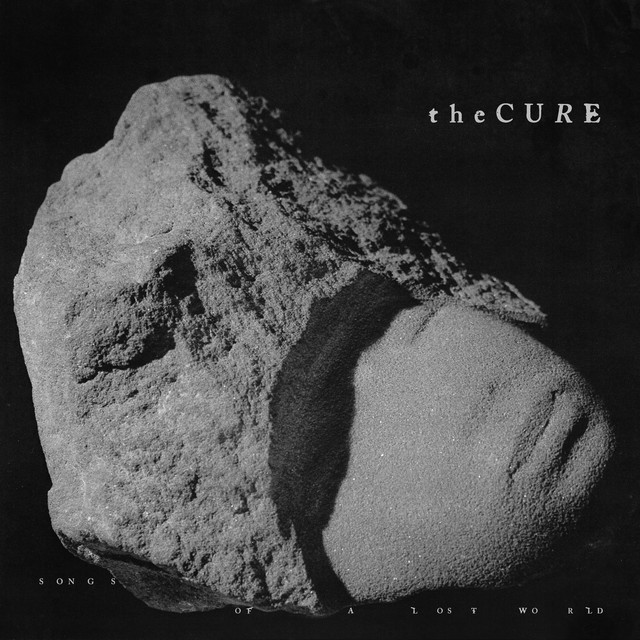
Photo via cover art for Songs of a Lost World
Very much awaited, The Cure’s fourteenth studio album, Songs of a Lost World, was released on Friday November 1st, sixteen years after the release of their previous album 4:13 Dream. It’s Friday, I’m in love with the new album, and so are countless other fans. Not only did it satiate listeners’ anticipation, but the album proved very successful, reaching number one on the charts in the UK, Austria, Belgium, Denmark, France, Germany, the Netherlands, Sweden, and Switzerland.
All eight songs on the album are solely composed by Robert Smith (vocalist/guitarist) who also produced and mixed it alongside Paul Corkett, British record producer and engineer. It’s The Cure’s first studio album to feature Reeves Gabrels since he fully joined the band in 2012, and his distinct guitar sound contributes to the album’s elegiac ambiance.
Songs of a Lost World is proof that beauty and artistry can arise from the ashes of tragedy. Smith’s grief over losing his mother, father, and brother is channelled into the creation of the album’s lyrical and musical genius. The Cure, more than ever, leans into the gothic genre they’ve denied for so long. Rob Sheffield of Rolling Stone magazine, claims that it is the Cure’s best since Disintegration, calling it a “vividly propulsive space-rock goth elegy, eight songs in fifty minutes, kicking with a full-blooded band attack.”
“Alone” kickstarts the album off with pounding drums accompanied by resonating guitar chords. The song grows in energy, all while the piano’s gentle melody softens the sound. Mirroring the long time it took for their album to release (good things take time), Smith only begins to sing three minutes into the song, “This is the end/ Of every song that we sing.” The powerful start to the album sets an apocalyptic tone that lasts throughout Songs of a Lost World, compelling the listener to feel Smith’s sense of urgency in mortality.
In “I Can Never Say Goodbye”, Smith directly references his deceased brother with the lyrics, “Something wicked this way comes/ To steal away my brother’s life.” “Warsong”, probably the most apocalyptic song with its battle-like hitting drums, criticises how humanity contributes to death around the world. The lyrics, “All we will ever know is bitter ends/ For we were born to war” forces listeners to gaze upon themselves by casting light on humanity’s tendency to create conflict.
The album cover itself evokes a sense of mortality, showcasing Bagatelle, a 1975 work by Slovenian sculptor Janez Pirnat. The lightly engraved face on a lump of granite is “redolent of a damaged classical sculpture rescued from beneath the waves,” says The Guardian writer Kitty Empire. Smith fell upon a picture of Bagatelle as he was looking through a book by Pirnat. Right away, he knew that it needed to be the album cover. Coincidentally, Smith looked up the artist online only to discover that he had died that same day, “It was a very strange coincidence, which cemented the idea that this has got to be the album cover,” he tells NME.
Mortality, the album’s central theme, is explored throughout the album either by describing the passing of Smith’s family members or the overall negative repercussions of conflict. At the core of the album’s message lies Smith’s own sense of his transient self.
Now that the dream of stardom has been achieved– what next? Smith’s lyrics reverberate with his introspection on his mortality, contemplating his lost youth, “Where did it go?” he sings in “Alone.” In “And Nothing is Forever”, he sings, “I know, I know/ That my world has grown old/ And nothing is forever.”
Despite emanating a sombre mood, the lyrics can also be interpreted as having an underlying hopefulness. Mortality is imminent, but can art last forever? Not only does Songs of a Lost World honour the memory of Smith’s father, mother, and brother, but the album also adds to Smith’s discography that will undoubtedly be remembered long after he passes away.
In his article in Rolling Stone, Rob Sheffield writes, “It’s a full-circle achievement for the goth moppet who was already singing ‘Yesterday I got so old’ when he was halfway through his 20s.” However, unlike “In Between Days” and the rest of the band’s older discography, Songs of a Lost World exudes an even more serious and mature tone, an additional sombre layer that was not as present in The Cure’s earlier love songs. It is clear that Smith, growing older and grieving the passing of family members, views mortality as fast approaching more than ever.
The Cure demonstrates how older artists’ music can remain relevant and appeal to anyone, standing the test of time. Smith may feel his mortality looming above his head more than during his youth, but his new music resonates just as much as before. In Pitchfork magazine Ben Cardew writes, “It feels like a record whose time is right…” Songs of a Lost World released when its message had to be heard. We must accept that we are all bound by our mortality, but that there is still so much within our control to ease that burden during our lives, and Smith does so through his music.
 The Plant
Leave a comment