
Berlynne Steenbergen
Copy Editor
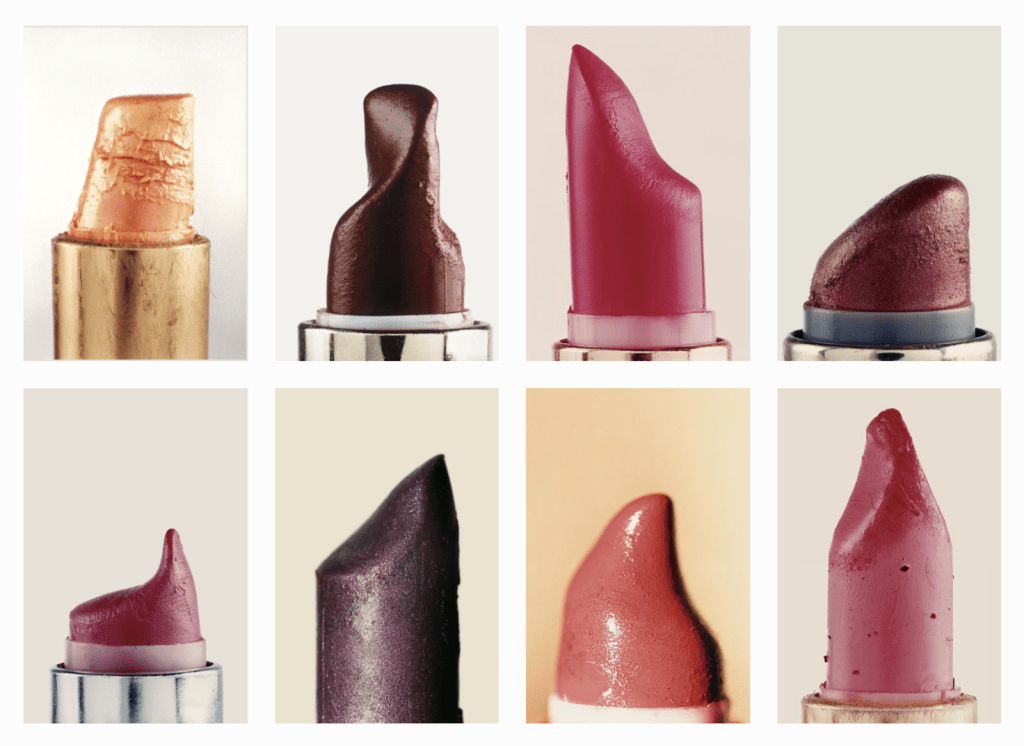
Photo Via Stacy Greene, Lipstick, 1992
When times get tough, people tighten their budgets—but somehow, a tube of lipstick or a stick of lip balm always finds its way into the cart. This phenomenon of consumers spending money on small items during economic downturns is called the Lipstick Effect. It suggests that, no matter how hard times get, consumers will splurge on small indulgences, such as lipstick, to lift their spirits and give them the appearance of wealth. From 2001 to the COVID-19 pandemic, makeup sales have told a story about the perfect shade and our need for comfort and status.
The trend was first recognized in 1998 by economist Juliet Schor in her book The Overspent American. She wrote that, during times of economic hardship, “[women look for] affordable luxury, the thrill of buying in an expensive department store.” Schor found that when money was tight, women would gravitate towards buying luxury products that are used in public, such as lipstick, rather than products that are used at home, such as skin care. This is a psychological phenomenon—human beings desire status. We all want to be admired and respected, and in a capitalist culture that promotes hyperconsumption, the primary way of achieving this is through showing off the acquisition of items.
This phenomenon became glaringly obvious in 2001 when the makeup company Estée Lauder saw a spike in lipstick sales following 9/11. Leonard Lauder, the former chairman of Estée Lauder, told the Wall Street Journal that he noticed the company sold more lipstick than usual after the attacks. It wasn’t just this company that felt this effect; statistics showed an 11% increase in the demand for lipsticks. This is an example of retail therapy; the act of buying things you want to improve your mood and help you avoid hard emotions.
But what is the link between shopping and quality of life? The marketing of lipstick is deeply tied to self-worth because it boasts beauty, empowerment, and personal expression. The idea that a simple swipe of lipstick can enhance one’s appearance and, by extension, one’s confidence, reinforces the belief that beauty is linked to personal value. In a consumer-driven society, people are often encouraged to equate their sense of fulfillment with material possessions, which are marketed as solutions to emotional needs. The burst of happiness felt when making a purchase is a real thing; dopamine and serotonin are both released when we engage in behaviors such as adding lipstick to our shopping cart. The Journal of Consumer Psychology did a study in 2014 that found that sadness is often linked to a feeling of helplessness in changing our circumstances. Shopping gives us the control that we crave by letting us make choices and determine outcomes. The fact that I bought a warm toned shade instead of a cool toned shade was my choice and it doesn’t matter whether or not the purchase was a good idea; selecting a product restores a feeling of control and autonomy.
The most recent example of the Lipstick Effect was during the COVID-19 pandemic. While we all wore masks, lipstick sales plummeted. No one was going out, so the demand for products like foundation and lipstick dropped by more than 70%. Women shifted from buying makeup to buying self-care products. In 2020, Amazon reported that sales for nail-care products, hair products, and bath-and-body products went up by 151% on average in the United States. Without having a place to wear lipstick, consumers shifted their wallets from one luxury item to another.
Now, as we move towards normalcy after a global pandemic, lip products such as the Benefit Cosmetics Benetint are rising to popularity all over social media, with 24.1k posts on TikTok using the hashtag benetint. This product is categorized as a lip and cheek stain, rather than a lipstick or a lip gloss. The stain takes a few minutes to settle on the skin, which makes owning this item feel that much more luxurious. In today’s fast-paced world, free time is scarce. Taking the time to apply a tinted stain becomes a rare opportunity to relax and enjoy the process of applying makeup. The ability to enjoy free time without worry is a privilege not everyone has access to, making it a luxury in itself.
Pricy, but easy-to-use and multipurpose products with a recognizable name are popular with consumers because they do the same job as lipstick—they raise status and give comfort.
Looking at the Lipstick Effect reveals an interesting aspect of human psychology—our spending habits are not just about necessity but also about emotional support. In times of economic downturn, small indulgences serve as luxuries, offering a sense of control and optimism. This phenomenon underscores the connection that capitalism has made between consumption and well-being, reminding us that people will always seek ways to feel good about themselves.
 The Plant
Leave a comment