

Emma Caspi
Voices Editor
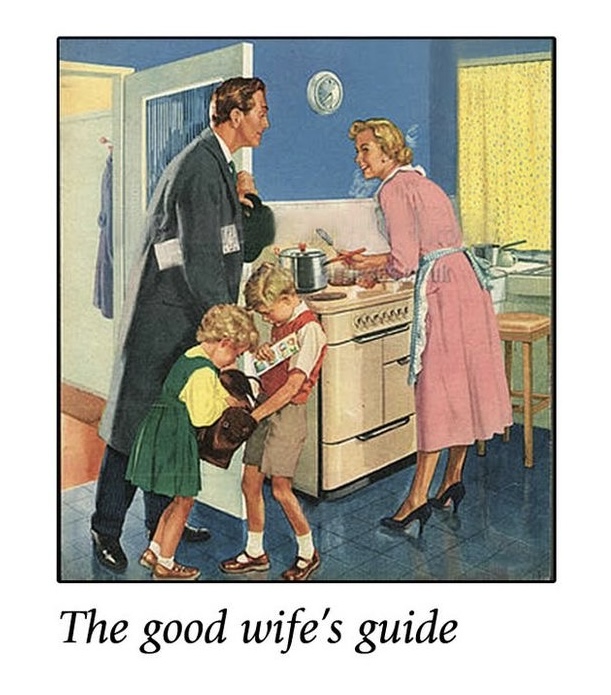
Photo Via Housekeeping Monthly (1955)
Recently, social media has been flooded with women who call themselves “tradwives,” a shorthand for traditional wives. Over 100 000thousand Instagram posts have used the hashtag #tradwife, many receiving millions of views and likes. Unlike stay-at-home mothers, tradwives lead a lifestyle which embraces traditional values and gender roles. A tradwife is the epitome of prim perfection: she cooks, cleans, sews, raises her children, obeys her husband, and is always presentable and proper.
I cannot help but wonder, beyond their apparent picture-perfect life they depict online,: are these tradwives content and satisfied? It turns out that what lies beyond a tradwife’s meticulous Instagram page are the physical, mental, and circumstantial challenges– the aspects far too unladylike and unaesthetic to be shown on camera. The idea of the impeccable traditional wife who dutifully fulfills her household tasks is unrealistic and impossible to sustain.
The perfect example is Hannah Neeleman, also referred to as the catalyst of the tradwife trend. Known as @Ballerinafarm on social media, Neeleman posts about her her life living on a farm with her husband and, 8 children and her life living on a farm in Kamas, Utah. She appeals to a whopping 10.1 million followers on Instagram. Her social media platform exudes sophistication, and class, and portrays her life as the archetype for the “perfect” family. However well put together her life seems, it is not the complete truth. In July of 2024, Neeleman agreed to be interviewed by journalist Megan Agnew for The Times and revealed the drawbacks of leading a trad-wife life: She gave up her career aspirations, physically exhausts herself through constant labor and, from the interview discussions, is frequently subservient to her husband’s opinions and demands.
Before becoming a tradwife, Neeleman aspired to be a ballet dancer. According to The Times, she adored her bustling life in New York City, where she studied at Julliard for her undergraduate degree. When she got married and had children with her husband, Daniel Neeleman, he “expected Hannah to be more at home with the kids.” Consequently, she “[gave] up dance,” which she compared to “giving up a piece of [herself].” This notion of sacrificing possible career paths and goals is common to all tradwives; they are, without exception, devoted solely to their families and household, leaving no time or energy for any other aspirations. An exclusively traditional life polarizes the experiences and duties between caring for one’s family and having a career.
Besides sacrificing her dreams, Neeleman physically exhausts herself to fulfill her tradwife duties. Daniel recounts the times when Neeleman was “so ill from exhaustion that she can’t get out of bed for a week.” According to Tradwife Tradlife, a website devoted to all aspects of the traditional lifestyle, tradwives are responsible for cooking, cleaning, caring for their children, managing finances, being loving and nurturing wives and mothers, etc. Not only are these tasks daily and perpetual, but they are also quite taxing and can easily lead to burnout. There is also the burden of perfectionism surrounding tradwives’ appearances and demeanor. So, on top of all their tasks, a traditional lifestyle also requires tradwives to be uber-conscious of their bodies, attire, hair, and makeup to always ensure they look picture perfect.
Beyond the pressure to remain aesthetic and dutiful, the tradwife life is costly. Neeleman can afford her home life because Daniel’s father owns 5 airlines, including JetBlue. Being a tradwife without a personal income from social media can be risky; depending financially on one’s husband raises the question of what would happen should he want a divorce or, worse, abuse his financial power. Tradwives like Neeleman would surely be able to sustain their traditional life with their social media income, regardless of their husband’s wealth. Nevertheless, there is something paradoxical about tradwives who both preach traditional values and use modern smartphones to post on social media. Massive followings and monetized tradwife accounts detract from what a traditional life is all about.
During the interview, Agnew revealed that Neeleman could not answer the questions “without… being corrected, interrupted or answered for by her…husband.” This brings up the trend’s biggest point of contention: the romanticization of the 1950s, an era that disempowered women and upheld strict gender roles. Feminist movements arose in the mid-20th century to counteract the notion that women should always bear the domestic and child-rearing responsibilities, while men shouldare always be the breadwinners and providers. In other words, women fought to have a voice among the men who previously silenced or spoke for them. MTherefore, many women therefore feel like this trend is ahistoric and promotes a regression to a more oppressive and patriarchal society.
At the end of the day, living a more traditional life is a choice. For some, embracing traditional values feels genuine and authentic. For others, the tradwife trend perpetuates harmful stereotypes and is overall too old-fashioned. Regardless of opinion, it is important to recognize that tradwives are idealized on social media, shown as only curating aesthetic social media content and looking pretty. In actuality, the requirements of a traditional life are mentally and physically taxing and, overall, unrealistic.
 The Plant
Leave a comment