

Jacqueline Graif
Arts and Culture Correspondent
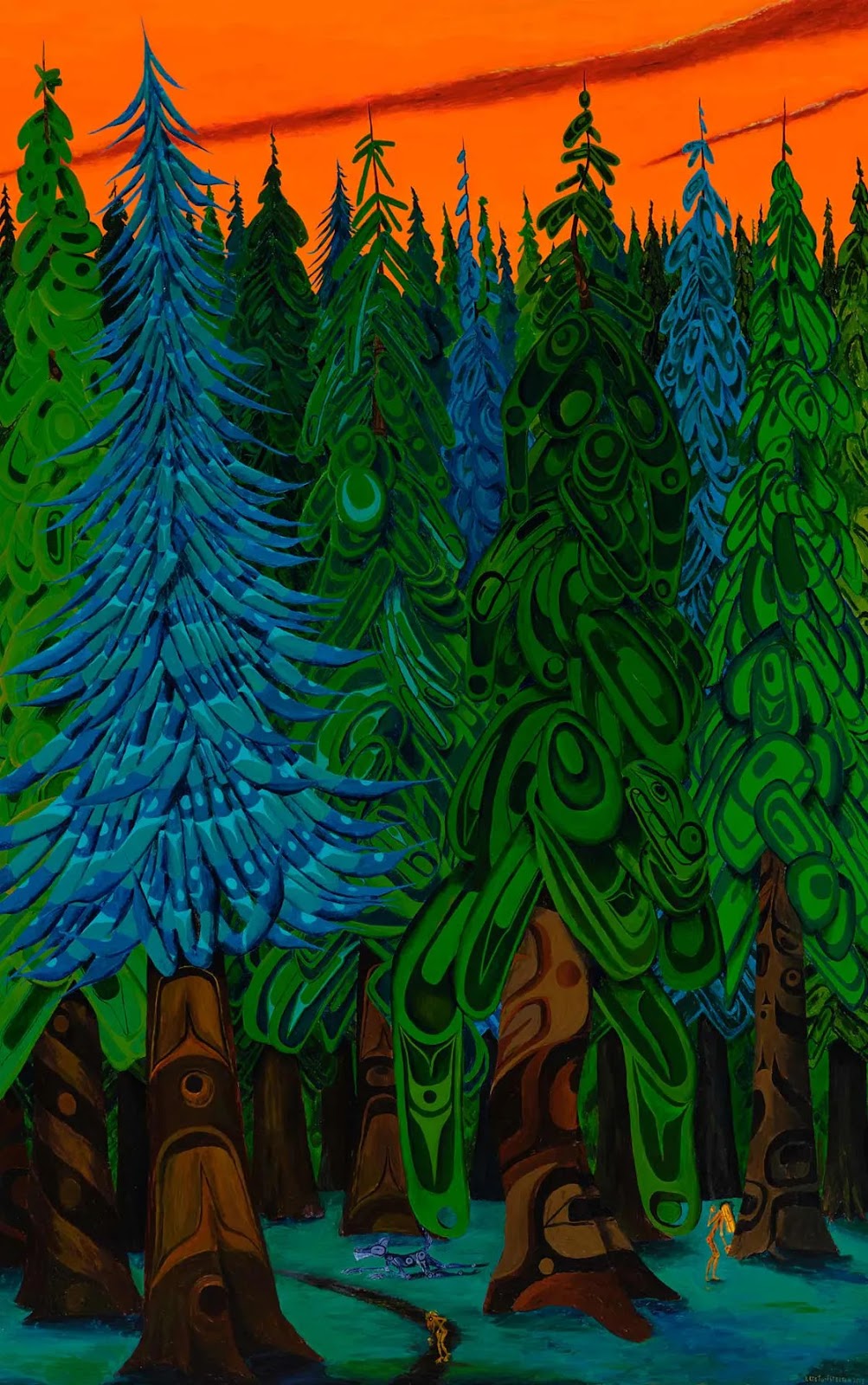
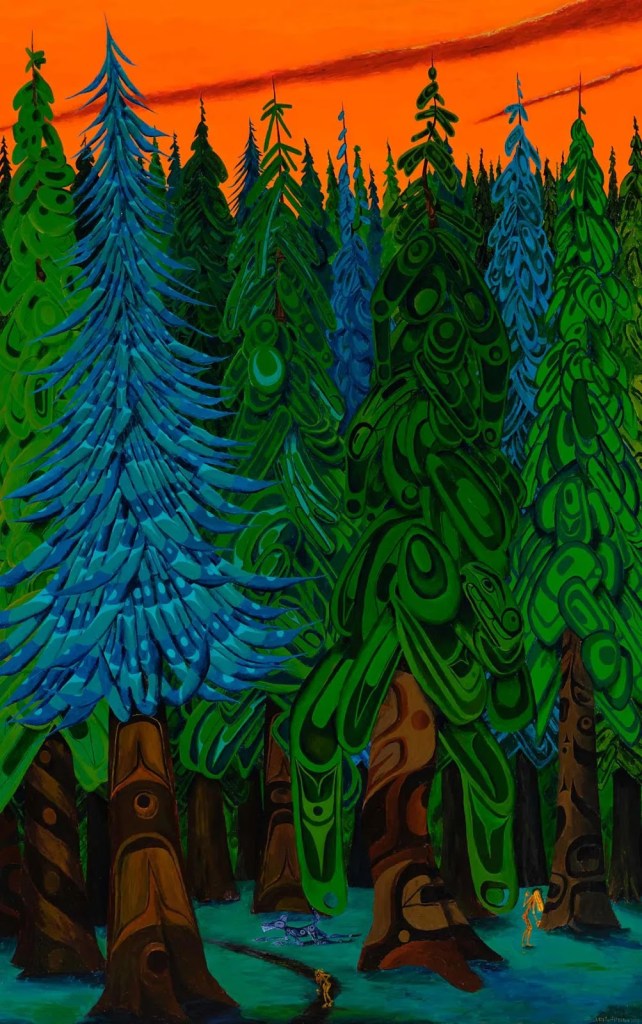
Photo Via MMFA, Natives Playing on the Land by Lets’lo:seltun
The Montreal Museum of Fine Arts’ recent exhibition titled Two by Two Together (after Pierre Lapointe’s song “Deux par deux rassemblés”) selects art that juxtaposes each other’s mediums. An artistic dialogue is created between two works as their forms of media, time period, design, or ideas are somewhere rooted in similarity. The exhibition will run until October 5th, 2025.
The exhibit begins with Fairy Rings (Mushrooms) by Kiki Smith on its own as it stimulates a perspective of birth, death, and regeneration through its circular interpretation. Mushrooms tend to grow in circled patterns, and are named “fairy rings” in myths and folklore. Smith’s piece sets a precedent for the exhibition that converges through life and death; relating to the idea of the circle of life.
The next piece, Natives Playing on the Land by Lets’lo:seltun/Lawrence Paul Yuxweluptun (2015, oil on canvas) is composed of bright oranges and dark greens. The humans depicted in the painting are very small compared to the overwhelming nature surrounding them; reminiscent of the idea of our perpetual destruction of the environment colonized from Indigenous land. The piece that accompanies this painting is a sculpture titled Nunatta Sapujjijingit/Protectors of our Land (2021, Bowhead whale bone, caribou antler, muskox horn, walrus tusk ivory, marble, stone, mother-of-pearl) by Manasie Akpaliapik, that draws on Inuit stories, myths, and the connection between nature, animals, and humans. Both pieces provide important insight on Indigenous stories while commenting on environmental issues through different forms of media.
As the exhibition continues, we are met with portraits by Stanley Février and Rembrandt in two completely different forms. Février’s what does it mean to be, now? (Plaster, 2020) is a social commentary. It is a self-portrait that does not resemble Février in any means. He comments on having to fit into the art world by shaping into stereotypes. He is unable to express his true self through art as the art world is quite elitist, making it difficult for artists to break through. Rembrandt’s The Great Jewish Bride (Etching, drop point, engraving, 1635) focuses similarly on a marginalized community through its etches, highlighting the divergence of Jews in the seventeenth century. These portraits signify equally marginalization and isolationism from personal or heard experiences.
There are many incredible pieces that appear in this exhibit that showcase different eras and draw similarities between their themes; the observation of social, political, and environmental ideas.The exhibit highlights diverse voices that are overlooked elsewhere, making the exhibition an important showcase of diversity and inclusion in the arts, while also being incredibly thought-provoking.
 The Plant
Leave a comment