

Ciaran Williams
Science and Environment Editor
“My grandfather is filled with lead, my dad is filled with asbestos, and I’m filled with microplastics,” reads an Instagram meme I saw on my feed last week. This message communicates a growing concern I’ve seen about the possible effects of microplastics on human health. Bottled water, cutting boards, food packaging: It feels like microplastics are unavoidable. Many people find that scary– are their fears justified?
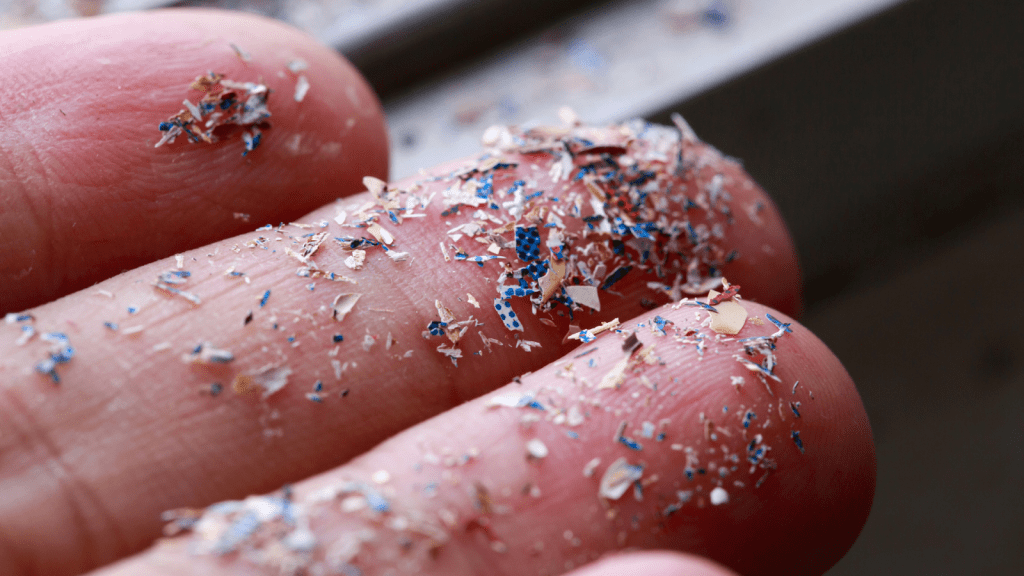
Before I answer that question, I want to explain what microplastics are. They are, as the name shockingly suggests, small pieces of plastic. Specifically, they are plastics between 5 millimeters and 1 micrometer in size. This size distinction separates them from smaller nanoplastics, and larger deposits of plastic waste.
There are two kinds of microplastics: primary and secondary. Primary microplastics are plastic particles that are already smaller than 5mm, like the plastic glitter found in some toothpastes. Secondary microplastics are plastic particles found after the breakdown of larger plastic products caused by weathering – think of the water in your Nestle bottle leaching plastic from its container after sitting for an extended period of time. Both types of microplastics present the same risk factor to human health and the environment.
Microplastics enter our bodies through ingestion or inhalation. Unmanaged plastic waste contaminates ecosystems from which we source food, and plastic wrappers and bottles shed microplastics into the food they contain. This way, they are inadvertently ingested, and enter our bodies. Seafood, some types of produce, and bottled drinks have some of the highest deposits of microplastics in them. Once they’re in your stomach, microplastics pass through the intestinal barrier into your bloodstream, where they work their way around your body through your circulatory system. Recent research suggests that microplastics can cross the blood-brain barrier, a lining of the blood vessels of the brain that’s intended to prevent unwanted toxins from the bloodstream from entering the brain, increasing the range of possible risks.
What impacts could they possibly have on your health? It’s important to note that the body of research on microplastics and their effects on human health is incredibly limited and recent, so we do not have a large enough body to have a strong scientific consensus as to what the exact medical effects are. Something that makes it even harder to create one cohesive narrative is that many of the studies that already exist employ vastly different methodologies to measure the effects of microplastics. For researchers, this makes information difficult to compile into systematic reviews, which are important to determine what the consistent health risks are across multiple studies. Due to how recent investigations into microplastics are, there are no studies on the long-term effects of exposure, highlighting another short-coming in scientific research.
Despite the shortcomings of existing research, we can try to learn from what little is out there. Every bit of research into microplastics has yielded either no tangible effect on health, or a negative effect on health as a result of exposure to microplastics. In terms of the range of health effects, microplastics seem to be correlated with about every negative health outcome you could think of: increased risk of cardiovascular disease due to microplastic build-up in arteries; oxidative stress on DNA that has been linked cancer; even endocrine disruption that has been associated with infertility. Harkening back to microplastics crossing the blood-brain barrier, research conducted by the University of New Mexico found that human brains can contain up to 7 grams of microplastics (a plastic spoon weighs only about 5 grams). Similar research has also found higher accumulations of microplastics in the brains of individuals with dementia. Due to the recency of this research, the relationship between plastic content and dementia is corollary and not definitively causal.
It is important to note that this research is still very new, so future findings might fundamentally change how we understand microplastics and human health. As it stands, however, microplastics are a cause of concern. Hopefully, future research will elucidate the risks with more precision, and tell what exactly can be done to either mitigate, or avoid microplastics entirely. As we did with asbestos and lead, it seems that we adopted plastic before we were aware of its potential negative health effects on humans.
 The Plant
Leave a comment