

Jacqueline Graif
Arts and Culture Correspondent

“Chemise de nuit” Via Smell the Contemporary Art

“Hot Crown” via Barbara Gross Galerie

“Vanitas: Flesh Dress for an Albino Anorectic” via Walker Art Center

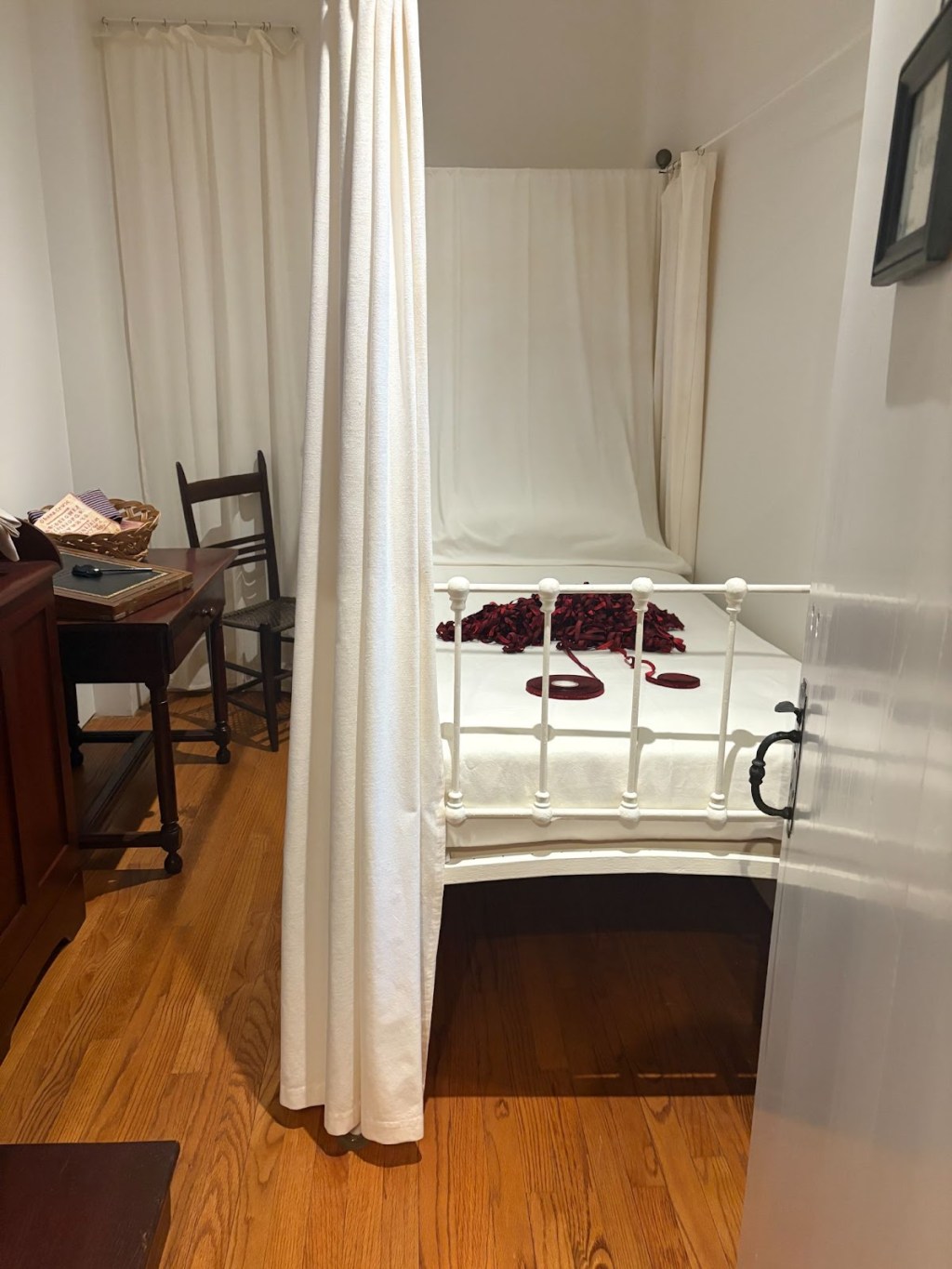
“I made it” via Jacqueline Graif
As you walk up to Musée des Hospitalières de l’Hôtel-Dieu, the expectations are high. A large, beautiful, old building with so much to offer, and a tiny museum nudged tightly on the left of the building. The small building holds a two-floor museum that explores the intriguing historical aspects of the old establishment, such as how it became the first Francophone research centre in Canada. However, once you make your way to the Jana Sterbak exhibition floor, you soon realize that this will hold a small but mighty exhibit that can be visited until August 24th.
This is the first time that the museum has managed to incorporate contemporary art into their work, and how they do so is magnificent. Not only does Sterbak’s work have a whole half-floor, but some of her findings and artwork is incorporated into the permanent collection throughout the entire museum.
Jana Sterbak’s Corpus insolite explores the true complexities of the human body, as she attempts to re-work strange and hospital-like findings through contemporary art. The exhibition begins with her work “Chemise de nuit,” which is a nightgown covered in subtle chest hair. It poses the question of who is meant to be wearing this, as it is viewed by society as mainly a female garment, but it is covered by male chest-hair.
As one moves through the exhibit, they are faced with strands of hair, blood, and various religious reliquaries, all of which are homages to religious institutionalization and the structural standards they implement. Since l’Hôtel-Dieu is historically incredibly religious, the collection seems fitting. The reliquaries right next to strands of real human hair makes one ponder on religious faith, and evokes the idea that these reliquaries could be attached to a living person, sustaining their faith as it mixes into their daily life.
An interactive piece stands called “Hot Crown,” where once the motion sensor is activated, a large, brass technical object makes lots of noise, in an attempt to resemble the real roots of a crown, and how it is made. The piece almost resembles a Christmas tree, as an unfinished brass crown sits at the very top, almost poetically. “Hot Crown” is meant to let museum-goers feel a part of the exhibition, as they admire the dematerialized crown that is meant to represent a Holy figure, and remains recurring in Sterbak’s other works.
Lady Gaga’s iconic Meat Dress is widely known in pop-culture, and originated from Jana Sterbak’s “Vanitas: Flesh Dress for an Albino Anorectic.” The dress is meant to represent the human body, as she attempts to contrast vanity and bodily composition. The piece was originally made with 50 steaks and hung on a hanger, but has since been re-made to last much longer. Sterbak tries to focus on the transience of human life by using the term “vanitas” that does such a thing in European art. This piece is incorporated into the general collection of the museum, surrounded by religious and historical artifacts, letting visitors think truly about the human condition, and how religion affects its point of view.
The artist’s work “I made it” is a bundle of red ribbon placed on a bed in a replica of a room from the original monastery. Placed right near a Bible, on a proper canopy bed, the ribbon with the words “I made it” sticks out. The term “I made it” could have multiple meanings, such as; she made it as an artist, she created the work, or she arrived on time. The exhibit is set right back into the monastery’s original history, allowing the visitors to wonder what it was like for the nurses and nuns who were in the original building.
Sterbak’s exhibit is a combination of the disturbing and the wonderful, and is thought-provoking. It is a must-see exhibit for anyone interested in religious shame, contemporary art, and the bodily process.
 The Plant
Leave a comment