
Via IMDB
Minola Grent
Managing Editor
The TV is on in the living room, children and parents alike gather on the couch. Since 1956, Eurovision has gathered an entire continent at once in front of one program. A complicated sense of competition and camaraderie is the very basis of this massively successful contest. Every year, the Eurovision contest brings one musical artist per participating country, with a maximum of 44 countries participating at once, and a maximum of 26 advancing to the Final (Eurovision). Despite the name of the contest indicating that only European countries can participate, other regions, such as Israel and Australia, can join despite falling outside of Europe and not being a part of the European Union (EU). This is because the only eligibility requirement is that the country be covered by the European Broadcasting Area, which extends beyond European soil.
In its 69 years of existence, Eurovision has helped jumpstart the career of numerous solo artists, some of whom even became popular worldwide, with few knowing their origins. For example, in 2019, Duncan Laurence won the contest representing the Netherlands. His song Arcade shot to popularity, particularly on social media apps like Tik Tok. Similarly, Alexander Rybak’s song Fairytale won Norway the Eurovision title in 2009 and is still beloved to this day.
Groups also got a career from this competition. ABBA is a great example, as they won the contest’s 1974 edition with their now universally beloved song Waterloo. More recently, none other than the Italian group Måneskin became a worldwide phenomenon after their win in 2021 with their song Zitti e buoni.
Despite the obvious success Eurovision has been at the root of, many scandals have shaken the competition, often questioning the integrity and political implications of the contest. In 2022, after the Russian invasion of Ukraine, the European Broadcast Union (EBU) which organizes the contest each year, took the decision to sanction Russia by banning it from competing that year, says a 2022 BBC article. The EBU faced pressure from other events originally scheduled to take place in Russia, such as the F1 Grand Prix and the Champions League final, which were either relocated or cancelled (BBC). The pressure also came from other countries like Finland, threatening that “if Russia took part, it would not send a representative to the contest in Turin in May” (BBC).
Ukraine went on to win the 2022 title with mixed reactions. Regardless of how much EBU attempts to preach the contest’s apoliticality, Eurovision has always reflected the current issues in Europe, says an NBC article, “It’s a proxy outlet for the international politics bubbling beneath its slick Euro pop surface […]” (NBC). Though the juries’ votes mostly went to less problematic songs, the people spoke louder and awarded Ukraine the second highest number of points in history (NBC).
Last year’s edition of Eurovision has also seen its fair share of controversy because of Israel’s participation and the disqualification of fan-favourite contestant, Joost Klein. Because of Russia’s exclusion two years prior, many expected the same treatment to be extended to Israel. Israeli contestant Eden Golan was allowed to compete despite protests raised in response to her inclusion, says Vanity Fair. Furthermore, her song “Hurricane” was originally titled “October 7”, in reference to the attack on Israel that took place on that date, before Eurovision organizers demanded a name change (Vanity Fair).
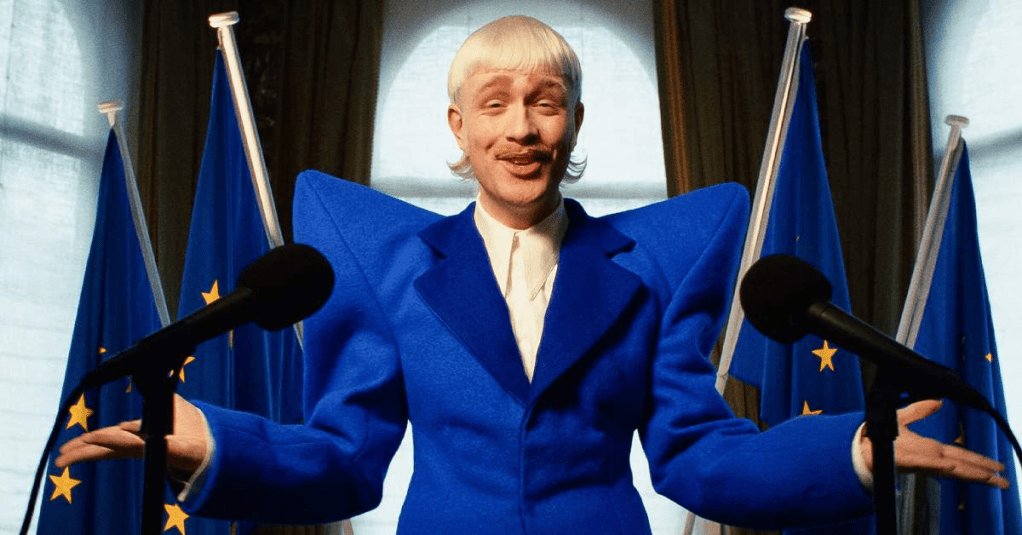
Joost Klein, Netherlands’ representative, was widely expected to win the 2024 Eurovision Song Contest with his song “Europapa”, which aimed to unite the continent and pay homage to his deceased parents. Yet, mere hours before the finale, he was unexpectedly disqualified for allegedly threatening a camerawoman off-stage (AP News). It was later explained that Klein had been followed by the camera behind stage despite explicitly saying he did not wish to be filmed in that space (Barron’s).
The winner title was then awarded to Swiss singer, Nemo, for their song “The Code”, discussing their non-binary identity. They received hate and backlash online from fans who would have preferred to see Klein take the win.
Following this controversy, the Netherlands’ participation in the 2025 edition was up in the air. However, the EBU put in place measures to protect artists “including the appointment of a ‘safety manager in the artist environment’ and ‘seriously reducing the amount of filming behind the scenes’’’ (Barron’s). Joost Klein was given the opportunity to compete again, but he declined.
Today, Europeans all over the world are waiting with bated breath to see which of the 37 participants will take the crown in next year’s 70th edition of the contest. Echoing Joost Klein’s words during his semi-final performance — “I don’t care who you are. I don’t care where you come from. All we got is this moment, so let’s come together” (Eurovision Song Contest) — tune in on May 12th, 14th, and 16th at 9 PM CEST from anywhere in the world to find out!
Its successes and scandals alike make Eurovision what it is: a pillar in European culture.
 The Plant
Leave a comment