

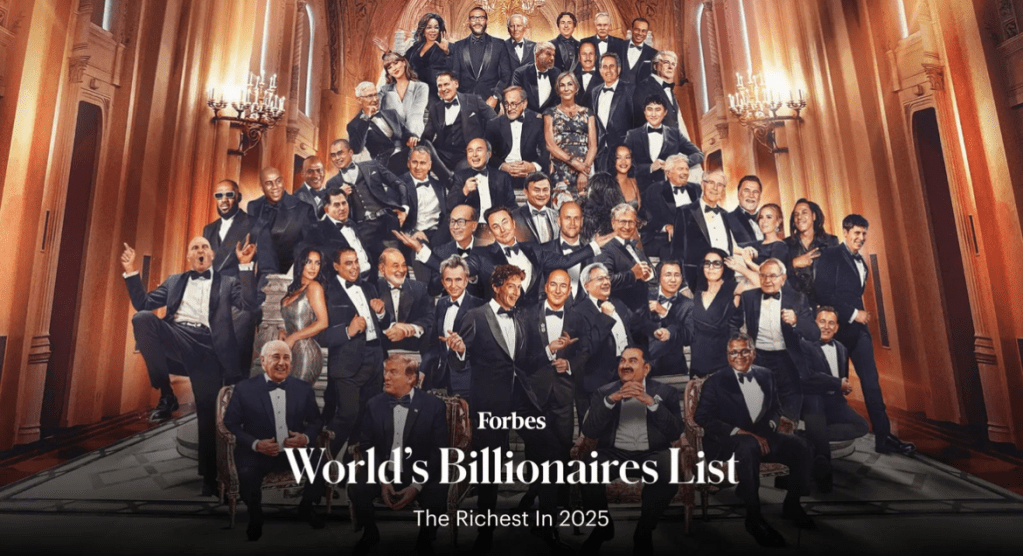
Via Forbes
Nicole F. Motta
Staff Writer
The finance bro—catch him with slicked-back hair and his Patagonia vest, preaching on podcasts, mumbling something or other about the stock market, or agglomerating in what seems to be their natural habitat: Montreal’s “Le Cathcart” bar, where one too many victims have gone to grab a bite at the glass-ceilinged food court situated under the Place Ville Marie complex and found themselves in an overwhelming sea of corporate talk. There’s something a little eerie (and genuinely impressive) about his 80-hour work weeks and his ability to curate his own emotional avoidance through mantras and alpha-male rhetoric.
He’s a cultural relic, and an inspiration. Many young hopefuls look up to his advice, equally as passionate about finance.
Now, date or be friends with the “finance bro” at your own risk; I’m not going to stop you. I’m not saying every finance professional fits this archetype either. However, his significance lies in the greater symbol he’s become:
“how the game of wealth has grown into a cultural obsession. For the worse.”
The game is quite simple: how can one make the most money possible?
Except, it’s not really about money is it? Finance bros talk of recognition, respect and influence—to rub elbows with the greats and have their names sparkling in gold upon people’s mouths. It seems the sport of finance can only be won when power, the kind usually only attainable through democratic elections, is the prize. These winners tend to appear on a certain list. In fact, you might know it: Forbes Real Time Billionaire List.
It is quite the accomplishment. Say you make a good name for yourself, a great one in fact, and your company, investments, or partnerships generate enough money for your name to appear on this list. According to Forbes’ April 2025 stats, you will have now become one of the 3028 billionaires to own around ⅙ of the world’s total wealth, with the rest of us (the other 8 billion), making up the rest; but the successful businessman doesn’t stop there. Maybe, one day, hiking your way up the list, you’ll have really done it and joined the “finance kings” of the world. With all that wealth, you could join Elon Musk in controlling Starlink—deciding whether Ukrainian soldiers can communicate on the battlefield or not. Or Jeff Bezos, who owns The Washington Post and can shape public narrative. Maybe even Mark Zuckerberg, the founder of Meta, which has the power to influence global elections. I don’t know about you, but to me, “Kings” doesn’t sound much like a euphemism anymore. Wealth is an insidious power mechanism, and I don’t think we have fully grasped the implications of cultivating an obsession for its pursuit.
It’s nothing new to critique the rich for the unethical means by which they attain their wealth—low worker wages, child exploitation, and long work hours: an unfortunate but common ordeal. However, the danger goes much further than that. The West lives in a democracy (or so we say). Power should belong to the people, but if money is power, that principle is undermined simply through the passive act of someone being in possession of so much wealth.
In fact, democratic wealth is an oxymoron. Let’s say, exploring Dellara Gorijan’s example (a UCLA graduate lawyer providing legal advice on TikTok), you—an up-and-coming figure in the world of finance, possibly soon to be a billionaire—are considered a morally “good” person. You have extraordinarily attained your wealth through ethical means and plan on donating to charity or towards ending poverty. While technically acts of moral good, they are also acts of great consequence, which alter the course of humanity as we know it. Regardless of intentions, this power ultimately resides in the hands of a single person: you, an unelected figure, who cannot possibly represent the votes of millions of people. To keep democracy functioning, any decision regarding the displacement of wealth must necessarily be voted on.
We are quick to glamorize hustle culture, but it is time to take a collective step back and see the game of wealth as the political threat that it is.We must be cautious about teaching the next generation to idolize a ladder that bypasses the principles of government by the people—principles the West (or at least Canada…) so loves to pride itself on. We have to start thinking to ourselves, who elected the billionaires?
 The Plant
Leave a comment