

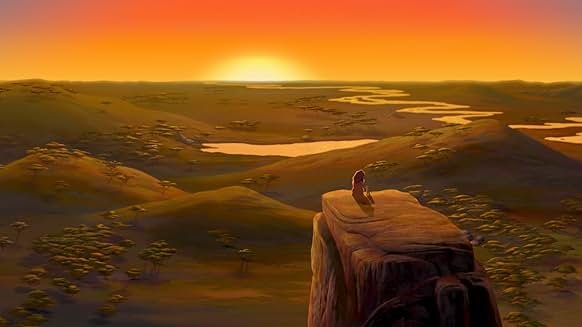
The Lion King (1994) via IMDb
Nadira Zibirov
Copy Editor
My five-year-old cousin can’t sit through a 20-minute cartoon episode without switching to YouTube shorts. And he’s not the only one. Many kids today scroll through clips that last a few seconds only, whereas before, they could sit through an hour-long cartoon. Now, I also find myself getting distracted and scrolling through fast-paced content, which is also the case for many teenagers and adults. Living in a world where time seems to be escaping us, our attention spans are struggling to keep up. We continuously seek instant gratification, which impacts not only how we consume media but also how we reshape animation, especially with the decline of 2D animation.
2D animation made its first appearance in the animated film Pauvre Pierrot (1892). Later, it was Walt Disney who made the first-ever 2D animated short film with sound and colour: Steamboat Willie (1928), marking the debut of Mickey Mouse. Over the past decades, Disney’s hand-drawn classics that took years to create have become worldwide staples of childhood movies. Through various eras, such as the Golden Age with Snow White and the Seven Dwarfs (1937) and Bambi (1942); and Disney Renaissance with Beauty and the Beast (1991) and The Lion King (1994), Disney shared its magic with the world.
Then came the first full-length 3D animated movie: Pixar’s Toy Story (1995), which marked the shift from hand-drawn to computer-generated imagery (CGI). This transition brought a new level of depth, movement, and visual dynamism. With reusable models, it also allowed for faster production. By 2011, Winnie the Pooh became Disney’s last 2D project, making 3D the new industry standard.
The change wasn’t just technological but also reflective of our present society. Today, we forget to live in the moment, always thinking about what awaits us in the future. People nowadays seek gratification through novelty, whether it be through fast fashion or our consumption of fast-paced content—the latter reducing our attention spans by 25%. According to Microsoft Study, humans’ attention span has dropped from 12 seconds in 2000 to 8.25 seconds today. We crave constant stimulation and quick rewards, a habit shaped by platforms like TikTok and Instagram Reels. 3D animated content feeds into this mindset: it’s visually stimulating, fast-moving, and produces quicker results, instantly gratifying its audience.
Still, 2D animation feels alive. Its charm comes from the artist’s hand, which adds soul to every frame.
“While 3D captures realism and depth, 2D evokes warmth and intimacy”
Essentially, it reminds us of childhood, bringing us closer to these cherished memories. Its slower pacing also contributes to less frequent angle changes, which is better for children’s development compared to the constant, fast-paced visual style of modern 3D animation. This slower rhythm invites the audience to reflect and connect—something we are nowadays losing, both in animation and in everyday life.
That’s not to say 3D animation lacks talent or effort. However, as industries increasingly use it as a shortcut for efficiency, it has gradually become more uniform and less emotionally “warm”. Early 3D animated films like How to Train your Dragon (2010) and Big Hero 6 (2014) took years of work and creativity; their high-quality animation and storytelling earned them worldwide success. Today, however, with studios preferring faster and cheaper production, recent Disney and Pixar releases have been criticized for their lower quality. Their art styles are often described as too generic, particularly due to the “Pixar bean-mouth style,” a simplified, cartoony character design with bean-shaped mouths that is seen as a sign of laziness and a lack of visual complexity. While 2D animation has also faced similar criticism, it is less pronounced thanks to the unique human touch that 2D possesses. It begs the question: are we really appreciating art—the patience, effort, and dedication that goes into animation? Can industries find a balance between both without one overruling the other? Unfortunately, right now, industries are prioritizing marketability at the expense of artistry.
Some companies, however, have resisted the shift, notably Studio Ghibli. Founded in 1985, Ghibli continues to use hand-drawn animation as it perfectly reflects the nature of its films. According to producer Toshio Suzuki, just one minute of animation takes Miyazaki and his team a month to complete. Yet, Hayao Miyazaki remains dedicated to hand-drawing, stating: “I believe the tool of an animator is the pencil.” From older films like My Neighbor Totoro (1988) and Spirited Away (2001) to the most recent one, The Boy and the Heron (2023), the studio’s works have captivated audiences with their visual richness and emotional depth. Studio Ghibli films remind us that 2D animation remains one of the oldest and most influential art forms, even in a time of fast production.
Yet, even as technology keeps evolving, nostalgia seems to be making a comeback. From vintage fashion to vinyl records, our generation is rediscovering what the past has to offer. The animation world seems to be following suit. Industries have begun experimenting with hybrid animation, which incorporates 2D and 3D simultaneously. Both Spider-Man: Into the Spider-Verse (2018), which blends CGI with comic book art, and Puss in the Boots: The Last Wish (2022) gained popularity for their hybrid approach. This technique offers an innovative blend of 2D’s charm with 3D’s visual energy.
In the end, animation is the art of storytelling—and art can only be truly appreciated when one understands the value of patience and effort. In our time of constant movement, perhaps slowing down might be the answer—in animation and in life.
 The Plant
Leave a comment