

Via Wikipedia
Romane Randria
Digital Staff
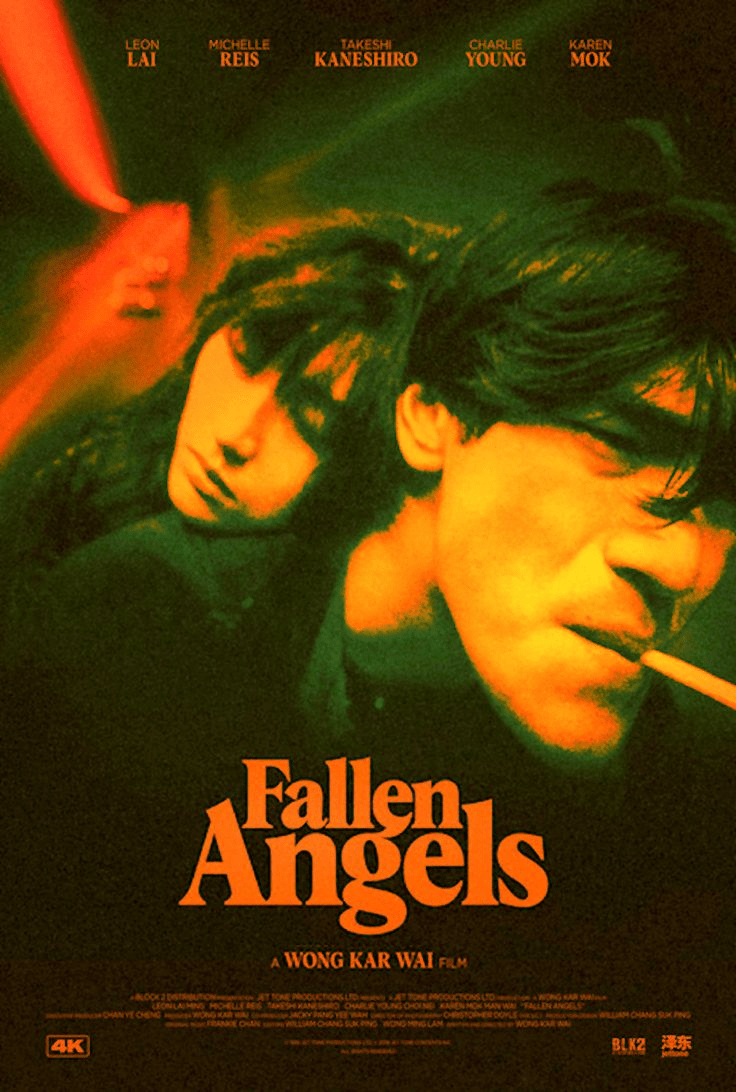
Wong Kar-Wai’s 1995 Fallen Angelsz is one hell of a movie ride. Unique visuals, odd camera work, non-linear story-telling, those aren’t never-seen-before elements in the world of cinema, but no film does it quite like Fallen Angels.
The movie, an interesting mix of comedy, crime, drama, and elements of the noir genre, recounts the story of multiple characters, all evolving separately, but connected by brief or relatively meaningless encounters. It exudes a very distinct and memorable feeling of solitude, something it achieves not by isolating its characters in the middle of nowhere, but by suffocating them in the faceless crowds of post 1990s Hong Kong, a time and place where the city, barely emerging from the 1997 handover, was marked by a “lack of identity” and was “not so much a place as a space of transit” (according to Ackbar Abbas in his work Hong Kong: Culture and the Politics of Disappearance). There’s something distinctly nihilistic about the way the movie depicts its different characters and the way they interact, with life and with each other.
For example, the hitman and his unnamed partner. Though they work together, there is an emotional chasm between them. She yearns for connection, but that yearning is depicted in that way that makes it obsessive. She skims through the hitman’s trash, she masturbates in his sheets… Their relationship lacks substance and reciprocity, their relationship is, ultimately, quite empty.
The hitman as a character lacks purpose, he is aimless in his own lifes. His murders are stripped from the gravity of the act, his assassinations are as any other action that he does; pointless, and an act of empty routine. In Fallen Angels the characters are not represented through the lens of morality or immorality, but amorality. The mute character Ho Chi-mo, who breaks into shops to “pretend” he’s running a business, does not rob or destroy; his actions are absurd and comical, and the short montage that presents this aspect of the character makes them feel ritualistic. In a typical movie, characters and their relationships would evolve, progress, not in Fallen Angels. We observe them happening, we observe the characters existing in a way that leads to no satisfactory conclusion or climax.
Historically, Wong Kar-wai’s movie captures the existential weight of a generation confronting the void, and emotionally, it’s something that echoes what many of us might’ve felt at some point in our lives. “Do you feel alone, even surrounded by people” it asks you, and, chances are, the answer is yes.

 The Plant
Leave a comment