

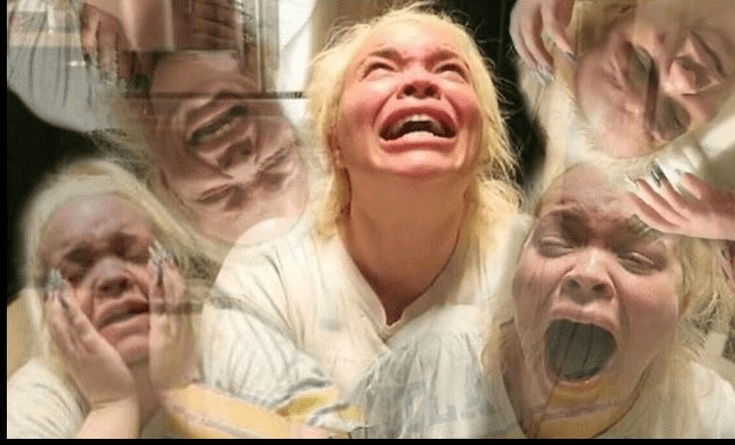
Via Pinterest
Orion Peyrol
Staff Writer
Gen Z loves to make up words, especially to describe dating, but none mean as little or as much as “situationship” does. It’s used to describe any romantic adjacent relationship that is undefined or unclear. So, it can pretty much mean anything that’s more than friends but not quite dating. The ambiguity in the word’s definition makes it incredibly hard to describe to anyone not already familiar with the term. I mean, have you ever tried to explain a situationship to your parents? They’re not surrounded by the word or the experiences with modern dating it encompasses. They haven’t seen the countless memes and videos of people crashing out over their situationships. If you do try to explain situationships to people who are no longer in their young adulthood, many of them will ask the same question: why would we put ourselves through this?
We’ve just drunk the Kool-Aid, we’ve bought into this idea that this dynamic is normal and the only way to date people in the 21st century. Who is selling that idea to us? The usual perpetrator, our phones! In the last decade the internet has become the arbiter of social conventions. Whatever becomes adopted by the majority online is reflected onto our daily lives. “Situationship” as a word was coined in the 2010s, but only once it took off on TikTok has it become embraced by the mainstream. Every day we see countless videos about situationships, talking stages, dating mishaps, and girls crying prettily with smudged mascara about some guy that ghosted them. These videos enforce a new norm for dating in our generation and create a slew of new words to describe it.
Words and the language we use directly influence our way of thinking and understanding situations. There’s an idea called the “Sapir-Whorf Hypothesis” proposed by Benjamin Lee Whorf, an American linguist from the late 19th century, that supposes that language directly affects our ability to think or understand a subject. For example, in a theoretical world in which a language does not have a word for the concept of love, the experience of love still exists but the capacity to talk about and intellectualize that concept is rendered much more difficult. We have created an entire new dictionary to describe our experiences and lessen this effect, but this comes with its own pitfalls.
This new vocabulary we’ve created exacerbates the problem with situationships. The main issue in this relationship dynamic is the power imbalance and words and expressions like “ghosting,” “lovebombing,” “guilttripping,” “being a red flag,” etc. are used constantly (and often stripped from their original context in psychology; not everyone is a narcissist I promise) that we’ve come to see it as a normal and well adjusted way to talk about a budding romance. These new words always have the connotation of there being a victim and a perpetrator. Furthermore, using that vocabulary constantly subtly makes us believe that that power dynamic is true of all situationships. We now go into a new romantic entanglement being hyper-vigilant of any sign of a red flag or an ick. The thing is, if you’re looking for it, you’re going to find it. I’m not saying that there are no red flags but confirmation bias is very strong; if you go into a situation expecting them to suck and gaslight you, you’re eventually going to be proven right. Furthermore, if you magnetize this phenomena onto an entire generation who is then sharing those experiences with each other on a mass scale online, you get an entire generation of people who struggle to believe in love.
This imbalance that our new language speaks to can be traced back to the popularisation of dating apps. They’ve brought the normalization of hookup culture, for better or for worse, and with it the fear of only being wanted for one night stands. Many people enjoy one night stands but some are just afraid to ask for more. For the majority of Western society, monogamy was a very strongly enforced social norm. However, this has shifted since then, in part because of dating apps. On these apps it’s presumed that you’re talking to or sleeping with multiple people at once. Monogamy is no longer assumed, it’s now something you have to ask for.
Having to ask for exclusivity creates a stronger fear of rejection. We have a fear of the other person only wanting one thing from us, of the unsaid part of non-committed relationships: that if you ask for something more, you will get nothing at all. What was once a norm is now considered a big commitment. For some, this change in norm is very welcome. It allows for casual sex and relationships to be seen less negatively, and lets people explore more freely before settling down or never settling down at all. But for others, it leaves them always craving, at the mercy of the three dots of an incoming message.
This shift in convention is representative of a shift in our society. We no longer have a set timeline for relationships or life. Of course there are still certain expectations we hold about what life should look like, but, in general, our paths and decisions are much more in our control. It used to be that if you weren’t married and on the way to having your first child in your twenties, you were doing something wrong, but, today, the same age range can be experiencing entirely different life stages. We now have to navigate relationships knowing that we aren’t all on the same page. This is where a lot of the complications in modern dating come in: you have some people who are ready to settle down and be committed, and others who are in that exploratory phase.
Then there’s the elephant in the room: the role that gender plays in situationships. There is a trend that I’ve noticed in which the people who seem to be lamenting the most online about situationships are women. Women seem to be disproportionately the ones hurt by the emotional rollercoaster. They often find themselves chasing after men, trying to get them to commit, and getting ghosted. This is because of the difference in the way we are socialized: women are told their value is in their capacity to keep a man happy, and men are told theirs are from their conquests and emotional repression. When you add to that the difficulties of dating apps and a lack of communication of wants, someone ends up hurt and it’s usually the woman.
Social media and online communication has been an added strain on modern dating. We have a never seen before access to almost anyone, at any time, which makes us feel that our Hinge date taking a few hours to respond is a lack of interest. We have so many walls up because we expect to get hurt. We jump from prospect to prospect because there are so many more fish than we’ve ever had access to. If you ask me, the sea has gotten too big. Social media has also created a culture of constantly waiting for somebody to reach out to us because there is no barrier to starting a conversation, so why aren’t they? And so, we spend all of our time staring at that new photo of theirs wondering why they aren’t reaching out.
“The contemporary crush is all about having a person to stalk more than a person to talk to. “
Trying to analyse phenomena like situationships is incredibly difficult because it’s an ever shifting kaleidoscope of norms, trends, and socialization with infinite influences and effects. Things will continue to evolve and along with it our approach to love and relationships. There are so many ways the 21st century, with all its quirks and faults, can and will affect us that I’m profoundly curious about the future of the situationship, and you should be too.
Via Sex and The City
 The Plant
Leave a comment