

Via The Safety Magazine
Nicole Motta
Staff Writer
“If you kick every Latino out of this country, then who is going to be cleaning your toilets, Donald Trump?”
This line, said by Kelly Osborne in 2015 during a live episode of The View in an attempt to call out Donald Trump for his offensive remarks about Latinos, will undoubtedly be going down in history as one of the most disastrously phrased political critiques to ever see the big screen. The countless memes circulating the internet for over 10 years made sure to never let her forget that.
One of her co-hosts, Nicole Wallace, manages to catch onto a somewhat discernable point tangled within Osbourne’s tone deafness and awkwardness, suggesting, “I think what you’re saying is that Trump himself probably relies on a lot of these people that he’s insulting.”
Now this remark rings much truer. In fact, the idea of socially demonizing migrants while simultaneously depending on their contributions to society, such as labour and economic output, is a growing issue in the past decade. As Quebecers, we are witnesses to it within our very own provincial government.
The CAQ, since taking power in 2018, has led the contemporary Québécois “culture preservation” agenda, pushed with the overarching critique that foreigners threaten Quebec’s identity – defined particularly around the French language and a set of Western values such as secularism. The party has been consistently vocal about these beliefs in the media; you might recall the 2022 Jean Boulet incident, where Quebec’s immigration minister falsely claimed that 80% of immigrants who go to Montreal don’t work, don’t speak French, and don’t adhere to Quebec society’s values. That same year, Premier Legault warned that bringing in more immigrants would be “suicidaire.”
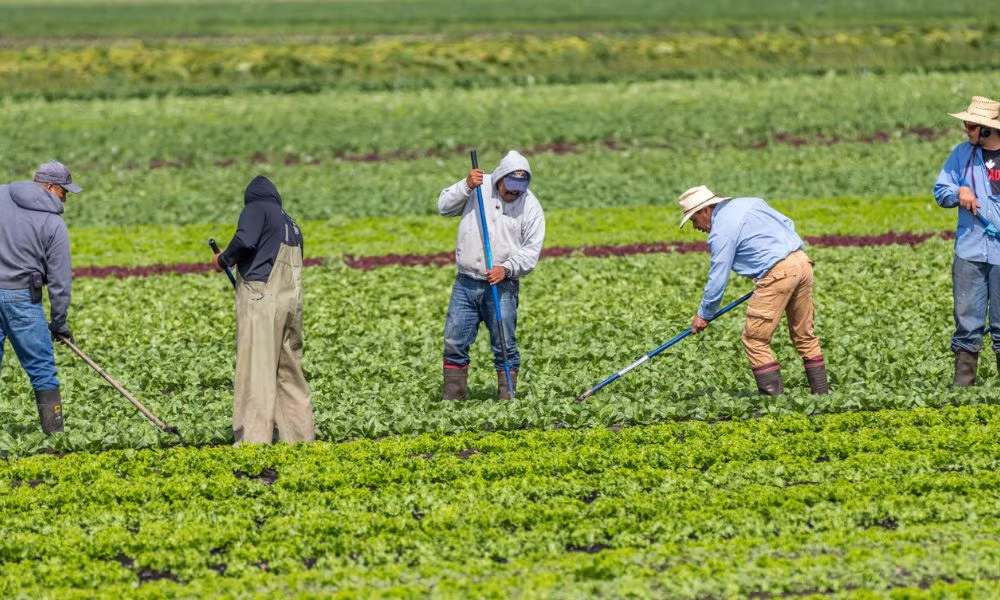
Among those most directly affected by the government’s demonization are the province’s temporary foreign workers (TFWs), which, curiously, have been increasingly welcomed over the years under CAQ’s government, increasing from 7,180 in 2017 to 59,000 by June 2023, according to United Steelworkers. The TFW program concentrates itself in agricultural and manufacturing work, where workers’ closed-permits tie them to a single employer and an inflexible role, confining them in inhuman work conditions. They are often victims of low pay, abusive employers, extremely long hours, and prolonged separation from their families. These workers are even required to contribute to the Quebec tax base, while ineligible for most public benefits.
It’s no accident their numbers have increased so drastically; these workers are indispensable to the Quebec economy. According to the Canadian Agricultural Resource Council, over 21 500 foreign temporary workers were employed in Quebec’s agricultural sector in 2022, making up around 22% of the entire sector workforce. This is even more significant due to the labour shortage in this sector, where 7800 positions went unfilled at peak season in 2022.
TFWs are to thank for filling gaps in essential sectors relying on low-skill labor. However, occupying these jobs traps them in a striking systemic disadvantage.
Most temporary foreign workers dream of settling permanently in Quebec.
”But it seems temporary migrant workers are only welcome as long as they stay in the opressive roles designed for them.”
Programs like Programme de l’expérience québécoise(PEQ), previously one of Quebec‘s main routes to permanent residency, only allowed workers in the highly skilled TEER (training, education, experience, and responsibilities) job categories 0-3 to apply. Levels 0-3 include jobs that require higher education degrees or specialized training. This excludes levels four and five, short term training jobs or manual labor respectively, which make up most of temporary migrant labour in Quebec.
The PEQ is set to end as of this November and will be replaced by the reformed Skilled Worker Selection program (PSTQ). Technically, this new points-based system allows level four and five workers to apply, but they’re faced with hopeless barriers within the program. Applicants are assessed through a 1400-point grid that prioritizes three main categories: human capital, response to Quebec’s needs, and adaptation factors. Clearly, TFWs are responding tremendously to the province’s needs, yet point accumulation heavily favours younger, highly educated, and French proficient applicants, with 200 points dedicated to proficiency across the four language skills. Beyond that, an intermediate oral level is required to apply, which can take anywhere from 600 to 650 hours of practice to reach, according to French Language Solutions. The multiple flaws within the Quebec Francisation system itself, designed to support the “integration” the government so desperately demands, hinders language progress for workers. They deal with enrollment limits, months-long waitlists, work schedule conflicts, and poor teaching quality.
TFW contracts bind them not only to difficult living and working conditions, but to a system that offers the illusion of opportunity towards permanent status while fundamentally barring any real possibility. The question, then, is whether they are indeed stuck in this situation or deliberately placed there?
The CAQ presents an interesting dichotomy. We are told that migrants are a threat, yet, clearly, they acknowledge their labour is essential for our province’s needs. Cocooning a certain cultural identity appears to be conveniently keeping an indispensable workforce exactly where the government wants them: in their fisted hands.
 The Plant
Leave a comment