

Via Natural Cycles
Minola Grent
Managing Editor
Masturbation is the sexual stimulation of one’s genitals and other sensitive body parts, like the nipples, to achieve arousal and pleasure. It can be done with fingers, sex toys, videos, fantasies, or anything else that tickles your pickle. A common misconception is that women don’t masturbate. Surprise! They do. Research shows that women masturbate as frequently as men, but don’t discuss it as openly, says BBC. Another misconception is that a vulva and a vagina are the same thing. Surprise! They aren’t. Before diving into the juicy parts of female masturbation, an anatomy pit stop is necessary.
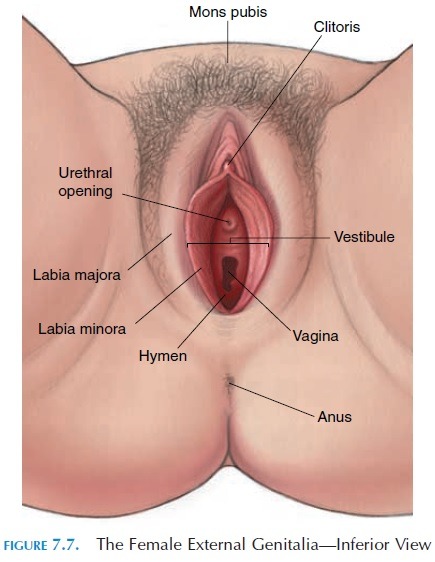
Let’s get the record straight. The vulva refers to the exterior part of the female genitalia. Furthest from the center are the mons pubis, a round piece of fatty piece sitting on the pubic bone, and the labia majora. They grow hair and protect the more sensitive areas. Then comes the labia minora, the shorter lips around the entry of the vagina. The labia minora can be of different sizes, shapes, and colours. Some are asymmetrical, smaller, bigger, pinker, browner, but they are all normal. Unlike men who have two, women actually have three holes: the anus, the vaginal opening, and the urethra, through which urine comes out. Right above the urethra sits an impossibly well hidden artefact: the clitoris. It’s the most sensitive part of the human body, even beating the penis due to the concentration of nerve endings. Lastly, the vagina is actually the internal canal that connects the vulva to the cervix. There is often a small membrane called the hymen covering this entrance. Its main purpose is to protect the vagina from infection during infancy and childhood. It’s often broken when women first have penetrative sex, but it can also happen from other activities like biking. In that case, it is not painful and simply erodes over time as it loses its necessity with age.
Via BrainKart
Historically, masturbation had a horrible reputation, particularly when it came to women engaging in it. Any type of sexual behaviour for women that happened outside of marriage was heavily frowned upon. However, female masturbation was a known phenomenon and was studied by physicians. Medical textbooks of the early modern England period, which is roughly between the 16th and 18th century, believed that, like men, women had their own “female seed” which would be released upon orgasm, explains The Conversation. It was believed that in order to maximize pregnancy chances, it was preferable for the woman to enjoy herself during intercourse. If, on the contrary, a woman’s pent up sexual frustration and “seed” had nowhere and no way of being released, it would make her ill and cause a disorder called the “madness of the womb.” It would later be renamed hysteria.
Therefore, women, and especially virgins, were seen as lustful creatures. In 1662, English physician Nicholas Culpeper was already aware that the hymen was not a proper proof of virginity. He explains that some virgins were so lustful they used their fingers or other objects and broke their hymen. While it is true that it can happen if masturbation is performed by inserting fingers or other objects, qualifying women as beings unable to control themselves is a typically misogynistic comment of the time.
In 1716, a piece of paper was distributed, causing a societal shift in the view of female masturbation. “Masturbation, [an anonymous pamphlet] claimed, was physically ruinous to either sex, causing infertility, genital discharge, consumptions, genital disfigurement, and even death,” says Women’s History Network. Female masturbation was viewed as “self-defloration” and “a meaningful threat to men’s sexual property.”
Similarly, Freud also thought of female sexuality as a threat. Most are familiar with his theory that women have “penis envy.” In the same vein, Laura Mulvey explains in her book Visual Pleasure and Narrative Cinema that Freud believed women were a threat to men because they represented what all men feared: castration. In response, men use voyeuristic and fetishistic urges as a defense mechanism against the threat of female sexuality. This includes masturbation and is, according to Mulvey, a likely explanation for the prevalence of female masturbatory content aimed at men in films and pornography alike. In porn, female masturbation is a fantasy that men get to enjoy rather than women as it holds little value in itself. “[I]t tends to serve as an appetiser to the main dish of penetrative sex,” says White Little Lies.
Mainstream media often portrays female pleasure as a mystical and hazy concept that is beyond the comprehension of women, and is solely understood by men. An example of this is in episode 3 of the first season of Bridgerton, “Art of the Swoon.” Daphne, the main character, is unaware of her own sexuality, given how sheltered girls of that time period are, until Simon, her love interest and a notorious playboy, swoops in to enlighten her. He tells her that she can touch herself between her legs when she is alone, and then explains to a shocked and confused Daphne what an orgasm is. Later in the episode, Daphne tries it for herself as seen in a pretty montage that showcases moments she spent with Simon, along with her gasps in her candlelit room.
Another example is Darren Anorofsky’s Black Swan in which Nina, a ballerina obsessed with perfecting her role as the white and black swan, is introduced to her sexuality by her company’s artistic director, Thomas. He invites her to touch herself to relax. When she is unable to do so because of her controlling mother, Thomas starts doing it for her during one of their private rehearsals and stops midway to teach her a lesson. After rubbing her between her legs, Thomas pushes her away and reminds her that, as the black swan, she is meant to seduce him and not the other way around. The expression of Nina’s sexuality is highly dependent on the people surrounding her, and particularly on Thomas who has a manipulative grip on her and her career.
Cosmopolitan explains that female masturbation is “misrepresented in mainstream films and TV shows as this sensual, erotic experience.” A study on the feminine gaze in cinema also says that “[t]he cinematic female sexual experience has historically been criticized for its use of one dimensional, purely aesthetic, and representational practices. Scholars have argued that this is largely due to the patriarchal ideological framework, and male gaze, that has long defined the Hollywood film industry.” Despite the two scenes described above being relevant in the plot of their respective narratives, it is undeniable that to an audience, and especially a male one, it seems more like an erotic and visually pleasing endeavour.
It is hard for women to identify with Daphne and Nina’s masturbation sequences. It is implied to be the first time they masturbate, yet they immediately know what they are doing and seem capable of reaching an orgasm. Both women are also in their early twenties, which is much later than the average first masturbation experience, which usually happens between the ages of 11 and 15. The lack of realistic progress and banality in female masturbation portrayed on screen alienates women from an experience that most should be able to relate to.
More accurate depictions of everyday female masturbation are present, for example, in Fleabag and Broad City. They each showcase a different part of masturbation that women experience in a relatable and down-to-earth way.
In Fleabag, the titular character starts masturbating to a video of Obama giving a speech. This speaks to the sometimes odd choices that can be used for masturbation. As she’s entertaining herself, her sleeping boyfriend is woken up and is distraught at the scene. Interestingly, in a study that touched on reasons for not masturbating, 2.5% of women surveyed expressed that they feared their partner’s negative reactions to knowing they masturbate.
While Fleabag shows how uncomplicated and straight forward female masturbation can be, Broad City, on the other hand, shows an example of using a ritual to get in the mood and begin arousing yourself before even touching anything. Whether it be always starting out in the same position or wearing a certain piece of clothing, a pre-masturbatory ritual can be both soothing and exciting.
Regardless of what history may have gotten some people to believe, masturbation is far from harmful. It does not cause vision loss, mental illness, or infertility as some may have made you believe. On the contrary, it can help reduce stress, improve sleep, and enhance your sex life. It’s a matter of learning to explore and discover your body and what it likes. The first step to make the mystical real is to bring it into the physical and to remove the barriers of shame and misrepresentation that keep masturbation a taboo topic. Go ahead and try it. Touch yourself tonight!
 The Plant
Leave a comment