

Via Hammersley Homes
Nadira Zibirov
Copy editor
You’ve probably skipped meals during exams to save time for studying. Yet no matter how much you study, you still feel stressed and foggy. Why does this happen? The answer might be on your plate. Our gut and brain are closely connected — so much so that scientists call the gut our “second brain.” Because of this, what we eat directly influences our brain function and emotions far more than we realize.
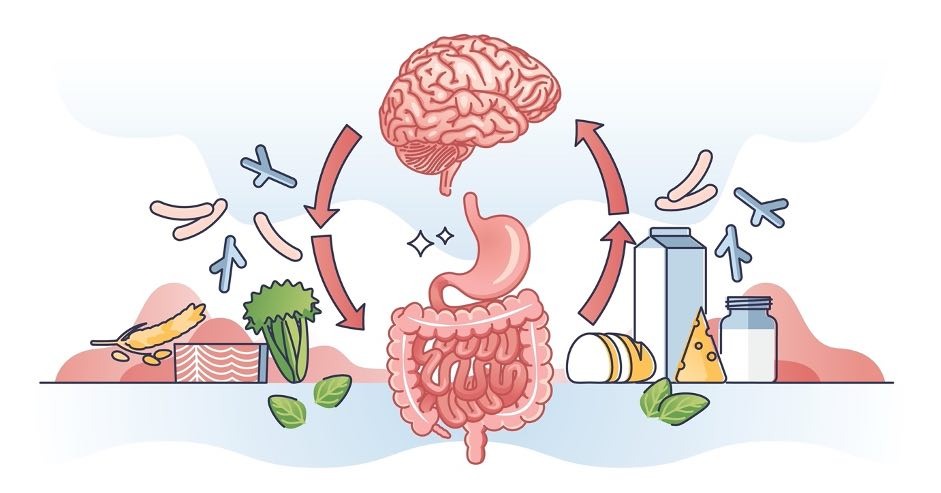
The gut-brain connection is complex and bidirectional, meaning each affects the other, and the health of one influences the health of the other. Signals travel both ways through the vagus nerve, hormones, and the immune system. In fact, the gut contains more nerve cells than any other part of the body aside from the brain, and it also houses trillions of microbes that produce neurotransmitters involved in mood regulation. Among these neurotransmitters are serotonin, also called the “feel-good hormone,” dopamine, released in response to pleasurable activities, and GABA, which reduces neuronal excitability and has a calming effect. Notably, about 90% of the body’s serotonin is produced in the intestines. As a result, when the gut is healthy, the brain is more stable and possesses improved stress resilience and more energy, whereas when the gut is inflamed or imbalanced, we are more prone to stress, sadness, irritability, and brain fog.
Since the brain is always active — controlling our thoughts, movements, breathing, heartbeat, and more — it needs constant fuel from the foods we eat; thus, what we consume makes all the difference. Nutrient-rich foods improve our mood by feeding the “good” bacteria in our gut, which influence the production of neurotransmitters like serotonin, strengthen the intestinal lining, limit inflammation, improve nutrient absorption, and activate neural pathways between the gut and the brain. Fiber-rich foods such as fruits and vegetables boost serotonin production; fermented foods like yogurt and kefir increase beneficial microbes; healthy fats, including salmon and walnuts, support brain-cell communication; and polyphenols, found in berries, olive oil, and green tea, reduce inflammation linked to depression. In contrast, ultra-processed foods such as chips, instant noodles, and fast food, high-sugar items like soft drinks and candy, and excess saturated fats disrupt helpful bacteria, leading to inflammation, anxiety-like symptoms, poor focus, energy crashes, and irritability. According to a meta-analysis from the National Library of Medicine of 21 studies across 10 countries, a nutrient-dense diet has been associated with a decreased risk of depression, while a “Western” diet, high in processed food, has been found to increase that risk.
Just as the gut is bidirectional with our brain, it also loops with stress. Stress increases cravings for comfort foods, which harm gut health and worsen mood, leading to more cravings. This “stress-eating cycle” is biological, not a lack of willpower. Over time, it can disrupt gut microbes and contribute to obesity, certain autoimmune diseases, and inflammatory bowel diseases.
So what does that mean for students? A lot, as our brain performance is constantly tested at school, especially during exam season.
”Skipping meals to “save time” hinders brain activity, making studying harder and less efficient — so it is actually counterintuitive.”
Running on coffee and snacks also increases anxiety and weakens focus, while a balanced meal improves concentration, memory, mood regulation, and test performance. A meta-analysis of 24 studies from the National Library of Medicine found that students who skip breakfast have significantly greater odds of poor academic outcomes. So the phrase “breakfast is the most important meal of the day” couldn’t be more true. There are many ways to support a healthy gut — and a healthy mind — such as a nutritious eating plan, regular physical activity, stress management, and sufficient sleep. And of course, you can still treat yourself. A small sweet snack can temporarily boost dopamine and provide a short burst of energy. However, it is important to eat in moderation to avoid negative long-term consequences. Taking care of your gut is taking care of your mental health.

Via Hammersley Homes
Nadira Zibirov
Copy editor
You’ve probably skipped meals during exams to save time for studying. Yet no matter how much you study, you still feel stressed and foggy. Why does this happen? The answer might be on your plate. Our gut and brain are closely connected — so much so that scientists call the gut our “second brain.” Because of this, what we eat directly influences our brain function and emotions far more than we realize.
The gut-brain connection is complex and bidirectional, meaning each affects the other, and the health of one influences the health of the other. Signals travel both ways through the vagus nerve, hormones, and the immune system. In fact, the gut contains more nerve cells than any other part of the body aside from the brain, and it also houses trillions of microbes that produce neurotransmitters involved in mood regulation. Among these neurotransmitters are serotonin, also called the “feel-good hormone,” dopamine, released in response to pleasurable activities, and GABA, which reduces neuronal excitability and has a calming effect. Notably, about 90% of the body’s serotonin is produced in the intestines. As a result, when the gut is healthy, the brain is more stable and possesses improved stress resilience and more energy, whereas when the gut is inflamed or imbalanced, we are more prone to stress, sadness, irritability, and brain fog.
Since the brain is always active — controlling our thoughts, movements, breathing, heartbeat, and more — it needs constant fuel from the foods we eat; thus, what we consume makes all the difference. Nutrient-rich foods improve our mood by feeding the “good” bacteria in our gut, which influence the production of neurotransmitters like serotonin, strengthen the intestinal lining, limit inflammation, improve nutrient absorption, and activate neural pathways between the gut and the brain. Fiber-rich foods such as fruits and vegetables boost serotonin production; fermented foods like yogurt and kefir increase beneficial microbes; healthy fats, including salmon and walnuts, support brain-cell communication; and polyphenols, found in berries, olive oil, and green tea, reduce inflammation linked to depression. In contrast, ultra-processed foods such as chips, instant noodles, and fast food, high-sugar items like soft drinks and candy, and excess saturated fats disrupt helpful bacteria, leading to inflammation, anxiety-like symptoms, poor focus, energy crashes, and irritability. According to a meta-analysis from the National Library of Medicine of 21 studies across 10 countries, a nutrient-dense diet has been associated with a decreased risk of depression, while a “Western” diet, high in processed food, has been found to increase that risk.
Just as the gut is bidirectional with our brain, it also loops with stress. Stress increases cravings for comfort foods, which harm gut health and worsen mood, leading to more cravings. This “stress-eating cycle” is biological, not a lack of willpower. Over time, it can disrupt gut microbes and contribute to obesity, certain autoimmune diseases, and inflammatory bowel diseases.
So what does that mean for students? A lot, as our brain performance is constantly tested at school, especially during exam season. Skipping meals to “save time” hinders brain activity, making studying harder and less efficient — so it is actually counterintuitive. Running on coffee and snacks also increases anxiety and weakens focus, while a balanced meal improves concentration, memory, mood regulation, and test performance. A meta-analysis of 24 studies from the National Library of Medicine found that students who skip breakfast have significantly greater odds of poor academic outcomes. So the phrase “breakfast is the most important meal of the day” couldn’t be more true. There are many ways to support a healthy gut — and a healthy mind — such as a nutritious eating plan, regular physical activity, stress management, and sufficient sleep. And of course, you can still treat yourself. A small sweet snack can temporarily boost dopamine and provide a short burst of energy. However, it is important to eat in moderation to avoid negative long-term consequences. Taking care of your gut is taking care of your mental health.
 The Plant
Leave a comment