

Via Foshay Learning Center
Jacqueline Graif
Editor-in-Chief
It’s your last semester of CEGEP, you’ve probably been accepted to university, you’re finally at the age where you can go out often, you are a part of a million clubs, you likely have a part-time job… and you’re most likely exhausted.
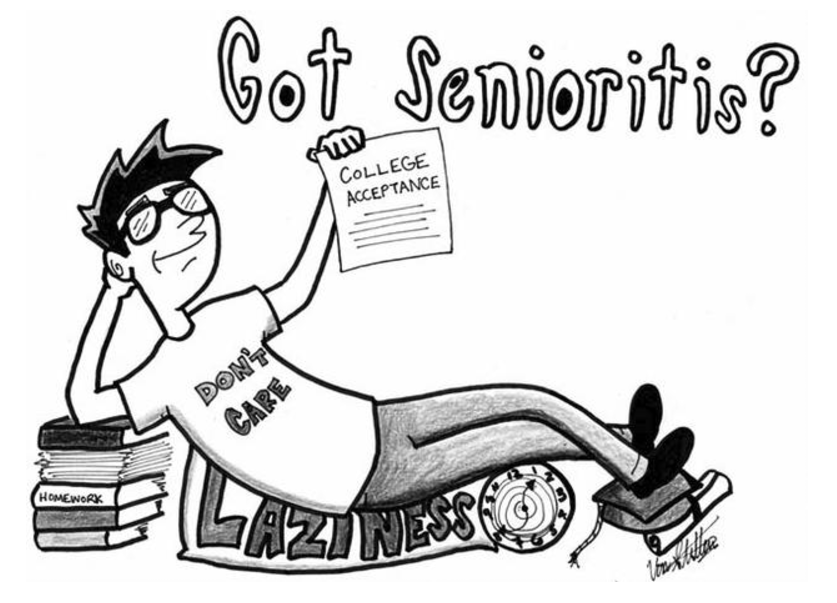
The term “senioritis” has been coined in recent years as it describes the lack of motivation felt by high school or college students in their final semesters of school. This is characterized by lower academic performance, lots of absences or tardies, procrastination, and missing assignments.
It must be first noted that “senioritis” is not necessarily a medical term, but a colloquial one used to describe “burnout,” which is a medically accepted psychological phenomena. According to Psychology Today, burnout is a form of mental and physical exhaustion stemming from repeated, untreated stress.
A 2024 report written by psychologist Dr. Elka Jacobs-Pinson elucidates 55% of college students experience some degree of academic burnout, with 20.5% reporting severe symptoms.
A study conducted by the National Library of Medicine reveals what factors affect student burnout specifically. In essence, factors such as the overall school environment, meaningful relationships with other teachers and students, feelings of belonging, and students’ self-worth can affect burnout.
Excessive internet usage is also a main cause of burnout, as those who devote lots of mental energy to “abundant internet activities” have less energy to devote to work and schoolwork. Per contra, lots of students tend to rely on the “compensatory internet use theory” where students who experience difficult personal life events use the internet to relieve themselves of negative emotions as an attempt at personal pleasure. This ends up creating a neverending circle of internet usage and burnout, according to ScienceDirect.
Burnout itself is not classified as a medical condition in accordance with the World Health Organization, but is instead a syndrome of chronic stress. However,
“burnout can manifest physically by reducing energy levels, increasing cynicism towards work and others, and even affecting sleep habits,”
altogether ruining personal quality of life.
While I was previously aware of this burnout phenomena, “senioritis” is a term I explicitly hear more and more as I advance semesters. I find that, personally, I have a harder time paying attention in class, completing my assignments, and managing my time… Now that my peers and I have been accepted to university, we just want to go out and have fun, which is unusual, as we are typically very driven and hard-working. So why is this happening?
According to LiveScience writer, Jennifer Walsh, dopamine levels in the brain can determine one’s work ethic. Essentially, hardworking people have higher levels of dopamine in the parts of the brain that are associated with motivation, these being the anterior cingulate cortex (ACC) and the dorsolateral prefrontal cortex (DPC), says Neurology Associates Neuroscience Center. More “motivated” people have high dopamine in those areas of the brain, and lower dopamine in the anterior insula, which is linked to weighing risk and reward, according to Vanderbilt University.
Those with lower dopamine in the anterior insula tend to weigh risk and reward differently than those with lower dopamine in the DPC and ACC. The higher the reward, the more motivated those labelled as “go-getters” would be. So once admitted to university, or with solidified plans after CEGEP, the reward may feel less significant, and that lack of motivation may then be linked to this “senioritis” phenomenon. The work has been done, there isn’t much left to do to obtain a CEGEP diploma, so why continue to work hard? There is, unfortunately, a lack of research to prove this thesis, and the data available is not specific enough to prove “senioritis,” but instead a general lack of motivation and decline in mental well-being.
However, there are ways to manage or inverse the effects of “senioritis.” Southern New Hampshire University recommends setting goals, even if they are small. Tangible goals may help the work-and-reward system set in your brain and increase dopamine levels in your anterior insula.
Taking breaks may also help to regain motivation, as your body and mind may need a physical reset. Setting a limit on your capacity can help you reach this state efficiently, without burning out.
It is always important to focus on your mental health and put yourself first. Skipping class and missing assignments may give you satisfaction in the short-term, but harm your mental well-being and academic performance in the long-run. The only real solution is to attempt to push through and complete as many assignments as possible, sometimes any grade is better than no grade. Good luck on beating “senioritis,” graduates!
 The Plant
Leave a comment