

VIA X, @manswoldmag_
Elsie Duque Hills
Staff writer
Food is universal to human existence, yet eating has never been confined to sustenance alone. What we eat, whether we choose to eat, how we eat, and when we eat are all shaped by the socio-economic, political, and cultural conditions that surround us. Ingredients function not only as nourishment, but as symbols – markers of class, objects of guilt, and flags of identity and belonging.
“Today, these meanings are being weaponized. Something deceptively simple as a meal has been folded into the culture war, where food–particularly meat—has become an effective rallying point for the far right. “
From etiquette-bound cutlery to cultural foods unpacked at an elementary school lunch table, the ways in which individuals consume food have long been used to distinguish the ‘us’ from the ‘them.’ Deviating from these unspoken norms can immediately mark someone as different, signaling a perceived gap in status and values. Food, then, becomes a subtle political test.
This expression of consumption as identity does not exist in isolation. It predominantly overlaps with one of the most divisive symbols in contemporary American politics: firearms. Routinely illustrated as emblems of political freedom, guns occupy a vital role in national identity.
The United States’ Second Amendment has come to function as a pillar of what it means to be a “good” American– an ode to archaic ideals of self-defense. These weapons are often framed as tools for autonomy, and more frequently than not, hunting. The nationalistic identity of right-wing America is driven by a rigid patriarchal framework, one in which each household’s survival is secured by the presence of a provider, a hunter, a man. The image of a camo-clad, gun-bearing protestor has become increasingly common. Yet, openly invoking militias as justification for gun ownership has lost political viability. As a result, these groups turn to more palatable narratives–namely, blood sports.
The mythic image of the red-blooded American is neatly accompanied by the right to own a gun. To kill for sustenance is often framed as a return to something primal–a performance of masculinity that celebrates self-sufficiency and control. Raw, bloody meat has long been tied to the American man: burgers, steaks, prime ribs sizzling on a grill, and, more recently, the rise of the “carnivore diet.” Seemingly innocuous language carries subliminal connotations, ones that construct the image of the “Real Man”—one who would, if necessary, shoot his dinner dead.
In this social hierarchy, the consumption of flesh becomes an insignia of raw power, with men seeking validation from one another through displays of strength and restraint. Those sitting at the edges of conservatism have capitalised on this masculinized view of food as a subtle yet effective tool of radicalization, particularly among young men. Questionable representations of gender roles are first introduced in moderate, accessible spaces, gradually forming a pipeline towards more extreme ideologies—where men must provide, women must submit, and deviation is to be treated as weakness.
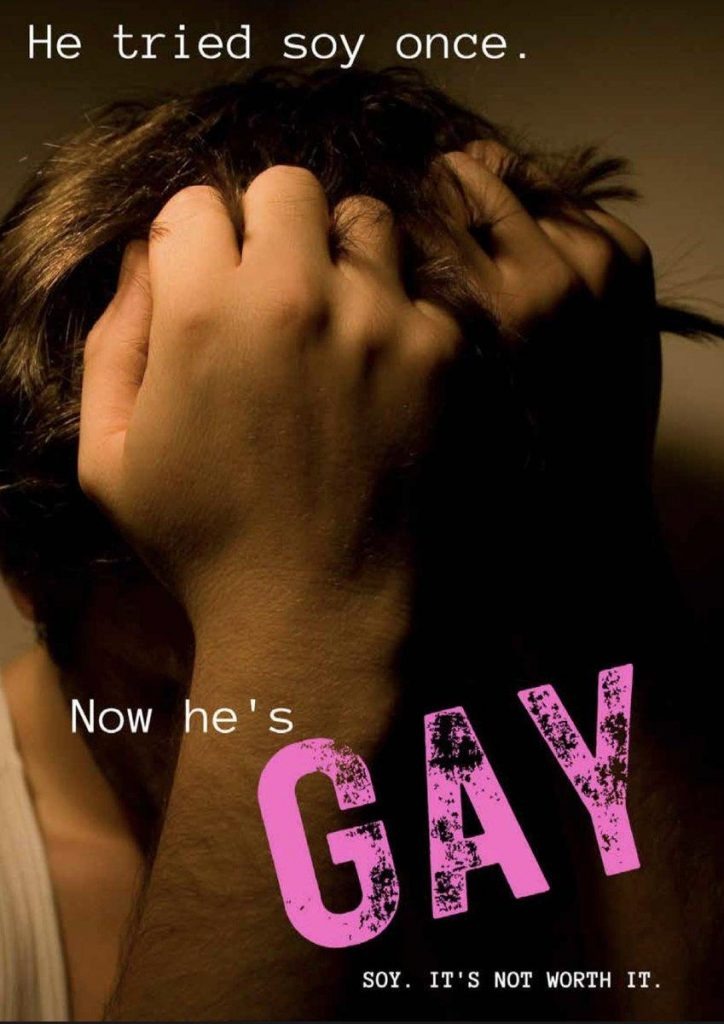
Underlying this curation of masculinity is a biologically deterministic belief that women and men are so fundamentally different that even their culinary tastes should diverge. This policing extends beyond calorie counts and macronutrients, but goes so far as to dictate which flavours and preferences are deemed acceptable. To stray from these rigid categories is to risk one’s masculinity. Foods labelled as soft and feminine–cheese pizza, plant-based alternatives––all these choices are laughable, and don’t you dare offer a man a non-dairy milk for his coffee–presupposing it isn’t black to begin with. While food policing and body image issues are often framed as concerns exclusive to women, the modern man is increasingly haunted by similar restrictive standards.
Many alt-right diets marketed towards men–emphasizing lean meats and vegetables–present themselves as seemingly harmless. Yet, by repackaging uncontroversial health advice around food, these spaces create entry-points for much more insidious beliefs. Online fitness communities, in particular, have been increasingly infiltrated by far-right advocates. Members are initially drawn in by workout routines and nutrition tips, only to be gradually exposed to extremist content through private forums and closed group chats.
Mark Townsend, global journalist for The Guardian, has noted that these communities frame individual self-improvement as a part of a broader political struggle, creating a sense of purpose rooted in physical dominance and confrontation. In doing so, they become grounds for mobilization–spaces where masculinity and diet converge into ideology.


Leave a Reply