

Via Illot
Nicole Motta
Arts and Culture Editor
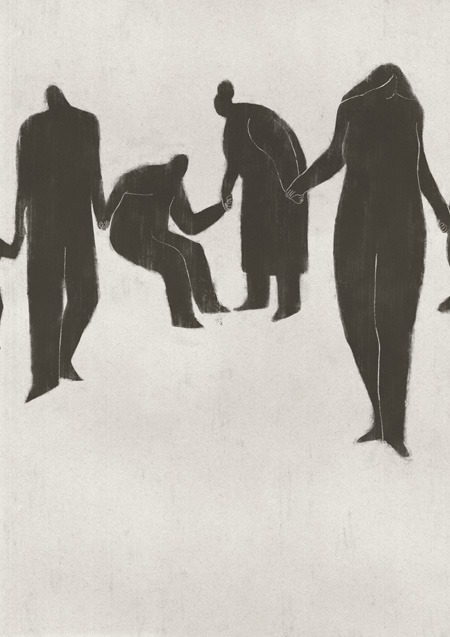
“Everyone wants a village, but no one wants to be a villager.”
This idea is at the heart of a contemporary cultural dissatisfaction with the Western framework for interpersonal relationships. Notably, video essays and online forums have been opening up conversations about our society’s individualism: apparently, we might be taking it too far with “protecting our peace.” Critics note that avoiding inconveniencing ourselves for others is leading us to evaluate our own human connections through a cost-benefit analysis, like yet another product of our capitalist economy. People are tired of their friendships feeling shallow. They want depth and reliability, not transactions.
Pointing fingers at the shortcomings of individualism seems to be a natural response. As psychologist Sharanya Sadana explains, in individualistic societies, such as the US, UK, Australia, and Canada, people focus more on their own goals and success rather than group goals and view their actions as a personal responsibility. Indeed, the individual goes above all else. This contrasts with collectivist cultures, prevalent in regions like East Asia and Africa, where people experience a deeply rooted loyalty to their communities and prioritize the needs of the group above their own. To recap, it’s helpful to think of these cultures as divided into two simplified categories: people who would pick you up from the airport without hesitation and people who you’d be worried about asking.
These networks of human connection cultivate very different emotional landscapes. Research by Hazel Markus and Shinobu Kitayama shows that individualistic cultures tend to emphasize pride and fulfillment in speaking one’s mind, while collectivist cultures can be associated with deeper feelings of connection but, also, feelings of guilt and anxiety due the intertwinement of one’s emotional state with that of their communities.
In fact, while collectivism appears to offer a way to fill the emptiness of Western relationships, it is not without its own set of issues (beware of the instinct to turn to the opposite binary!). Sadana points out that, “in individualistic societies, social networks are tailored to personal needs and interests, with friendships formed based on shared affinities and unpleasant relationships easily severed, whereas in collectivistic societies, individuals tend to adapt to existing social structures, making it harder to disengage from undesirable relationships.” Sometimes, emotionally distancing from that one toxic family member is a necessary form of self-healing. Moreover, grounding one’s overarching identity in a group can actually be dangerous for individual consciousness, especially if it stifles critical judgement for the sake of collectivity. Individual identities are good and must be cultivated! Originality breeds change.
Both these interpersonal frameworks are deeply influenced by our social ecology, particularly economic prosperity. Sadana highlights how studies indicate that countries with higher per capita GDP tend to place a stronger emphasis on individualism deriving from capitalistic values of personal freedom and liberty. These societies want you to order an Uber from the airport. Their economies function on human detachment. Individualism and collectivism are thus linked directly to systems of governance which oversee the economy: individualism plays a key role in democratic systems, whereas collectivism tends to influence more authoritarian or consensus-driven governance systems.
This is why the analysis of anarchal societies, both historic and modern, through the lens of anthropologist Harold Barclay’s book People Without Government, reveals intriguing alternate models of classic interpersonal frameworks. While anarchism is often stigmatized, linked to “bomb-throwing radicals,” he stresses that it is fundamentally about the maximization of individual responsibility and the reduction of concentrated power. Barclay explains, “to advocate it one must practise considerable self-abnegation, because the type of community it envisages cannot, for obvious reasons, be prescribed.” The rejection of authority as a social tool is an attitude, not a programme, and, in growing numbers, this attitude begins to affect the ways societies choose to relate to one another at a personal level. Mutual aid begins to emerge as a serious alternative to administrative services.
While interpersonal responsibility intensifies, principles of cooperation, mutual aid, and self-organization are fostered. However, they remain flexible and portable to different contexts; interpersonal models aren’t imposed and that, perhaps, is what makes them so real. Relationships based on true reciprocity is what builds deep solidarity among individuals. Barclay points out that “the anarchist emphasis on solidarity and empathy reflects individuals’ efforts to protect not only their own freedoms, but also each other’s freedoms,” because they understand two are inextricably linked.
Perhaps this is what we are yearning for. A model of solidarity built on respect for individual identity that strengthens an individual’s social connections and emotional health while still honouring autonomy.
It may be time to question whether our authority-concentrated and capitalist-driven society is fertile land for the “village” we so crave to grow. Changing the way we foster human connection might mean rethinking the social systems that dictate the ways we relate to one another.


Leave a Reply