


Sinners (2025): Research, Representation, and Realism
Via Film Grab
Laurine Alinot
Videographer
Premiering in 2025, the film Sinners by Ryan Coogler (Black Panther (2018), Creed (2015)) became an Oscar legend with its record-breaking 16 nominations, surpassing the 14 nominations record previously held by All About Eve (1950), Titanic (1997) and La La Land (2016). Out of those 16 nominations, it won 4 Academy Awards. One of them was awarded to the movie’s cinematographer Autumn Durald Arkapaw, who became the first woman to ever win in the category in addition to being the first woman of colour nominated.
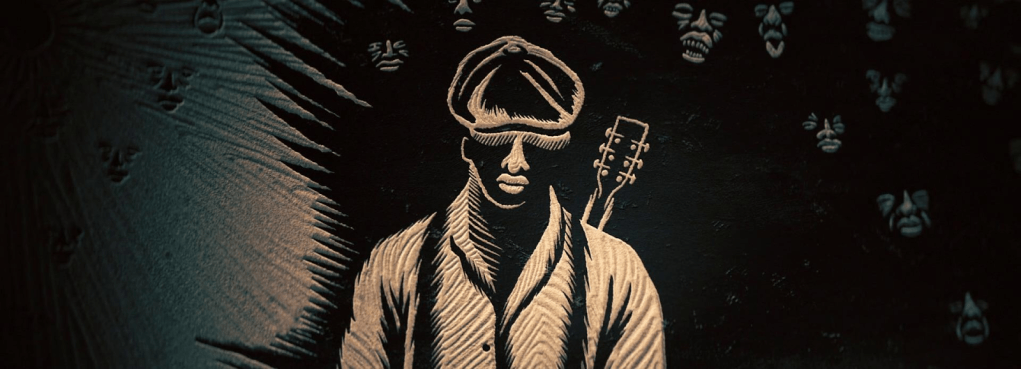
Sinners is a thriller and horror film, starring Oscar-winner actor Michael B. Jordan in the dual roles of the Smokestack twins. It is set in the 1930s in the Mississippi Delta, and revolves around the story of the twins, Elias Moore (Stack) and Elijah Moore (Smoke), coming back to their hometown to open a juke joint to welcome the Black men and women working the plantations. Coogler’s dedication to research and accuracy is what helped make this film so believable and real, in addition to historical musical faithfulness.
Coogler turned to different specialized consultants for the film, among others: Twins Consultants Logan and Noah Miller, Hoodoo Consultant Yvonne Patricia Chireau, Historical Gambling Consultant Leeroy Johnson, and Mississippi Delta Chinese Cultural Consultant Dolly Li. Li highlighted Coogler’s work of research in an interview: “I responded that early immigrants really did come from Taishan, [but] you could go with Cantonese and easily get away with it but I love that they went all the way and chose Taishan.” This precision is what strengthens the realism and elevates the film’s storyline.
Blues music is central to the narrative of this film, highlighting raw emotions of joy and pain as well as depicting a spiritual and cultural connection to ancestral spirits. In the song “I Lied to You,” performed by Miles Caton as Sammie, scene, time, and cultures blur together. The past and the present mix with the ensemble and showcases a true emotional intensity for all to experience.
Overall, the film Sinners with its well deserved 4.1 stars average on Letterboxd, quickly asserted itself as a must-watch historical horror movie. Beyond the awards and audience acclaim, the film’s cultural authenticity and historical representation, in addition to its powerful blues music mark Sinners as a film that will leave a lasting impression on viewers. It became one of the most important moving pictures of 2025 and hopefully will be a staple for the years to come.
Dracula: A Love Tale (2025): Blurring the Line Between Inspiration and Imitation
Via MovieWeb
Laurine Alinot
Videographer
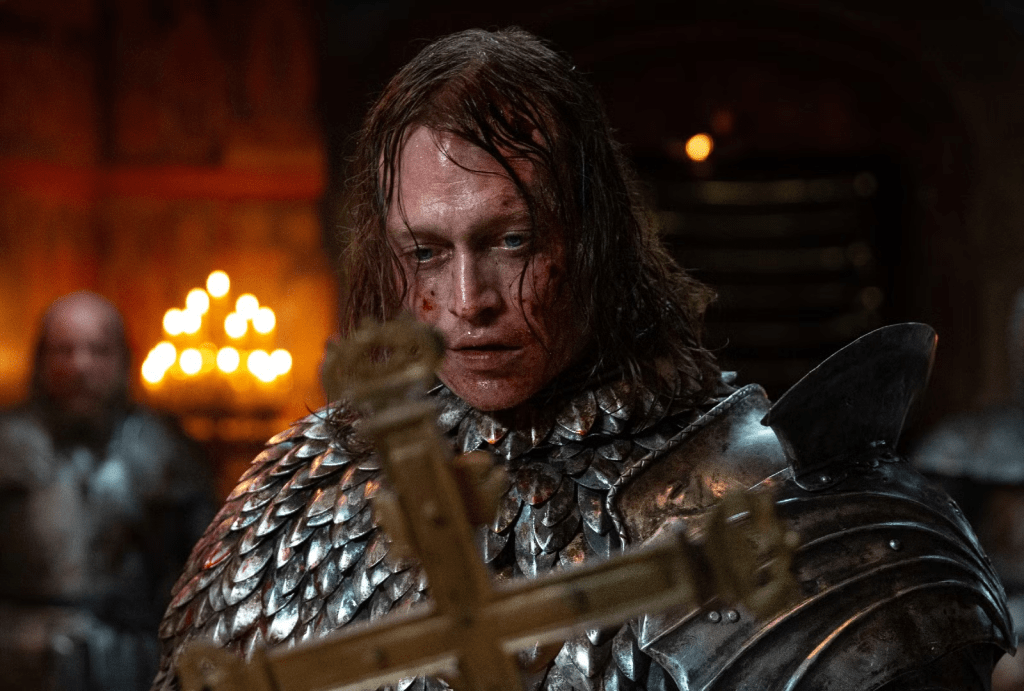
Known for his affiliation to Cinéma du Look—where creatives focus on the visuals and artistic expressions of a film, as opposed to the narrative—Luc Besson is a renowned director with credits such as Léon: The Professional (1994) and The Fifth Element (1997). His newest work is Dracula: A Love Tale (2025), and while it is a visually beautiful film, its focus on appearance strongly evokes Francis Ford Coppola’s Bram Stoker’s Dracula (1992), particularly in its character design and surface-level storyline.
The character design, specifically, is heavily inspired by Coppola’s work, as Besson’s Vlad, portrayed by actor Caleb Landry Jones, possesses practically the exact same hair, clothing, and overall appearance as Coppola’s protagonist. These similarities extend beyond visuals, for the whole romance plot between Dracula and Mina, absent in the original novel, is an original idea introduced by Coppola. Furthermore, the idea of Mina being a reincarnation of Dracula’s soulmate reappears in Besson’s film, as it was first seen in Coppola’s adaptation of Dracula, reinforcing how strongly Besson’s work draws from additions made by Coppola, rather than establishing its own originality in regards to the novel.
The most notable changes from Coppola’s film would be the switch from London to Paris. While both films take place in the late 19th century, this change of scenery offers a new point of view into the Victorian period. Although this modification was minor, it remains an original addition to the plot, perhaps reflecting Besson’s origins. Additionally, a more original element in Dracula: A Love Tale was the use of CGI gargoyles, which are not present in the original novel and are absent from Coppola’s version. These gargoyles reinforce the film’s gothic atmosphere while also contributing to its visual identity and stylistic approach.
Overall, Dracula: A Love Tale stays true to Cinéma du Look with its focus on visuals over narrative depth. It is a beautiful watch: the mise-en-scène, the performances and the cinematography work effectively together. However, the narrative is heavily dependent on Bram Stoker’s Dracula (1992), which comes at the expense of originality. Ultimately, despite its lack of faithfulness to Bram Stoker’s 1897 novel, the film remains an engaging watch that stands on its own when not compared to previous adaptations.


Leave a Reply