

Via Orion Peyrol
Orion Peyrol
Managing Editor
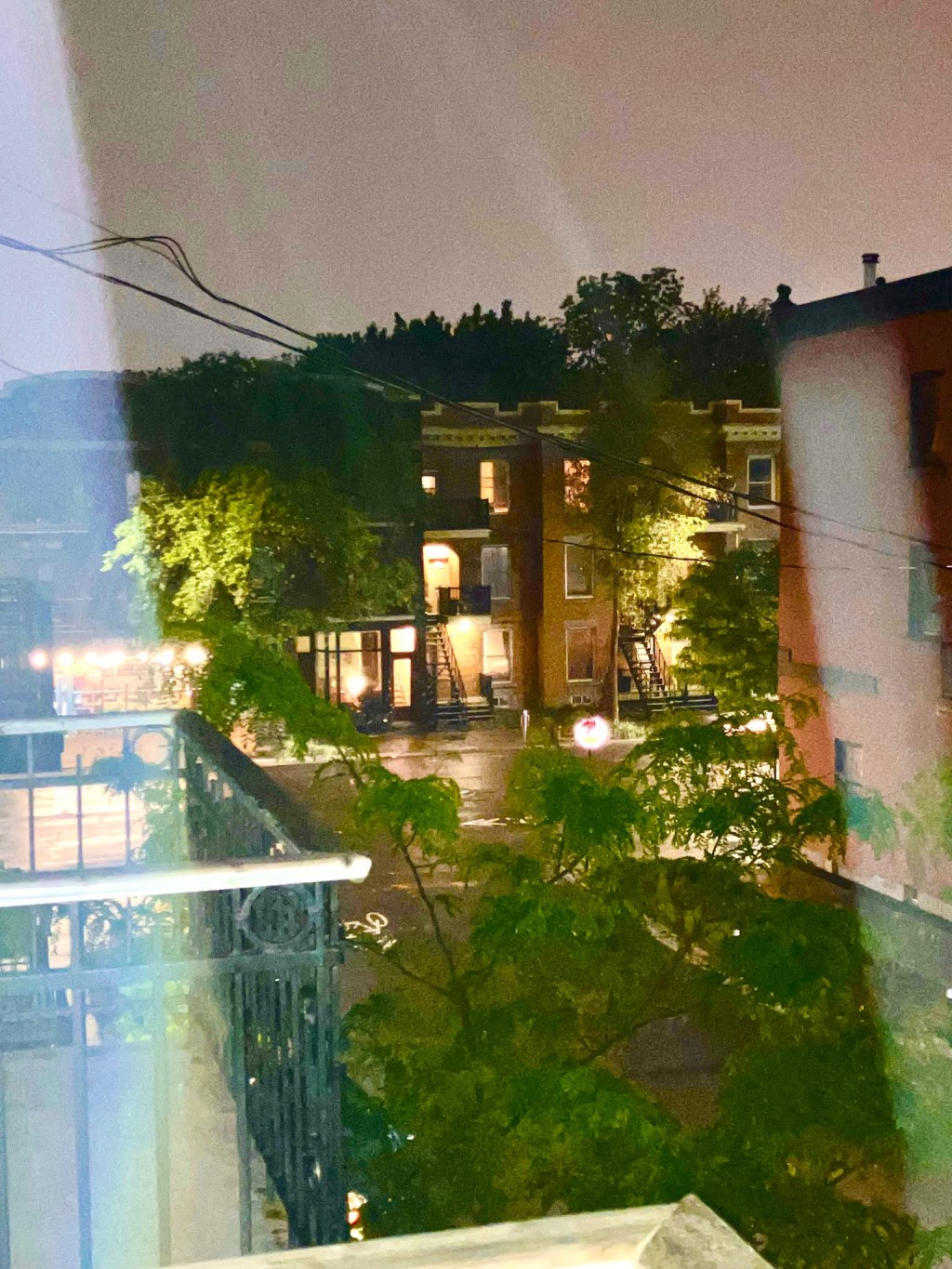
My first night in Montreal
When I first moved to Montréal, coming up on four years ago now, the smallest things made me feel like an étranger.
There isn’t really a good translation of that word in English. Literally it means stranger or foreigner, but it speaks to something more in French. When you are visiting a foreign country you’re going “à l’étranger,” but when you move there you become “l’étranger,” the foreigner. You are estranged from your own culture, a stranger to this new one and trying desperately to find the balance between the two of them.
Being an étranger is feeling like a puzzle piece from a different box that’s trying to find a spot that fits in an entirely new picture. There is no place made for you, so your only options are to stay apart or to carve out your own space.
When I first got here nothing felt even close to being right. Even as I crossed the streets of this cultural collage of a city, I could feel my étranger-ness. I would look up to try and spot the traffic lights, used to them being hung above the street, and find myself doing a double take when they weren’t there.
Thankfully, I already spoke French when I got here, but I spoke France-French, and none of the expressions or slang were familiar to me; I was so confused when someone had referred to the girl beside them— a girl with bright purple hair— as their blonde, that the language didn’t even feel like my own anymore. As Carl Jung once said, “Loneliness does not come from having no people about one, but from being unable to communicate the things that seem important to oneself, or from holding certain views which others find inadmissible” and for many immigrants communication, because of language, is a struggle.
Often, adolescents who are learning the language find themselves feeling split, like they have different personalities for different languages. Speaking to other teen immigrants a lot of us had similar feelings: “French still feels like a more ‘professional’ language to me. I sometimes find it hard to use it in everyday conversations or when making friends.” said one CEGEP student who arrived from Kyrgyzstan at twelve years old. One language comes easier to us and we find our identities being further fractured by this.
Adolescence is the time for identity formation and always comes along with its own difficulties: loneliness, mood swings, and acne. But when you add this gap between your experience and the ones of your peers, nothing quite fits. According to a 2024 study published by the International Journal of Adolescence and Youth, immigrant adolescents experience more symptoms of depression, social, and emotional loneliness, and this is an even higher percentage in recent, first generation immigrants. Trying to make an identity for yourself when the part that is supposed to be stable— your nationality, your home— gets shifted beneath your feet is so disconcerting and indescribably hard.
“Immigration, no matter the age, comes with suitcases upon suitcases of struggles but even more so for teenagers.”
A 2023 study in the European Journal of Ageing found that adolescent and young adult immigrants experienced more loneliness compared to other ages. Immigrating at a young age makes assimilation a much smoother process, and at an older age, identity formation and social relatedness is much less of a factor. The need for social interaction, belonging, and secure attachment is primordial to us all and we do not react well to loneliness. The National Library of Medicine found that loneliness over long bouts of time can lead to both your psychiatric and physical wellbeing decreasing over time. It’s no surprise then just how many young immigrants struggle in these areas.
Connection is especially a present need in adolescence, when you are actively trying to find peers to relate to. But as a brand-spanking, straight off the boat immigrant there is no one to relate to. Your experience becomes unrelatable, you try to find other immigrants, expatriates of a similar age but none of your experiences are comparable. You all came from different places, at different ages, have different difficulties, and different cultures that you are desperately, desperately trying to hold on to. These transitions are made easier for some thanks to classe d’acceuil, classes in french schools made to acclimate immigrant children, but eventually that bubble will burst. “[…] I felt like I was really thrown into the unknown. That’s when it became harder for me to relate to people and express myself” said that same source.
As an immigrant, you are forced to make an identity that only you can uphold, one that can contain the multi-facetedness of your experience. I carry a claim to four separate countries that I could call my origins and no simple story to tell when someone asks where I come from. There is no one out there with the same path as me, and I’m sure the same can be said for most of you.
That’s terrifying to think of: no one else has experienced exactly this but also no one else has experienced exactly this. You have a story that no one else can tell for you, you are the future. Globalization will make more of us— is making more of us— and a multi-cultural identity is a beautiful one, despite the difficulties it brings along with it. There are no spaces made for us, but we are actively making them, and things do get easier. You get used to your new environment and find a place in the world.
I no longer look up when trying to cross the street.


Leave a comment