


Sabrina Coccimiglio
Copy Editor
The winter 2026 semester is coming to an end. Slowly, though it may not feel like it right now, the academic stress will cease, and summer will be just around the corner. Think of the fresh sun on your skin, and the light breeze passing by you. Although life may seem pretty serious right now, as some of us may be wrapping up our last semester at Dawson and moving onwards towards adulthood, there’s one fundamental thing (in my opinion) to bring back some fun in your life: nostalgic games.Though your academic future is important, there is no need to worry about university, your grades, or, really, any of your life’s problems when games, especially nostalgic games, exist! Take this summer to rediscover (or just discover) your next game-related addiction and bring back the fun you deserve in your life.

Papa’s Pizzeria (the franchise)
The Papa’s franchise first started with the launch of Papa’s Pizzeria in 2007 by Flipline Studios, according to the fan-made Flipline Studios Wiki. This marked the release of their first Gameria, a game focused on restaurant management. The franchise now has 13 other variations of the game, including fan-favorites, such as Papa’s Freezeria, Papa’s Wingeria, and Papa’s Doggeria.
The game varies witheach version, but the main storyline they share is that Papa Louie, the owner, has run away and left you, the player, in charge of his business. Your job is to keep the business running as you navigate each customer’s personalized order. Once the order has been registered, you must follow the steps to prepare it by going through different stations. Each version of the game has 4 different stations. The ordering and cooking/baking stations are always included, whereas others vary, such as the assembly, decoration, or drink stations.
Once you have successfully completed an order, the customer gives you a rating out of 100 points. Depending on how well you prepared it, you may even receive tips. Points help you level up, whereas tips act as the game’s currency. Some versions of the game include a weekly paycheck to collect more money, where being at a higher level allows you to recieve a higher paycheck. With your money, you are able to unlock new decorations for your restaurant, purchase new outfits, and buy game boosts, such as alerts to tell you when your food is done cooking or when a customer walks in, to make the workday easier.
Other features of the game include mini games after every workday, depending on the game version you are playing. Another feature is unlocking new customers as you level up, who are then showcased in a parade (if you choose to view it). Papa’s games are available to play on mobile devices, costing from $0.99 to $2.99 CAD, or playable on PC on Steam for $7.79 CAD. It is also still possible to play Papa’s for free on Crazy Games and other game platforms such as Cool Math Games through your web browser!
Animal Jam
First launched in 2010 by WildWorks, Animal Jam may be the wholesome game you’ve been searching for. Although it is marketed toward children, rest assured, it is a game everyone can enjoy. The nostalgia lives on as old and new players, called Jammers, continue the games legacy.
Guaranteed to keep you interested, you can choose between Animal Jam Classic for the original 2D style of the desktop game or join Animal Jam Play Wild, an updated version with a 3D design playable on mobile and desktop devices. The game contains two currencies: gems and sapphires. Gems are the common currency of the game, while sapphires are the higher-value currency, usually harder to come across. While the game is fully free to play, it also offers various memberships, ranging from 1 month for $6.99 CAD to 12 months for $4.83 CAD (per month). These memberships allow Jammers to receive more perks, such as exclusive items, 5 sapphires daily, weekly member gifts, and more!
One classic feature of the game is the customization of your own animal, varying from the starter choices (bunny, fox, wolf, tiger, etc.) to rarer animals (deer, cougar, fox, etc), which are not always available to purchase. One crucial aspect of Animal Jam is its trading system, you can visit places on the map or go to parties available to you to trade for rare items and expand your collection of valuable items. Another possibility to collect items that aren’t available in shops is buying items from other Jammers using the My Shop Explorer in Coral Canyons, where you can search for items and the best deals. You also have the possibility of setting up your own My Shop for 100 sapphires (non-members), where you can sell your own items for gems or sapphires.
Another enjoyable feature of Animal Jam is decorating your den, which is your own personal home. The possibilities for decorating are endless as shops rotate with new items, such as couches, plants, rugs, posters, beds, etc. There’s also the possibility to upgrade your default den to other designs, ranging from a treehouse, an alpine lodge, a moonlight manor, among others. Jammers also have the opportunity to play minigames, such as Pest Control, Phantom Dodger, Treasure Hunter, to name a few, rewarding them with gems and sapphires in exchange.
Other features of the game include learning wildlife facts, chatting and interacting with other Jammers, and accomplishing missions, providing players with a multiplicity of things to do. Shops can be found all over the map, each with a specific purpose, such as shops for sapphires, den items, clothing items, or items sold by other Jammers.
Go and explore around the map and discover the unique designs of places, such as Jamma Township, Lost Temple of Zios, Apondale, Mesoterra, and many more. You’ll be transported into different climates, varying from the dry desert of Kimabara Outback to the freezing cold of Mt. Shiver, with lots of things to discover and collect.

MovieStarPlanet
MovieStarPlanet (MSP) first launched in June 2009 in Denmark by Danish company MovieStarPlanet ApS. It rapidly expanded to 16 countries, including Canada, Australia, and New Zealand. It now has over 400 million registered profiles, reaching its peak engagement between 2013 to 2015. By 2011, the game became playable on mobile and desktop. Though MovieStarPlanet 2, a new version of the game was released in 2020, most of the nostalgia lies within the original game.
To create an account, you’ll be able to customize your own character with default items. Once that’s done, you’ll be able to visit 5 places: the games, chatrooms, shops, movietown, and pets. The currency in the game is Star Coins, and “fame” are the experience points in the game, which are the building blocks to leveling up. These can be accumulated through signing and receiving autographs from other players, buying any items from the shops, watching movies, opening gifts, etc. Although there are VIP packs you can buy to make this process easier, the game is still accessible without a membership.
Shops introduce you to a variety of items to buy, from clothes to furniture, character animations, and backgrounds. Every week, there’s a new theme, such as Toxic Trance, Grey Skies, Waves, and many more, providing new items to the shop. If you’re visiting Movietown, animation and backgrounds will be useful, as you can use them to make your own movies, artbooks, looks, etc.
However, lately, the chatroom and games won’t be of much use, specifically in the Canadian server, due to a lack of players. Although MSP is not the game with the most active players in Canada, its legacy is being kept alive by old players who choose to revisit. If you enjoy fashion, conversation, and a game you can play passively, MSP may be for you.
Friv
Friv isn’t a game, but this plateform contains all the games you could want and more. It first launched in 2006, allowing users to play games on the web for free by licensing games from independent game developers. The original fan-favorite Friv used to be powered by a technology called Adobe Flash, which shut down in 2020 due to its incompatibility with mobile devices. This problem didn’t just affect Friv, but all the games previously discussed. Due to Adobe Flash’s shutdown, Friv and many other games were forced to adapt to new HTML5 technology. Though Friv was forced to rebrand its website completely, the classic Friv model was remade and is available to revisit today.
Friv is perfect for everyday passive gameplay because it includes a variety of games to choose from. Not only are there barely any ads on the website, but you can rest assured that you will always find a game to play. Some of the most popular games are Fireboy And Watergirl Forest, Fancy Pants Adventure, Electric Man, and The Right Mix! It depends on what type of game you like, but once you’ve figured that out, Friv most likely has it.
So while you still have the chance, go revisit the games that made life enjoyable. By searching for the nostalgia in things that once held meaning and presence in your life, you might just realize why they held such a huge impression. Give yourself a well deserved break after a hard week of exams, and rediscover your inner child.
Who Gave You Your Dream?: An Exploration of GhettoPhysics
Via Rotten Tomatoes
Nicole Motta
Arts and Culture Editor
As Dawson students, the big “next step” creeps towards us. With university applications and career path decisions weighing on students’ minds, we feel we no longer have that leg room we once had in high school to dilly dally. There is an imminent sense of: the real world is coming.
This “real world” can be a thrilling thought to some and a horrifying one to others. Many of us use confident words in our application essays to describe our future in this new place: dreams, passions, and goals. I remember a time, long ago, when our dreams were shaped more by imagination than the confines of a 9 to 5. I guess somewhere along the way, we chose, or complied, to dreaming different dreams. However, some still struggle to engage with this process of compulsivity. A lingering question arises, one that we might prefer to stick our heads in the sand than answer: are my “dreams” really mine?
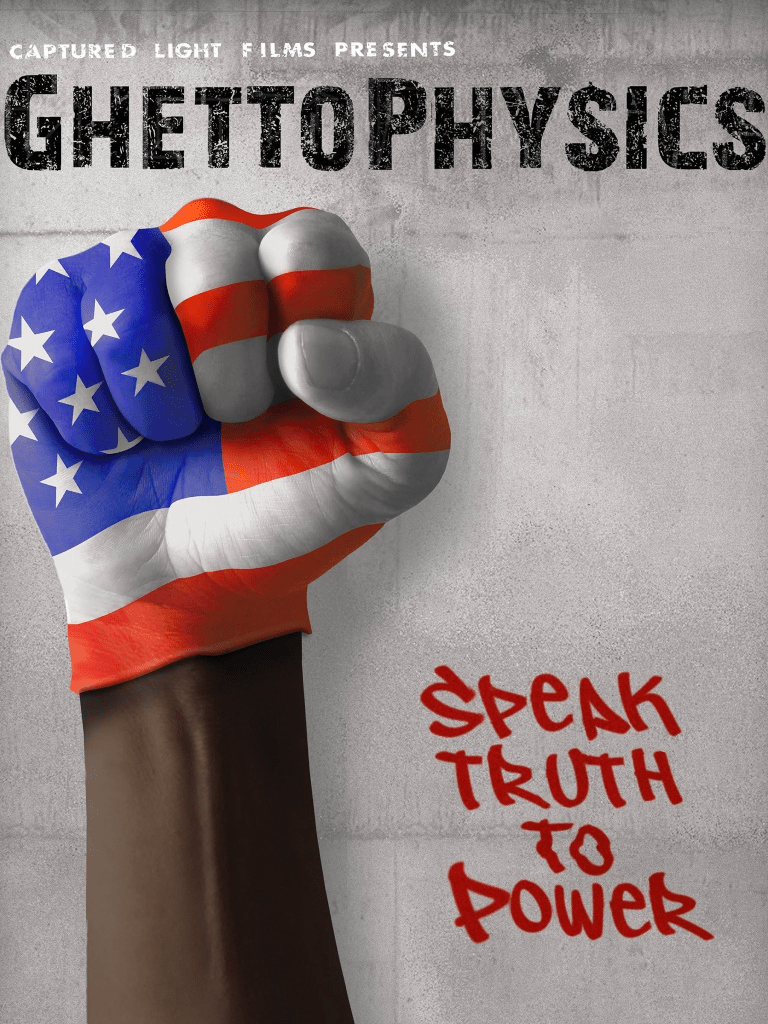
GhettoPhysics: Will the Real Pimps and Hos Please Stand Up!, a 2010 docudrama film written and directed by William Arntz and E. Raymond Brown, asks us to take a firm look at the power structures that make up the “real world” and which shape us at the most personal level. Indeed, power doesn’t leave much room for authenticity. At the documentary’s core, it describes the global interplay of two fundamental, long-standing, human archetypes using simplified prostitution street language terms: the “pimp” and the “ho.” The “pimps” are those in positions of power—kings, presidents, billionaire shareholders, and elites—while the “hos” are the masses who produce great value, yet do not control it. Pimps are dependent on our bodies and resources as their “game.” Today, these interactions are so multilayered and complex that it can be hard to recognize them.
GhettoPhysics points out that it is the pimp’s job to teach the ho how to play the game and convince them, not that they must participate in it, but that they want to. How, you ask? Well, you guessed it: through inserting the pimp’s dream into the mind of the ho, like planting a little seed. It’s very possible for one to learn to love the seed; once the tree has fully grown, it’s natural to feel possessive of it. After all, you were the one who grew it meticulously and tirelessly, in all its glory and magnitude. You just weren’t the one who originally put it there.
Everytime we mass upload our CV on Indeed or curate the perfect university applications, we are hoping that our “game” gets “pimped,” that someone in power will recognize and use our value. At a company, for example, students often work minimum wage jobs because we are conditioned to believe that our work is worth considerably less than a CEO’s. But really, this dynamic exists at any level of the pyramid. However, if you think about it, the CEO wouldn’t profit from his multi-million dollar company at all without its workers’ cheap labour. Essentially, without its hos, a pimp is left with nothing. If you’re suddenly feeling empowered, good, that’s exactly what GhettoPhysics wants to achieve.
In fact, the whole ho and pimp talk isn’t meant to offend. GhettoPhysics isn’t reducing us to this inevitability, rather, it offers hope and the potential for liberation. The documentary expands on what it calls the self-degenerative ho: the victim archetype. The victim lacks the spunk to fight because of this overwhelming sentiment that the power is out of the ho’s hands: feeling like the world happens to the ho, by the pimp.
“However, understanding and internalizing the power we truly possess leads us to a place where we can start defining the rules of the game for ourselves.”
In a certain sense, humans are creators of their own realities through their operative conceptions of the world called paradigms. GhettoPhysics suggests that, to change the dream born from the pimp-dependant paradigm—to find and water that second little seed that has existed within us all along—is to change our reality. When we break archetypes, we make room for a larger world vision, a world where game can be returned to the hos. Say it with me: power to the people!
In fact, the documentary talks about these two archetypes, not as dichotomies, but as a Yin and Yang dynamic. While one person can embody the Yang and another the Yin, it is also possible to cultivate the interplay of these two roles within ourselves, once we recognize our agency and ownership of our resources. As Dawson students, reclaiming power might not necessarily mean escaping the game entirely, but becoming conscious actors within it, aware of our capability of redefining the rules. GhettoPhysics notes that “the game doesn’t change, the players do.”
It might be time to pull our heads out of the sand and ask ourselves, “Who gave me my dream?”


Leave a Reply