

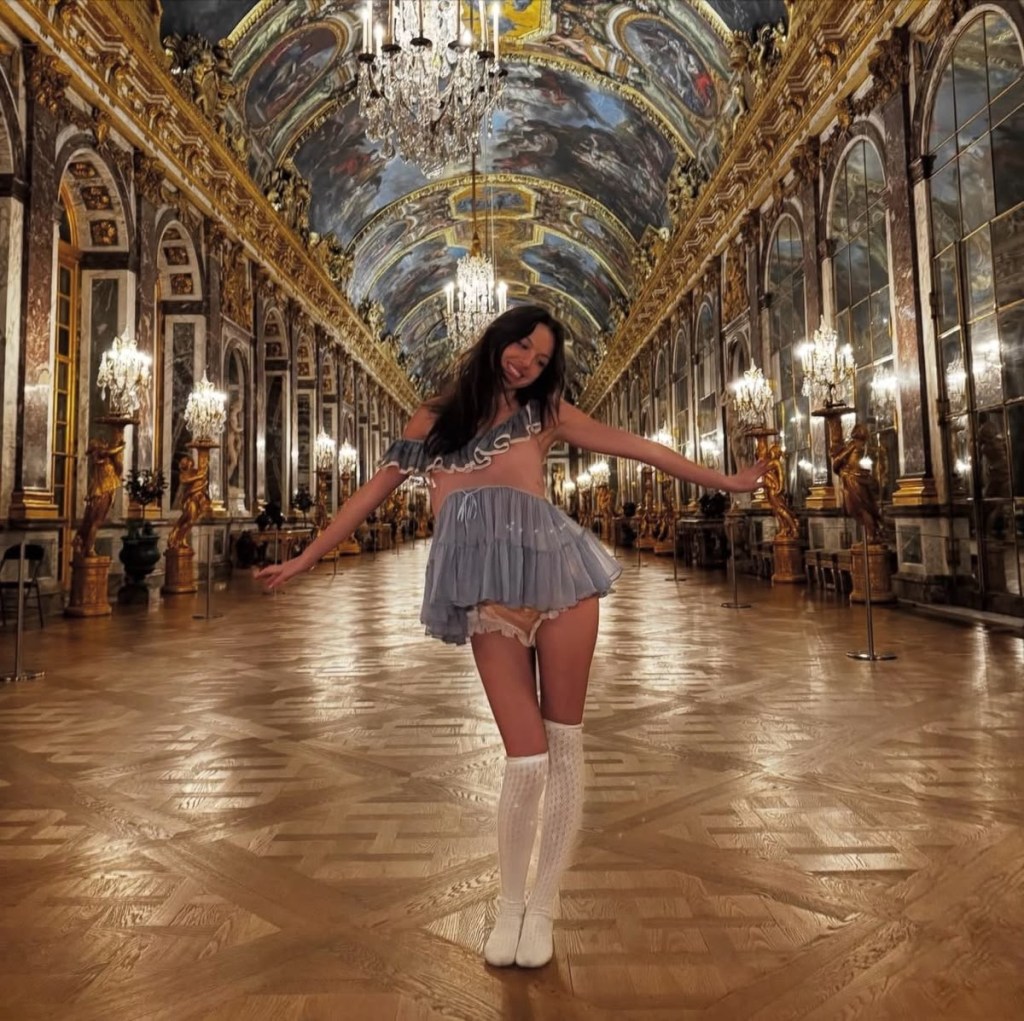
Olivia Rodrigo on the set of her drop dead music video
Via Cosmos
Karina Awad-Battista
Staff Writer
It’s no secret that life as an artist is not all sunshine and rainbows. While success in music can bring fame and fortune, it can also bring lots of unwanted attention and negativity — for some more than others. Criticism is expected when you’re a celebrity, but that expectation is sometimes used to normalize various forms of discrimination. Female A-listers tend to receive more hateful comments than men, both from the press and from fans. Whether it’s their fashion choices or scrutiny about their bodies, there always seems to be something to pick at. This discrepancy becomes even more apparent when you narrow the sample size down to artists in the pop genre. In 2023, women made up 35% of the artists in major United States popular music charts, according to a report published by The Guardian. While this is far from an equal proportion, it shows an increase from previous years and shines a light on just how many women are killing it out there. Despite this, there always seems to be just a bit more spite reserved for them, rather than for their male counterparts.
“When we disguise sexism as regular hate comments, it becomes a lot more socially acceptable.”
Clothes Aren’t A Crime
Let’s examine one of the most recent celebrity clothing scandals: Olivia Rodrigo’s babydoll dress. If you’ve seen the music video for “drop dead,” the lead single off Rodrigo’s new album, you seem pretty sad for a girl so in love, you know that it’s notable for being one of the few music productions ever permitted at the Palace of Versailles. Throughout the video, we see Rodrigo running around the palace, lovestruck, sporting a babydoll-style dress with ruffled shorts. However, the historical achievement and artistry behind the video were not primarily what caught people’s eye. Instead, the project was met with a wave of critics, whose response was anything but predictable: “YOU are normalizing pedophilia that style of clothing is not intended for adult women you are sexualizing children’s wear [sic],” one user wrote on X. The claim is that Rodrigo is feeding into pedophilic fantasies by “dressing like a toddler” and “sexualizing the clothing,” despite never actually doing anything sexual while wearing it. She seems to disagree with the critics: “What’s really disturbing is I feel like I have worn outfits that are revealing on stage. And that wasn’t ‘inappropriate’ — but me fully covered up in a dress that people deem to be childlike was inappropriate.” She also speaks about the societal tendency to shift blame towards women by telling them that they are responsible for dressing in ways that will not provoke men, rather than teaching men to control themselves. In high school, one of my classmates told a teacher that she was being harassed by a guy; he told her she could help herself by unrolling her skirt. When we teach women that the reaction to their clothing is their fault, we’re actively excusing rape culture by telling men that they should not be held responsible. Even worse, we show them that they can do whatever they want to women while not expecting the same reaction to what they wear.
Men never seem to be told that their clothing is too sexual; at the 2026 Grammy Awards, Justin Bieber chose to perform in nothing but a pair of silky purple boxers. Certain critics called the performance “cringe,” but nothing was ever said about him needing to cover up, about how he might provoke a woman watching this performance at home. When asked what inspired the look for Rodrigo’s video, she said she wanted it to look pyjama-like, mentioning that she was trying to pay homage to the many riot grrrl artists that originally used the dress as a political statement. The piece was a staple of the Kinderwhore style, which paired the dress with more rough, punk rock pieces in order to escape traditional feminine stereotypes. The entire idea behind it was far from pedophilic, rather the complete opposite. As for Bieber, the idea behind the outfit was to promote his brand Skylrk, which the boxers are from. Despite wearing less than Rodrigo, he managed to skirt the criticism that she was subjected to. This is not a case against Bieber; it is to let artists wear whatever they want. Neither of these outfits contained any hate symbols or were conceptualized with any malice. Why do we look at Rodrigo’s body so much more harshly when Bieber was wearing an outfit that should arguably be more controversial?
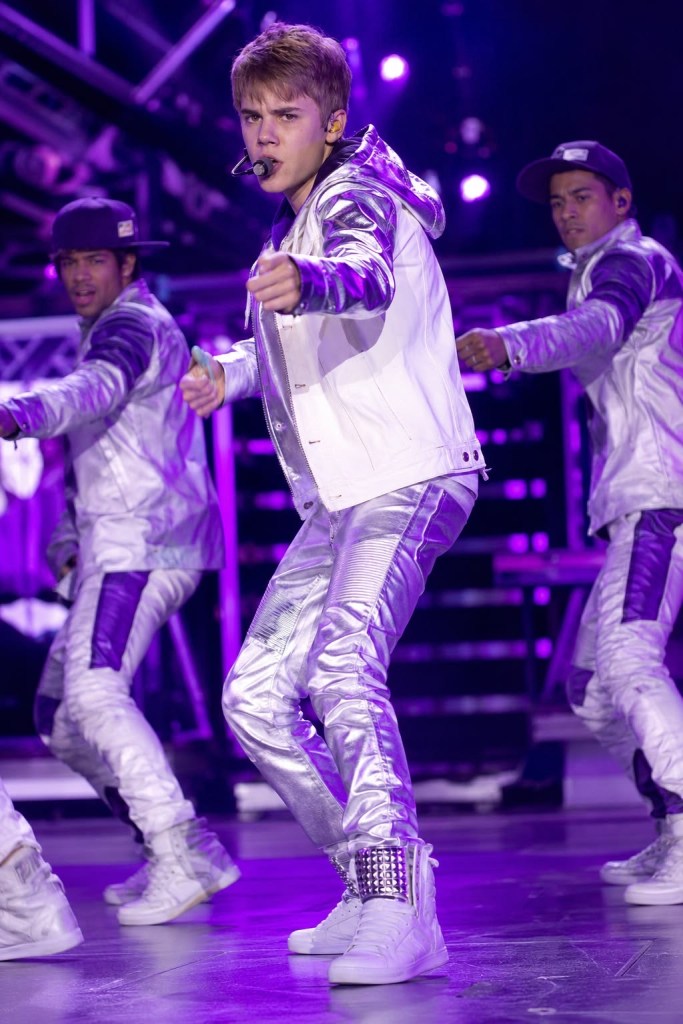
Justin Bieber performing with his backup dancers during the Believe Tour.
Via Pinterest
The Right to Sexuality
Women’s sexuality has always been taboo, but the frequency at which it is sexualized when you are in the spotlight becomes exponentially larger. Sabrina Carpenter, Disney Channel star-turned-pop icon, has been heavily scrutinized for her infamous “Juno” poses. Carpenter’s song “Juno” shares its name with the 2007 movie about a pregnant teenager. Every night of her Short n’ Sweet tour, Carpenter struck a suggestive pose at a key moment during the song, coming up with a new move for each show. There were even themed ones, such as a Halloween performance where she simply exclaimed “Boo!” in lieu of posing. Despite being appreciated by many, the tradition irked some concertgoers who believed it “vulgar” and inappropriate for any children in attendance. The same attitude hasn’t been reserved for male pop stars. During Harry Styles’ Love on Tour, his performances featured gestures like grinding and sliding his hands down his groin during his more sexual songs such as “Watermelon Sugar” and “Woman”. The general consensus of fans seemed to be that this was “the hottest he’d ever looked”. Certain fans raised the point that Carpenter got her start on Disney Channel, meaning she might have a young audience looking up to her. Similarly, though, Styles’ main listening demographic has always been young girls, ever since his big break with the popular boy band One Direction. Artists are entitled to their own sexual expression and shouldn’t forever be tied to what they were like when they were 15. Styles’ image is arguably even more sexual, considering the fact that he owns and actively promotes a brand of sex toys. So why is Carpenter’s sexuality criminalized when Styles’ isn’t?
Big Productions, Bigger Expectations
No genre of music seems to expect as much of a spectacle from the artists than pop does. A Taylor Swift concert features peppy choreography and 15 backup dancers, while Ariana Grande sports a new outfit for each “act” of the Eternal Sunshine tour and ascends to the ceiling at the end. Beyoncé literally rode an electric bull on stage during her Cowboy Carter Tour in 2025. And what do all these concerts have in common? They are shows performed by female pop stars. Male pop stars of similar caliber generally have smaller-scale productions, even though their shows will have similar attendance rates. At Lollapalooza 2026, Sombr drew one of the biggest crowds throughout the 4-day event. The show was certainly inspired: He wore a feathered jacket, strutted across a New York City-inspired stage, and even brought out musical guests. Nevertheless, it’s important to note that this is about as elaborate as these performances get. Male singers in this genre don’t generally have backup dancers, rehearsed choreography, elaborate stage props or costume changes. This isn’t to say that their shows aren’t good, but they certainly receive similar amounts of praise when their performances are not as intense. Female artists are expected to constantly interact with the crowd and have a new gimmick every few shows to keep the audience entertained. Even when they deliver, it never seems to be good enough. “It’s so cheesy. She did way better dance breaks and dances before”, one commenter said under a video showcasing Ariana Grande on tour. No matter how much effort they put in, we always seem to have a problem with how women perform. Meanwhile, we’re lucky if the male stars have just one choreographed dance break. If we look back just over a decade, we can see that this wasn’t always the case. During the Believe Tour in 2013, Justin Bieber had a full array of backup dancers and singers, pyrotechnics, and a crazy wardrobe. Michael Jackson is possibly the best example of a man excelling at a pop performance: big entrances, sparkly outfits, his signature moonwalk, and, once, a tank on stage.
“It seems that, over the years, the caliber of what we expect from men on stage has decreased a lot more than for women — and dare I say, the bar for women has risen even higher.”
This is indicative of a much larger problem and demonstrates how we’re always asking more of women. As a child, I’d sometimes be told by teachers that it was my job to take the moral high ground when fighting with boys because girls are “naturally more mature”. As I got older, I started to question this; was I mature in nature, or just forced to be by society?
Although female pop stars are now more represented in the field, dealing with these subtle (and not so subtle) forms of sexism is still especially hard on them. Especially in a music genre that is often considered more “girly” and taken less seriously, it’s shocking how harsh we still are on these stars. Pop music is ultimately about having fun and is meant to be accessible; there’s a reason why it’s so widespread. There is no reason why female singers shouldn’t be able to succeed without being subjected to constant hate. They say that having haters means that you’ve made it, but I’m sure it doesn’t feel that way when the message behind those haters is that you’ll always feel inferior because of your gender.


Leave a Reply