

Via Th3rdwave
By Leo Baron
Staff Writer
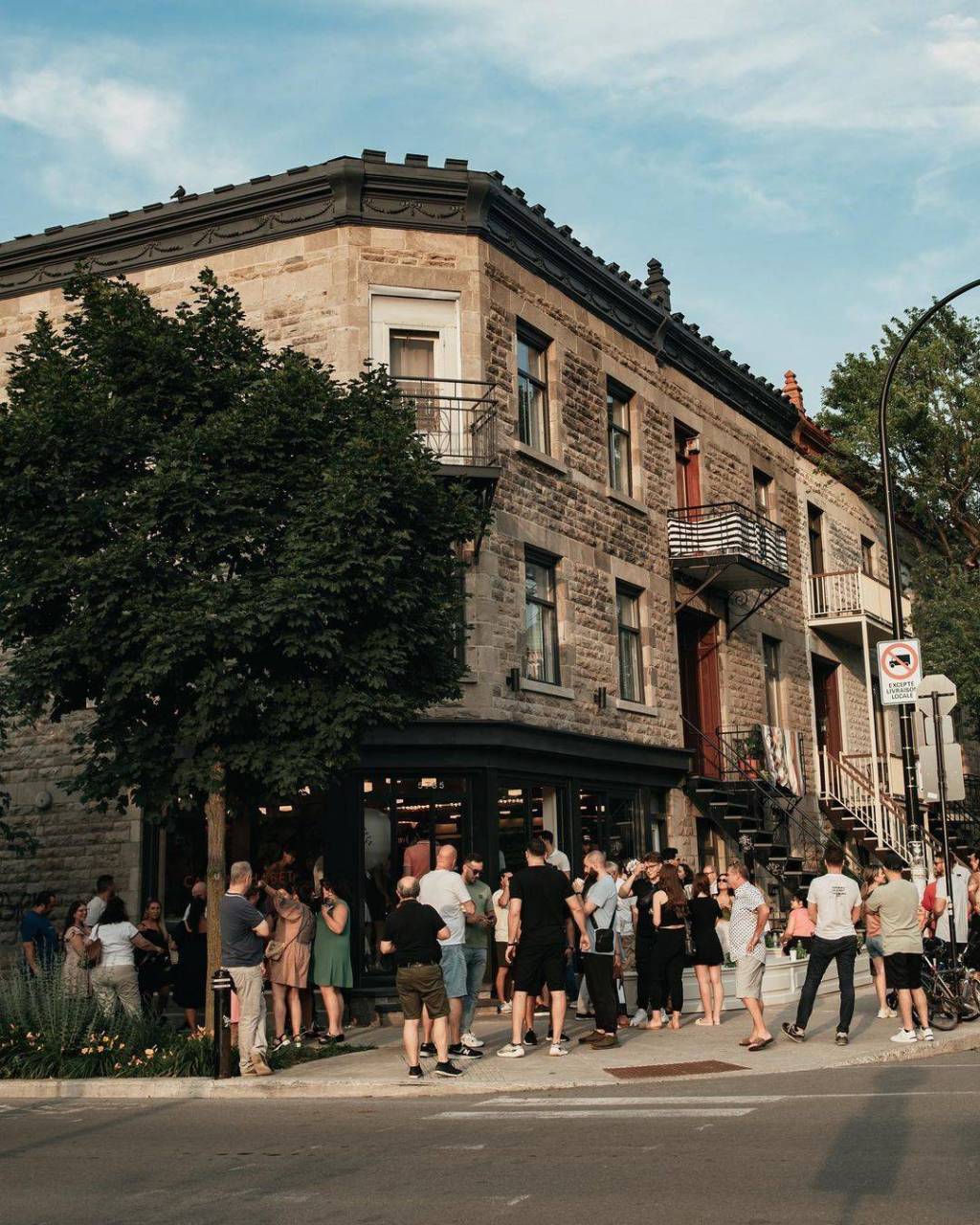
Café Alphabet is the church of secular consumerism.
Like a congregation coming to church every Sunday, dog walkers, morning people and stroller-pushing millennial parents form a heterogenous group that participates in the communal gathering every day of the week. Bread and wine is what they offer behind the ornate façade; cookies and coffee is the other deal you get within the large window walls. Functionally, the ritual is the same but hidden under a different form. The barista is essentially an indie pastor whose small talk provides welcome and reassurance to regulars. The pride of one’s loyalty to a church is the same pride that one may have towards a particular café. This way, the words “I found this cool new café, you should check it out,” hold the same value as converting someone to a religion — a long-term membership that could be hard to unsubscribe from.
At the root of it all, the need to belong isn’t attached to a structure. So, what is the true architecture of the need if a café is a church and a barista is a priest? Here the need gets recognized, but what happens when the same need doesn’t get recognized in forms that don’t have heritage or legimacy?
The post-COVID resurgence of commercial business in the Mile End area has since become gentrified by the Big Three: Bernie Beigne, Dalmata, and Café Alphabet. This can be interpreted more broadly as a “rebirth of capitalism” after the years of isolated living we had to succumb to during the pandemic, where I suggest, we could have thought harder on what kind of urban life we wanted to return to. During COVID, in the absence of a place to belong, we stylized consumption as a lifestyle. I would argue that businesses were very quick at getting our attention back to them, without giving a chance for communities to decide for themselves how or where to belong in a “new world”.
Henri Lefebvre was a French philosopher who thought that the usage and creation of public space should be in the hands of the people who live in it. Cities tend to compartmentalize and restrict natural flow by designating distinct places to skate and streets to shop, which more or less decides for you how you should walk on a given day. In his work, Le Droit à la Ville, he promotes the idea that people should have the right to appropriate a space as a function of what they need — a right that belongs to them in practice, not manufactured and designated to them by capital and zoning.
Third places are the third social environments after home and then work or school. Examples of third places are parks, libraries, gyms, cafés, shops and religious places, which are all extensions of our aesthetic appeals.
In reaction to needing a specific kind of third place, or by the inconvenience of how first, second and third places are connected via paths and roads, there are some cultural rebellions that have become invasive to a city’s infrastructure that examplify what Lefebvre is theorizing.
As absurd as it may seem, the Eisbachwelle — an artificial surf wave which was created in the heart of Munich, in the Eisbach river — is an example of how culture is a need-based phenomenon that doesn’t depend on the intended function of a space. Ever since its appearance, the Eisbachwelle has become a tourist destination and a symbol, I think, of a modern urban renaissance where the usage and meaning of space in a city is not only defined, but self-governed by people for their common interest. The desire path, a concept that has been made popular online, is another example of an undomesticated need. It is an unplanned trail that is visually distincted by foot traffic that diverges from the designed main path. The desire path is the rejection of a trail that is improperly optimized or even helpful to the user. The mere existence of these paths suggests that sometimes our needs are not always validated, or even frankly seen, by administrators.
Sometimes administrations will look at a need and try to remove it without giving it a solution. For example, just recently, the City of Montreal actively tried to delegitimize sleeping encampments under the Van Horne Overpass, giving the residents 7 days to leave. But without clear alternatives, the court rejected its proposition to lift the ban on dismantling. Still, the city tolerates sheltering in public parks, such as in Jeanne Mance Park. Apparently, one place is “better” than the other? The unhoused people need a fixed place to be, just like the people who go to Café Alphabet. Ironically, both groups live just a couple of streets away from each other in the same neighborhood.
For a couple of recent summers, there was a trend where hundreds of teenagers would get together late at night in the parking lots of Wawas, 24/7 convenience stores, across the United States. Parking lots became spaces where teens could freely socialize, functionally becoming uninstitutionalized places for youth congregations to thrive in, similar to the surfers on the Eisbachwelle. In a town where I go to see family, the police got involved, settled down reckless behaviour, and even imposed a curfew to further control the situation.
“Cities are rejecting our physical requests and making it harder for anybody to understand what they actually need from an environment.”
These subtle physical ways in which people use spaces differently from their original intended purposes could tell us something about how we are growing out of our current cities completely. Where is it that I need to be? I don’t know. Right now, I need some coffee.


Leave a Reply