

Via Pinterest
By Lara Judah
Staff Writer
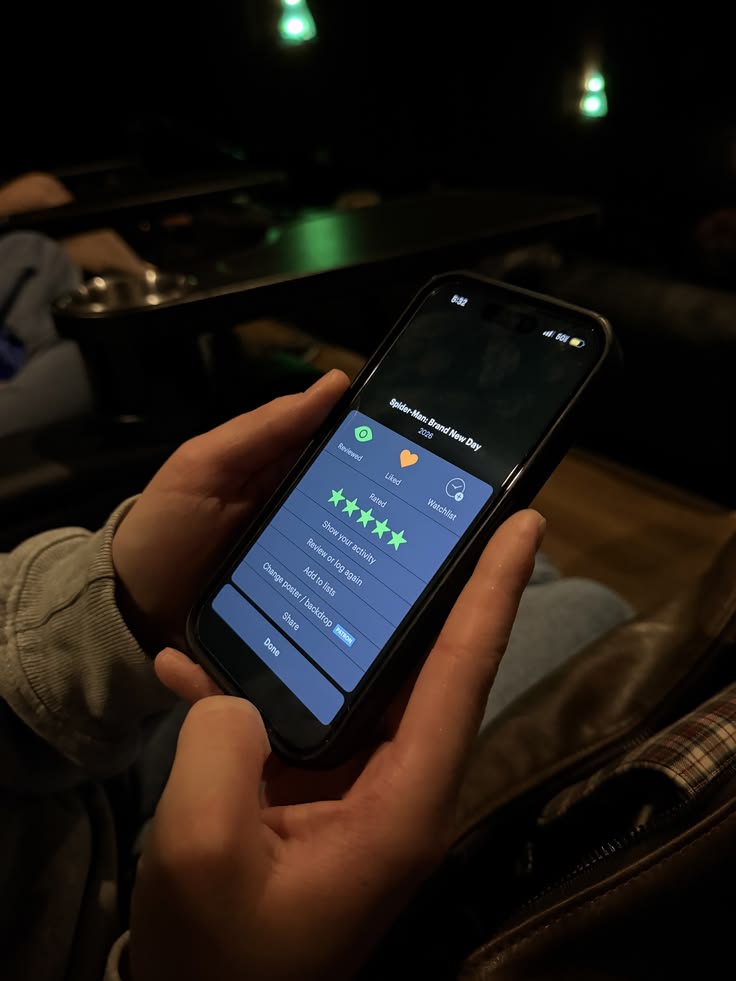
We all do it. Whether it is writing a Goodreads review about the latest book you’ve read, carefully selecting your “top four” on Letterboxd, or uploading your morning run to Strava, tracking seems to have become an inherent part of being human.
Nowadays, it is easier than ever to track every aspect of our lives. Apps such as Letterboxd and Strava entice us to keep detailed logs of our actions and consumption patterns. With their visually appealing look and intoxicating social element, these apps take tracking to the next level.
In an individual sense, tracking can be a useful and revelatory process. By logging our behaviors — runs, movies, books, restaurant reviews, daily steps — we get a broader understanding of who we are, where we’ve been, and what we want to become. Features such as daily streaks keep us motivated, giving us quantifiable goals to aim for: one book a week, 10 minutes of Duolingo every morning, a 20-kilometre bike ride on Fridays.
The notion of logging something is extremely alluring; we love to organize and rate things, classifying titles on different scales. And in a world stuffed with an overwhelming amount of information and types of media, digitally logging our experiences and material possessions can provide us with a sense of comfort and control. It allows us to expel our energy outwards, trading a portion of our cluttered mind for a neatly organized and visually appealing digital space.
But sometimes, we start to become too immersed in this digital realm, finding pleasure in attributing integer values to subjective and personal experiences, as when we reduce a complex and multifaceted movie to a five-star scale. When taken too far, our obsession with tracking can start to counter this initial sense of order, distorting that strange relationship between our real and digital selves.
What exactly do I mean by this?
Tracking draws us into the false idea that everything can be ordered and quantified. Amidst our busy lives and heavy media consumption habits, we seek the comforting presence of categories, which psychologist Gregory L. Murphy describes as “the glue that holds our mental world together.” On Letterboxd, for example, we group the movies we have watched based on a five-star rating scale. When I first downloaded the app, it was my favorite feature; I was easily able to determine how my most recently watched movie would fit into my curated hierarchy. But things can start to get complicated extremely quickly — it suddenly seemed wrong that I had placed Superbad, a raunchy comedy featuring the iconic McLovin, in the same category as All Quiet on the Western Front, a sobering account of a young World War I soldier. And how am I supposed to interpret each star’s value? Is it based on the quality of the acting? What about cinematography, dialogue, or level of enjoyment? As Murphy puts it, “every category is a simplification to some degree; it throws away information about the thing.”
Similarly, Strava can make us focus on achieving specific distances and paces, subtly dismissing the joys that come with discovering unplanned paths or taking a minute to pause and observe our surroundings.
Thus, tracking becomes a strenuous task, something to be accomplished rather than a natural output of our lived experiences. When reading, I much too often find myself looking at the page number, my book becoming a numerical entity that I start to perceive linearly rather than properly absorbing the malleable, non-linear structures that stories take on. In this way,
“the act of tracking starts to distort the very actions it is meant to record.”
Additionally, the social element that is often integrated into apps can exacerbate the negative effects of tracking. Hobbies that were once considered mostly individual and isolated are suddenly becoming extremely social; the acts of reading, exercising, and watching movies now have corresponding apps that allow for user interactions and followers. Even apps that might not be considered “social” are affected. First implemented in 2016, Spotify Wrapped allows users to share their personalized yearly listening summary across their social media pages. These types of features cause us to start anticipating how others will perceive our habits, which has vast implications in of itself. When we integrate social media into everything that we do, it becomes difficult to distinguish our digital personas from our authentic selves.
By logging, tracking, and rating all facets of our lives, we reaffirm the sense that everything requires an answer, where abstract pieces of media need to be quantified, and experiences reduced to small, curated reviews.
In a world filled with well-defined answers and concrete opinions, perhaps it is best to leave certain aspects undissected. Tracking is helpful, but it only conveys a small part of our existence. Sometimes it is important to simply let ourselves wander freely without any restrictions or expectations: to run without a distance in mind, to watch without the intent of reviewing, to read without a self-imposed deadline. Because it is often in these moments, when we allow our experiences to imprint themselves naturally in our minds and bodies, that we find a real sense of comfort and internal order.


Leave a Reply