

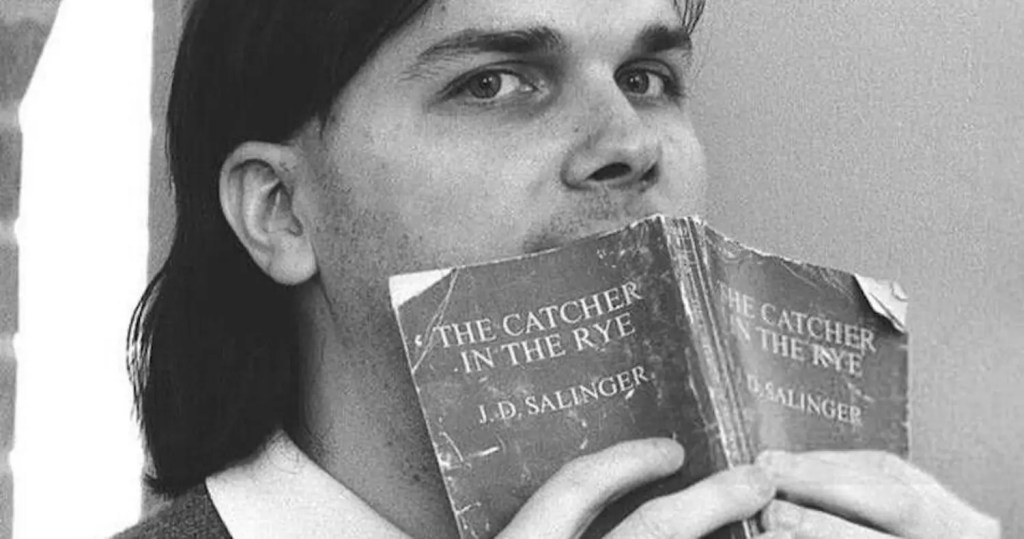
via All That’s Interesting
By Sibora Dibra
Arts and Culture Editor
Close your eyes, have no fear.
December 8th, 1980.
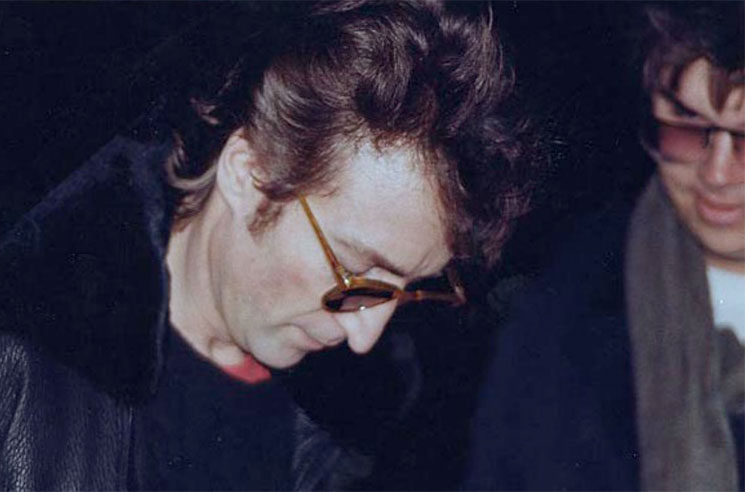
It hadn’t even been a month since John Lennon had reemerged on the world’s music scene. After five years away from the spotlight, he was back in New York, releasing a brand-new collaborative album, Double Fantasy, with his wife, Yoko Ono. On his way to a recording session, just outside The Dakota — his residence on Manhattan’s Upper West Side — he stopped to sign a fan’s copy of that very same album. The fan’s name was Mark David Chapman.
The moment remains, to this day, immortalized in an almost banal photograph: Lennon bent over the record with Chapman standing behind him, seemingly looking through him. Nothing in that particular snapshot would suggest that the two men would meet again, let alone that one of them would, soon enough, be dead.
Chapman was still waiting outside by the time Lennon returned to The Dakota that night and, shortly before 11 p.m., five shots rattled the building’s walls, and the entire world along with it. The Beatles’ lead singer was fatally struck in the back four times before being rushed to Roosevelt Hospital, while the culprit made no effort to flee the scene of the crime. Instead, he remained there, reading a particular paperback copy of a short, red book.
J.D. Salinger’s The Catcher in the Rye.
“The novel would become, in Chapman’s hands, a manifesto.”
That same day, he’d bought a fresh copy and written “This is my statement” in it, signing as “Holden Caulfield,” the protagonist of the story. More than four decades later, the world-renowned musician, the murderer, and Salinger’s novel remain irreversibly entangled.
Published in 1951, Salinger’s The Catcher in the Rye follows sixteen-year-old Holden Caulfield in the days following his expulsion from an elite prep school. Readers accompany him through 1950s New York City, drifting between hotels, bars, old acquaintances and fleeting new encounters, all while he desperately tries to make sense of a world he finds increasingly unbearable.
The book — a bildungsroman (or coming-of-age story) — explores the psychological changes its protagonist undergoes in that troubling, foreign space between childhood and adulthood. Salinger describes Holden’s position unconventionally: old enough to recognize the hypocrisy and “phoniness” that surround him in the adult world, but still young enough to hold onto the sweet innocence of childhood.
Holden Caulfield, then, stands as a one-of-a-kind take on the traditional literary lead — far closer to the concept of the antihero than to that of the virtuous, morally honourable figure readers are generally encouraged to look up to. He is a disillusioned, cynical, and often profoundly unlikable character who is scornful of societal norms and defined by his alienation rather than his courage or selflessness. In other words, he lacks the conventional qualities that make a protagonist “heroic.”
The notion of the antihero is hardly a new invention — protagonists resisting the strict boundaries of righteousness and morality have long existed in literature. We can trace this phenomenon all the way back to Odysseus and follow it through to more modern examples such as Dorian Gray, Amy Dunne, and Patrick Bateman.
Holden is riddled with a thousand dislikable qualities, which make him an unreliable narrator who is initially hard to sympathize with. He says so himself: “In my mind, I’m probably the biggest sex maniac you ever saw,” (Salinger 81) and “I’m the most terrific liar you ever saw in your life” (Salinger 22). He openly acknowledges the very flaws that bother readers, from his dishonesty to his obsession with sex. In fact, his unpleasantness has become synonymous with his character; readers are often warned before encountering him that he is a protagonist they may not appreciate.
It’s this honesty that makes Holden so appealing and easy to project onto. Holden does not ask to be admired or held in high regard; instead, he offers readers of all ages the possibility of looking into a cracked, distorted mirror — one in which they can pinpoint their own flaws and unspoken thoughts written down in a relatable string of words.
One of the novel’s passages, spoken to Holden by his former teacher Mr. Antolini, speaks to this idea:
“Among other things, you’ll find that you’re not the first person who was ever confused
and frightened and even sickened by human behavior. You’re by no means alone on that
score, you’ll be excited and stimulated to know. Many, many men have been just as
troubled morally and spiritually as you are right now. […] You’ll learn from them—if you
want to. Just as someday, if you have something to offer, someone will learn something
from you.” (Salinger 246)
This is precisely where Mark David Chapman’s relationship with the novel becomes unavoidable. While it can’t be known precisely what Chapman thought of the novel, he appears to have merged Holden and his own self as interlinked entities who saw the world exactly as it truly was: fake, oppressive and — most of all — “phony.” He seemed to fixate on “phoniness” as the ultimate moral failure, while adopting Holden’s desire to protect children from growing up in a fundamentally corrupt world.
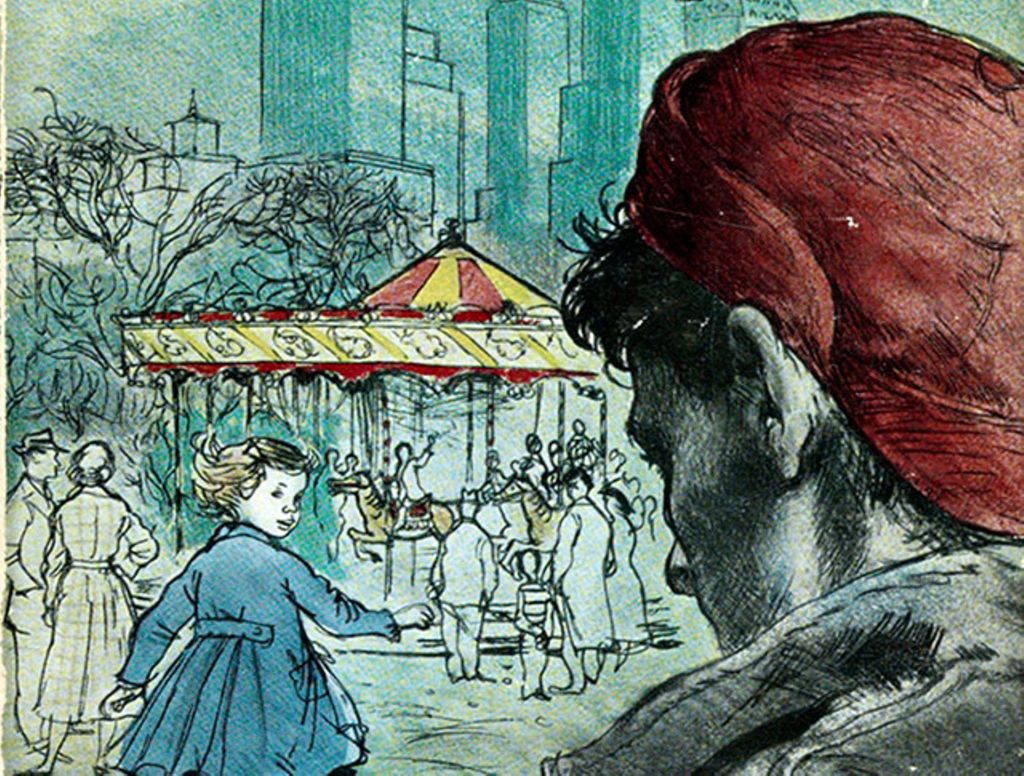
Chapman may have twisted Holden’s anxiety about growing up into something literal and violent. Once idolized by Chapman, Lennon gradually became, in his eyes, a poser: a man living in wealth and comfort while simultaneously preaching the notions of peace and love. Contradiction in the flesh. In this warped viewpoint, Chapman seemed to have become, in his own way, a “catcher in the rye,” imagining that he was exposing the very “phoniness” that Holden repeatedly tries to see through.
Widely read and taught around the world, The Catcher in the Rye has become one of the most recognizable works of American literature. From the 1960s onward, Holden Caulfield’s cynical view of the world — and the words through which he expresses it — became the subject of bans and removals from classrooms and library shelves. The novel’s profanity, sexual content and crude language were among the principal reasons it was challenged, while its link to Lennon’s assassination only further amplified its already controversial reputation.
Still, Chapman’s comprehension of Salinger’s great American classic does not paint a complete picture of how the rest of the world perceives it. Art has the power, whether we like it or not, to move us beyond measure. A painting can make one person feel warmth, and another feel unsettled; a song can revive an old memory within one listener but mean absolutely nothing to the next.
“In the same way, like any novel, The Catcher in the Rye can mean something entirely different to each person who flips its pages.”
For some, Holden is the quintessential embodiment of adolescent alienation. His hostility and reluctance become recognizable traits rather than threatening ones, his hatred of “phoniness” being a stark reflection of the confusion that undeniably comes with growing up. For others, including the people who censored or challenged it, his rejection of authority, profanity, and sexual encounters make the novel an inappropriate and dangerous depiction of a vulnerable stage of life.
The contrast between these perceptions of Salinger’s novel, however, raises an uncomfortable question: If we remove a work of art in light of some individuals’ negative interpretations of it, what happens to all the other meanings someone else might have found in it? When governments and public institutions ban a book because of a scandal, its language or its characters, they settle their own conscience at the cost of every other positive interpretation that could emerge from it.
Perhaps the most upsetting thing about The Catcher in the Rye’s link to Lennon’s murder is not that Chapman found himself in its pages, but that his individual reading of the novel has become part of how we remember it. The crime he committed has attached a concrete horror to a work that had been facing controversy for decades, making it difficult to separate the offence from the book’s lasting cultural impact. But association is not causation. Chapman being caught with the novel during the act does not make it responsible for the scandal, nor does his identification with Holden’s character transform Salinger’s protagonist into an instruction manual for brutality.
That red paperback became a symbol we’ve collectively attached to The Catcher in the Rye, giving the crime a memorable narrative that could be repeated. Just a few months later, John Hinckley unsuccessfully attempted to assassinate Ronald Reagan — Salinger’s novel was found in his hotel room after the shooting. Eight years after that, Robert John Bardo murdered 21-year-old rising star Rebecca Schaeffer — he was also found carrying a copy of the book.
Decades later, The Catcher in the Rye remains, like Holden himself, stuck between two worlds: what it truly is and what a certain group of people deem it to be.


Leave a Reply