


Via Indies Unlimited
Karina Awad-Battista
Staff Writer
fan fiction (noun)
: stories involving popular fictional characters that are written by fans and often posted on the internet
- called also fanfic
This is how Merriam-Webster defines fan fiction. But anyone familiar with the genre will tell you that it goes much deeper than that. Once a niche activity for fans to put their own spins on TV shows and movie franchises, fan fiction has become an integral part of the literary industry. Plenty of bestselling books have originated from an author modifying a pre-existing story they love, changing names and polishing it to the point that it becomes their own.
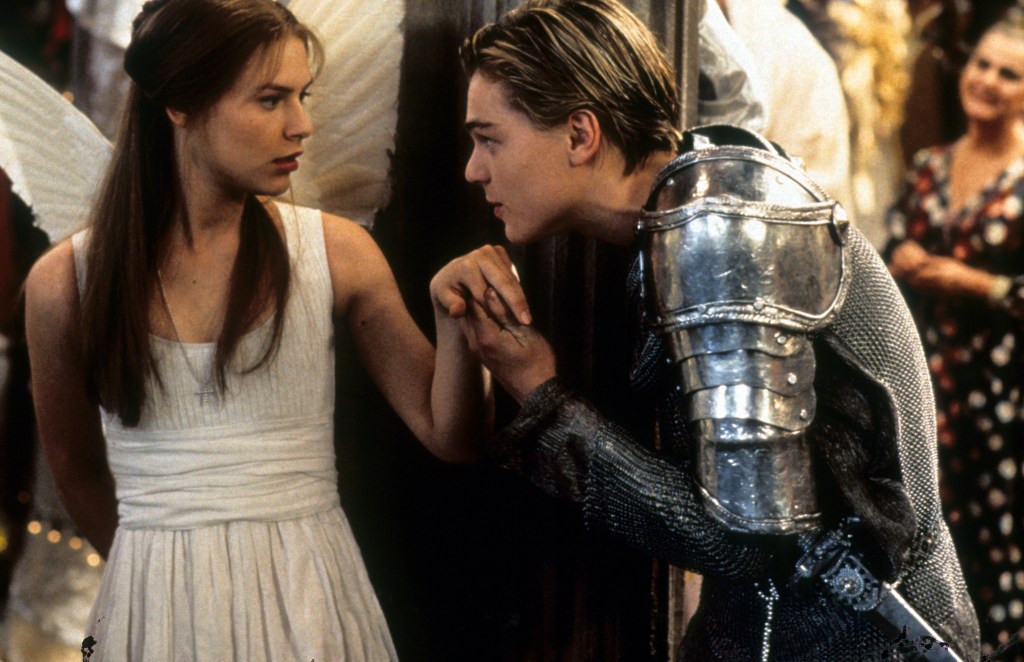
The origin of fan fiction is hard to define because we did not always consider that people could have ownership over stories the way that we do now. Let’s go back to the 15th century, long before fanfic was even a term. The printing press was not yet widespread, and copyright laws were certainly not a thing: most stories were transmitted orally, meaning they were considered more of a public property. This also means that we can’t be sure if anything inspired by something else was really considered fan fiction, since it never belonged to anyone in the first place. Take Shakespeare: Romeo and Juliet, one of his most famous works, is based on a poem known as The Tragical History of Romeus and Juliet by Arthur Brooke, which is itself an adaptation of an Italian novella. Shakespeare maintained the original plot but compressed it to occur over just a few days and changed Romeo’s name. The big changes occurred in the supporting characters, particularly by adding in Mercutio, Romeo’s friend, who doesn’t exist in the original story. The storylines of the Nurse, Tybalt, and Friar Lawrence also differ significantly. This is not the only time that Shakespeare adapted stories written by others, and he is certainly not the first to do so. Modern fan fiction is considered to have gained popularity in the 60s from Star Trek interpolations, but before that, the Romans had their own fun adapting stories. Virgil’s poem The Aeneid is an expansion of Homer’s The Odyssey, as well as The Iliad. If we consider this to fit under the definition of fanfic, that means the practice dates to as early as 29 BC (it’s unclear exactly when The Aeneid was written, but it was sometime between 29 and 19 BC).
Modern fan fiction is very different from Shakespeare’s version. These days, it’s mostly published online on dedicated websites. Fanfiction.net and Wattpad, among others, are some that were quite popular in the early 2010s and are still around today. Today, the most renowned place for publishing fan fiction is widely considered to be Archiveofourown.org. Archive of our own, often abbreviated to AO3, is a non-profit website that is distinguished by its tag system which allows authors to sort their stories by fandoms, maturity ratings, tropes, and more. It currently has over 18 million works published by around 11 million registered users. Although stories are normally based on pre-existing fiction, some are centered around real people and celebrities. In 2025, the #11 most popular fandom by volume of works published on AO3 was Formula 1, and #14 was the K-POP group Stray Kidz. Even topics such as men’s hockey and youtubers made the top 100. There are an infinite number of possible plot points explored, from inserting characters into alternate universes to bringing people back from the dead. Ultimately, fan fiction has become a way for any kind of fan to explore ‘what ifs’ and create their own version of things. Social aspects of platforms, such as commenting, or giving “kudos” in AO3’s case, allow users to interact and bond over each other’s writing. The growing popularity of fanfic has formed an increasing sense of community for those who read and write on these sites. Although fan fiction is mostly written in English on Archive of our Own, it’s become widespread enough for a variety of languages, such as Mandarin, Chinese and Russian, to appear on the platform.
Fan fiction has not only created its own circle of fans, but has affected other sectors entirely, specifically the publishing industry. The rise of fanfic has prompted publishers to scour platforms for emerging writers and even hold contests through them. For about 16 years, Wattpad has hosted the Watty Awards, an annual fan fiction contest whose winners are chosen by Wattpad’s team. In 2025, 4 authors received the grand prize of five thousand US dollars, as well as “priority consideration for series, film, and publishing opportunities with WEBTOON Productions and more.” Perhaps one of the most famous instances of a story being published through Wattpad is Anna Todd’s After series, which was eventually adapted into several movies. After started as a Harry Styles fan fiction published by Todd on Wattpad. It eventually became extremely popular, amassing over one billion reads. Soon after, Todd was contacted by Wattpad, and her book went up for auction; it ended up being acquired by Simon & Schuster’s Gallery Books for six figures. The movie rights were then acquired by Paramount, who released the first movie in 2019, which Todd was a producer on. As of 2026, the five After films have made a combined total of 168.9 million at the box office, and the books have sold over 12 million copies.
This is a crucial aspect of how fan fiction has evolved. It has become not only a place for people to explore their passion for writing, but also for budding authors to break into the industry. Of course, After is hardly the first instance of this happening. In 2009, Fanfiction.net was the reigning platform for publishing fanfic: it also happens to be where Fifty Shades of Grey was posted for the first time, under the title Master of the Universe. Before being self-published and being later picked up by a publishing company, the story was a fan fiction about the relationship between the main characters of Twilight, Bella and Edward. It was not until E.L. James decided to self-publish the book that the names of the protagonists were changed to Anastasia Steele and Christian Grey. The book rights were acquired a year later, in 2012, and the first film of the series was released in 2015, starring Dakota Johnson and Jamie Dornan. Recently, Ali Hazelwood’s The Love Hypothesis, a novel about a college professor and a PhD student falling in love, was adapted to the big screen. The origin of this viral book was an AO3 fan fiction of Kylo Ren and Rey from Star Wars set in an academia-themed alternate universe. The infamous City of Bones by Cassandra Clare was heavily based on a Harry Potter fanfic known as The Draco Trilogy that she, herself, had published on Fanfiction.net.
It just goes to show that not every best-selling series begins with a pitch to a publishing house; sometimes, it starts with a Twilight fan fiction.
Over the years, fan fiction has begun to overlap heavily with the publishing industry and has awarded many authors their big breaks. The impact has been so large that it has even produced breakout roles for many actors.
Without fanfic, would Dakota Johnson even have a career?
Although it’s often disregarded as a nerdy pastime for those who live vicariously through the internet (we see you, Kat from Euphoria), fan fiction has proven itself to be an accessible way of publishing that can lead to serious career opportunities. This is the modern version of Pamela Anderson getting discovered at a football game; this is the age of fan fiction.


Leave a Reply