

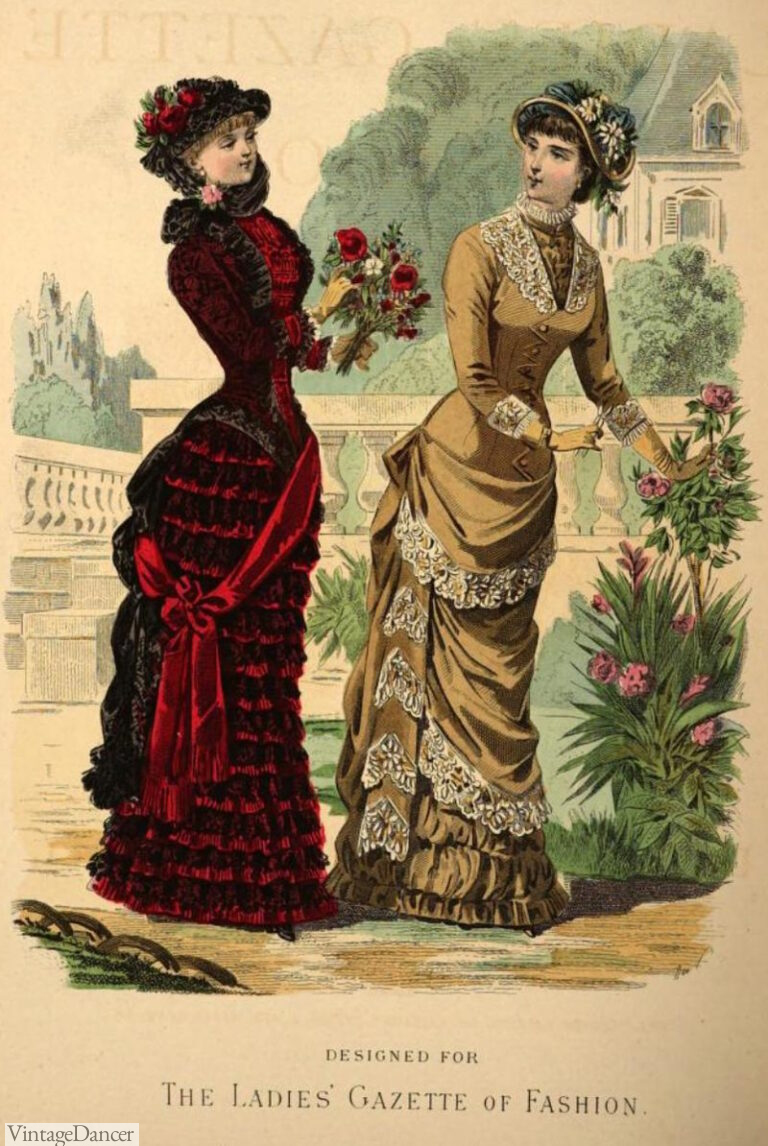
Via Vintage Dancer
Valentina Lipmann
Digital Managing Editor
Girlies, what jackets are we wearing this winter? Those shoes are so last season! This is the skirt of the summer! Red is in right now… When will it stop? Fashion is, has been, and will forever be a never ending cycle of trends, shortening by the decade, and with social media turning all fashion fast, even quality and style become momentary fads.
It is not new for fashion to resemble a social uniform–think of big frilly Victorian dresses, or Y2K layers. Merriam-Webster defines the term fashion as “the prevailing style during a particular time” and “the business of creating and selling clothes in new styles.” Magazines, such as Vogue, ELLE and Marie Claire, have been reporting on said fashion tendencies for well over a century, feeding into our homogenous ways.
That being said,
it takes one singular person to stand out and tweak the uniform to launch a new trend.
Subsequently, new fashions become overused and ordinary, stripping any originality from the style. For instance, Rachel Green from the popular sitcom Friends had an iconic layered bob during the earlier seasons that fans went crazy over. Hairdraissers knew immediately what their clients meant when requesting ‘The Rachel’. Today, this hairstyle is considered fairly standard, and so, the cycle carries on.
Social media is not to blame for these fashion habits dating back many years, though it has certainly escalated the situation. From following ridiculously named aesthetics such as Tomato Girl Summer, to speed-running through ‘micro-trends’, fashion is taking a fast turn–literally. Trends go from lasting years to lasting weeks because of information overload.
Public figures have the largest influence on trends. Their quick and easy presence on social media, paired with society’s addiction to these platforms, created the exposure that caused this phenomenon. Tiktok and Instagram’s algorithms are carefully crafted to keep viewers hooked, resulting in an overwhelming amount of micro-trends floating around at once, most of which are initiated by the need to adhere to celebrity styles.
With social media making it so simple to keep tabs with these personas, it becomes effortless to imitate them and turn their every move into a trend. Though many do seem to be going against the grain, it is clear that today’s fashion is heavily shaped by such occurrences.
Society has taken to heart the concept of the uniform, always wanting to wear or resemble someone else’s look.
The “Kylie Jenner Partless Slick-Back” is a clear demonstration of the instinct of keeping up with everything celebrities do and wear for our own copycat usage.
Now, the focus is infinitely more global, with any given person having somewhat of a connection to fashion items from an array of different countries, consequently making the uniform global as well. A great number of social media posts that don’t necessarily touch upon the subject of fashion receive comments, requesting shopping details from content creators on specific items displayed in their videos or photos. Comments such as “where are these jeans from?!” and “where can i find ittt” may be a way for many to acquire a sense of community or hard to find desirables, but it happens to reflect on society’s need to adopt someone else’s style.
High fashion and designer clothing was created for the upper-class population, meant to show the wearer’s status through quality and look. The concept of ‘dupes’ has turned all fashion accessible. Creating cheaper, more affordable versions of absolutely everything significantly drops an item’s value, decreases the quality, increases homogeneity, and promotes fast fashion. In fact, many brands operate under the same parent company, showing us the same item of clothing only slightly altered in a number of ‘different’ stores. This contributes to our uniformization.
While men can be heavily affected by fashion trends as well, women tend to be the primary target, especially within social media’s ‘micro-trend’ and ‘dupe’ consumption rate. Notably, during seasonal or holiday transitions, content requesting advice on what different items “we” are wearing circulates among women, normalizing the desire to fit-in rather than fit our clothes to our own standards.


Leave a Reply