

via HS Insider
Sibora Dibra
Arts and Culture Editor
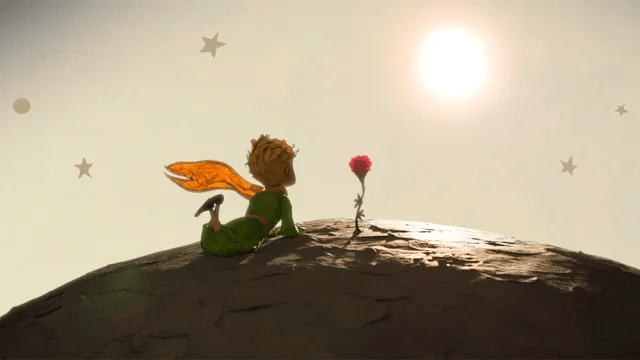
“All grown-ups were once children… but only few of them remember it.” – Antoine de Saint-Exupéry, The Little Prince
Once upon a time, a child drew a boa constrictor swallowing an elephant whole. A grown-up, peering over their shoulder to look at the very same drawing, saw a hat. Somewhere along the way, we trade imagination for the ordinary, the fantastical for the sensible. Our juvenile hunger for the surreal dissipates as time inevitably unfolds, leaving behind the elusive ghost of a childhood we’ve outgrown.
When I first read Antoine de Saint-Exupéry’s The Little Prince, I was quickly captivated by the prince’s travels, particularly by his encounter with the Fox, who taught six-year-old me that the essential is invisible to the eye. Upon revisiting the novel as an emerging adult, however, I found myself paying less attention to the prince and more to each newly discovered planet’s residents: the king, the vain, the drunk, the businessman, the lamplighter and the geographer. Each represents, respectively, ego, vanity, alienation, greed, responsibility, and knowledge.
To grow up is a peculiar thing; the world remains constant, but we learn to assess it differently. The objects of our attention gradually shift as we gather experience, knowledge and unique quirks which shape our personalities. With time, I began to find myself relating to the more complex themes within these stories, ones that extended beyond the issues of friendship and love that I so deeply related to as a child. My developing ability to discern underlying meanings and think critically led me to seek out profounder interpretations, to look beyond the initial surface of a story and into the more somber ideas that lay beneath it.
Perhaps, then, the difference between children and grown-ups lies in the simple distinction between whether an ambiguous shape depicts a hat, or a snake digesting an elephant.
And yet, who is to say we must, one day, relinquish a freer version of ourselves for another–one that is mature, responsible and ostensibly shallow? Does growing up necessarily mean growing out of what first taught us how to see and experience the world?
The stories we grow up with–film, books, and the overall fictional world we’ve inhabited since we were children–do not collect dust in the scheme of our lives. They follow us into adulthood, cultivating new meanings as we cultivate new experiences. They educate and reveal things we were, once, too young to notice. These stories grow alongside us, speaking equally to the child we were and the adult we have become.
My ten-year-old sister’s favourite film is Hayao Miyazaki’s Howl’s Moving Castle; my twenty-year-old brother happens to appreciate it just as much. Two people separated by an entire decade of exposure to the world can equally find, in a movie primarily targeted towards children, something worth relating to. While my sister may be drawn to its whimsical, beautifully illustrated landscapes, my brother may feel more intrigued by its exploration of war and identity. Of course, I cannot speak for them and claim I know for a fact what either of them grasps from the film–still, it becomes clear that some tales have the power to accommodate and move people of any age, of any experience.
Wes Anderson’s Fantastic Mr. Fox, in the top 20 of Letterboxd users’ best ranked movies, is another one that seems to remain just as relevant to children and adults alike–proof that it is possible to revisit the same story at ten, twenty, or fifty and find it just as meaningful, even if what we love about it has changed along the way.
We grow alongside this media, becoming increasingly capable of identifying ourselves within it in countless ways. A book that once made us laugh may later make us feel a crippling nostalgia; the character we once hated may someday become one we understand. We learn to appreciate their newfound depth while still basking in the aspects of it which captivated us as children.
In my eyes, Saint-Exupéry’s Little Prince was right all along. We may return to the same narratives with different, older eyes–convinced to have outgrown them–only to discover that the magic was present not in what we understood, but in what we had yet to understand. Growing up is not about learning to see the hat instead of the boa, but about learning to see both.


Leave a Reply