

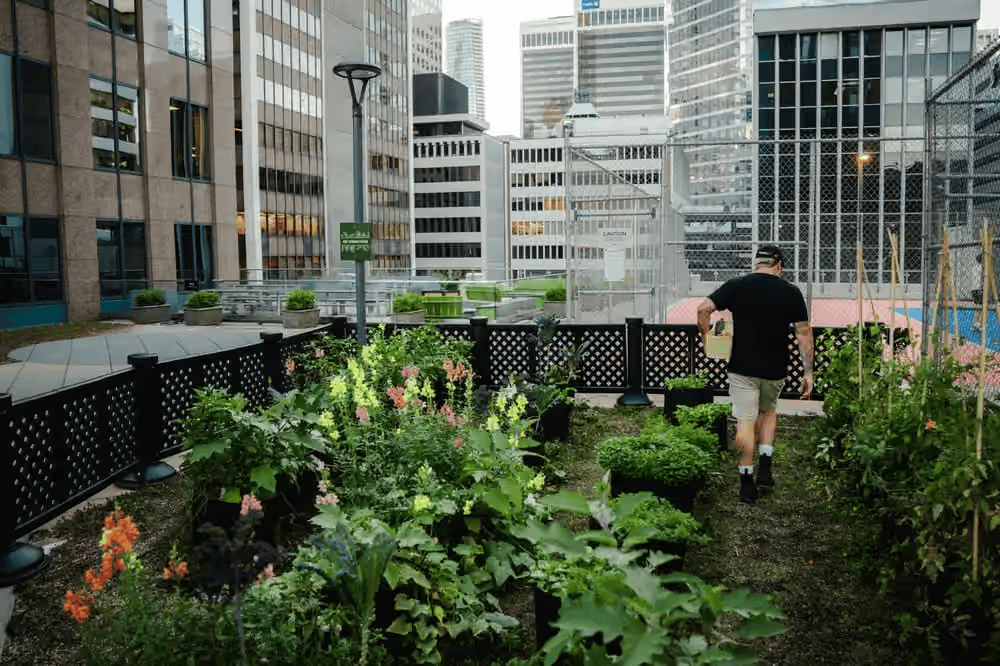
Via MicroHabitat
Leo Baron
Staff Writer
In my sculpture class, I recently built an interactive sculpture or what is essentially just a suggestion box, that asked a simple question I myself could not answer: “Quel type d’aménagement devrait-on faire ici?”. The idea was for visitors to slip a note with their request into a machine, and the machine’s job was to reply with direct refusals: LOYER + 20%, Zone commerciale depuis 2019, Consultation déjà terminée etc. It was inspired by the work of rootkid on Youtube, an artist and unofficial digital-era critic, who tries to make invisible infrastructures such as artificial intelligent surveillance, material objects. I wanted to represent the friction and impossibility of talking to bureaucracy, as a physical device that undermines the citizen’s passion for advocating change, one that makes the viewer feel belittled. In this way, inviting them to question and imagine ways around the limitations placed on them.
The machine asks about aménagement but it answers with phrases that are about développement. Aménagement comes from ménager, to manage a household in French. How can we picture vacancy differently, not by aluminum gates and a lack of development or as places to be urbexed but as homes that haven’t been cared for enough? The rooftop-farming movement in Montreal differs from conventional development, because it is more of an aménagement: re-using and re-arranging the overlooked spaces into places full of life.
Bernard Tschumi is an architect and writer who suggests that architecture and transgression are not so different. In his 1976 essay “Architecture and Transgression” he describes architecture as coming “alive”, when the “event” that takes place inside it doesn’t fit the rules or goes beyond what the designers intended it for.
An example of that idea is Lufa Farms: a business that only operates on pre-existing buildings. In 2009, Mohammed Hage, along with Lauren Rathmell, Kurt Lynn and Yahya Badran founded Lufa Farms; an organization pioneering urban agriculture as a means of integrating local food production into a city-built environment. It took two years of convincing to finally create the first commercial greenhouse rooftop in the world, in Ahuntsic, Montreal. One of the reasons it took two years is because at the time, the city hadn’t yet created any zoning regulations for urban agriculture in industrial or commercial areas.
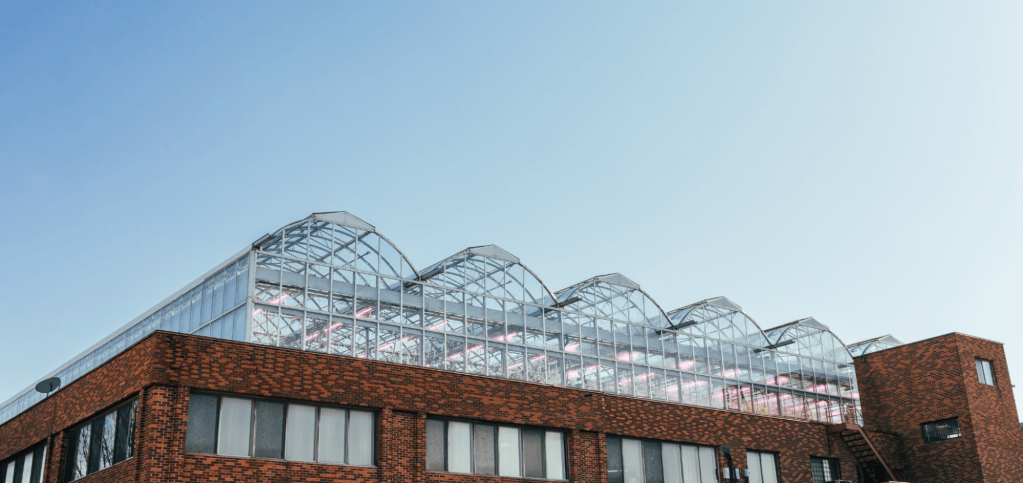
Just like the grass that grows in the cracks of sidewalks, rooftop farms do not demolish nor replace, they squeeze and place themselves almost naturally, where municipal design does not account for. What used to be 31,000 square feet; today, is 500,000 square feet spread over 6 different buildings. Throughout this journey, the principle has always remained the same: “Using no new land.”
About a decade ago, Alexandre Ferrari-Roy started an enterprise called MicroHabitat, selling rooftop farms to different companies around the world trying to promote local food security and a green lifestyle in the corporate world. This enables workers that spend hours in the office to step outside and experience a connection with nature. It is an opportunity to possibly learn about species while sourcing and making their own food, all, only minutes away from their desks.
In January of 2026, the Canadian Centre of Architecture (CCA) held a panel titled “What places get to define vacancy?” between Maurice Cox, a professor of Urban Planning and Design at Harvard and former director of planning and development for the City of Detroit, and Mio Tsuneyama, the architect and cofounder of Studio mnm, a Tokyo-based collective advancing urban resource reclamation.
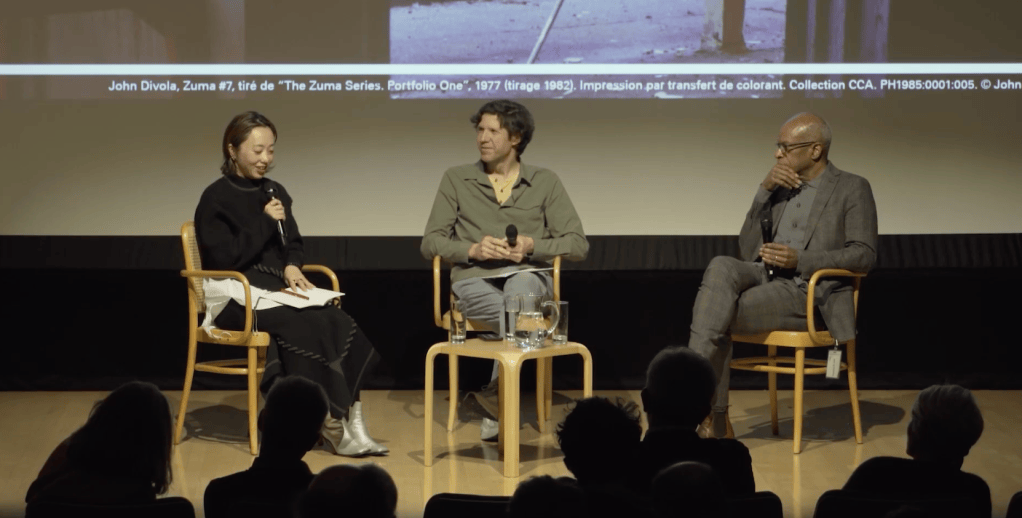
This discussion was, to say the least, a powerful indicator on how to bridge the communication between two cities with completely different approaches and reasons for urban design: Detroit and Tokyo. In Detroit, the population decline over the 20th century left a housing surplus, where Cox’s strategy prioritized landscape architecture to let nature reclaim the empty public spaces. For example, using graphic street art to slow down traffic in order to potentially create greenways between neighbourhoods.
In Tokyo, post-World War II, there was an unparalleled urban growth using cheap and undurable materials to stimulate an economic model reliant on fast production. Due to property value and the earthquake building codes, many houses in Japan are destroyed after 30 years. This led Tsuneyama to renovate undesired homes through the reuse of wasted door frames and reviving dead soil into functional environments for multiple families.
In both cases, vacancy shows that a property can never be complete — it can always be restored.
“Vacancy doesn’t ask for developers to do something grand, it asks for humanist people to care for their environment.”
Instead of telling citizens: “24-hour surveillance” or “No littering”, which often makes people feel watched or unwelcomed, environmental education could replace them, making the citizens feel that they aren’t threats but rather participants and little change-makers with powerful rights. In Montreal, roofs are often locked by doors with a sign that says “Authorized personnel only”. Rooftop farms contradict that traditional rule. Like Cox’s and Tsuneyama’s solutions to vacancy, vacant spaces don’t need to be built and destroyed—they can be aménagés. A rooftop farm serves this exact purpose, showing that vacancy is not about what can be potentially built but who are the people that can potentially care for it.


Leave a Reply